

Massive Legal Win for Kebaowek First Nation And Allies Against Proposed
Nuclear Waste Dump in Canada
-
Federal Court of Appeal Upholds Victory for Kebaowek First Nation
and Allies in “Species at Risk” Case Against Chalk River Nuclear Waste
Project Kebaow...
Latest Post
Hazardous consequences of leakages from Vedanta's red mud pond
Written By krishna on Tuesday, May 31, 2011 | 3:42 AM
To
Cabinet Committee on Economic Affairs (CCEA)
Government of India
New Delhi
Through Shri K. M. Chandrasekhar, Cabinet Secretary, Government of India
Subject-Hazardous consequences of leakages from Vedanta Aluminium’s 28-hectare red mud pond
Sir,
We wish to draw your attention towards the incident of 5th April and 16th May 2011, following heavy rain, local communities in Orissa state reported leakages from the 28-hectare red mud pond, owned and operated by Vedanta Aluminium, through its walls, polluting local streams and creating anxiety among the communities at the downstream villages of Lanjigarh, Bundel and Basantpada. The refinery and red mud pond is owned and operated by the Vedanta Aluminium Limited, a subsidiary of the UK-based Vedanta Resources plc.
We hope that the institutional accountability which has been absent from the outset till date in the matter of Bhopal’s industrial disaster spurs the CCEA to act sooner rather than later in the matter of Vedanta’s acts of omission and commission. .
We submit that the refinery and red mud pond are situated in a sensitive location, only a kilometre from the river Vamsadhara, the region's main water source; four villages are very close to the refinery and eight others are downstream of the river. Local communities - mainly Majhi Kondh adivasi (indigenous) and Dalit communities who rely on agriculture for their livelihoods - have consistently raised concerns over the risks posed by the 28 hectare main red mud pond that is currently in use and the construction of an additional 60 hectare red mud pond, which is not yet operational. These communities have been campaigning against the Vedanta's proposal for the refinery's five-fold expansion, arguing it would further pollute their land and water.
We have learnt that the authorities are indifferent to the plight of the local communities who are being affected by these leaks occurring due to hour-long downpours. What will happen to the villagers in future when the monsoon strikes?
We submit that over 4,000 families in India face serious risk from threats of leaks from Vedanta's red mud pond as the rainy season begins in June. Levels within the pond have already risen, amidst reports of two leaks in the last two months, threatening the communities' safety, health and livelihoods.
We wish to inform you that on 5th April and 16th May, company employees reportedly repaired the breaches and washed down the leak, but the communities are not aware of any attempts by the company to assess and clean up any damage that may have been caused by these leaks or to assess any resulting pollution of land and water this may have caused. It has been reported that the company denied any overflow from the pond and claimed that the rain had caused loose earth to flow from the pond's 30 metre tall wall which is sought to be raised. On 11 May, the Orissa State Pollution Control Board visited Lanjigarh to study the situation at the pond, but has not made its findings public.
We submit that eye-witnesses say the pond's waste levels have significantly risen. During 2007-2009, the Orissa State Pollution Control Board highlighted concerns about the pond's design and maintenance, including queries about construction, and evidence of seepage of alkaline waste water (pH of 11.06) from the pond. It is not clear how these risks are currently being managed. Amnesty International consulted an international environmental expert and this expert's view was that the pond should be considered a high risk facility, both because of questions raised about its design and construction and experiences of periodic rainfall.
We wish to submit that the local communities have been protesting that they were not being provided with information on steps that are being taken by the company and the state to prevent further breaches. They are also not being informed of the implications of increasing the red mud pond's capacity or the height of its wall. They fear that they could face a grave situation in the event of a breach during the rain expected from the monsoon which begins in June.
We wish to draw your attention towards Vedanta's proposal for a five-fold expansion of this refinery is currently pending before the Orissa High Court after India's Ministry of Environment and Forests rejected it in October 2010 after finding that the project violated the country's environmental laws.
We submit that red mud is a highly alkaline toxic residue formed during the process of refining bauxite into aluminium and posing significant risks to human health and the environment. Careful management and robust regulatory oversight are necessary to effectively manage the risks associated with red mud. In October 2010, when the red mud pond at an alumina refinery at Kolontar in Hungary leaked and flooded local villages with red mud, several people died, dozens were injured and there was widespread environmental contamination.
We submit that in September 2005, the Central Empowered Committee of the Supreme Court of India underlined that "...the location of the pond for the red mud, which is a mix of highly toxic alkaline chemicals and contains a cocktail of heavy metals including radioactive elements and the Ash pond on the Vamsadhara river may cause serious water pollution. The breach of the red mud and the ash pond may cause severe damages downstream. The potential of such an occurrence has not been properly assessed..."
We have learnt from various reports on serious concerns from the negative impacts by the refinery's operations on the rights to water, health and livelihoods of the communities living in proximity to the refinery, which had not been adequately addressed by either the company or the authorities.
We seek prompt action to prevent any further contamination of the river and to address existing problems and also recommended that Vedanta urgently and fully address the existing negative environmental, health, social and human rights impacts of the refinery at Lanjigarh and that this should be done in genuine and open consultation with the affected communities.
In view of the above, we urge CCEA to:
* Take immediate steps to protect the local communities from any contamination to water, land or air that has already occurred, including ordering a clean up and giving local communities access to effective remedies;
* Stop pumping any more red mud into the pond and ensure that no expansion of the refinery is allowed until action has been taken to adequately address existing problems in a manner that respects human rights;
* Immediately order an independent inquiry into the risks of overflow or leaks from the red mud pond as well as the report of the leak on 16 May 2011 and share these findings with local communities in an accessible manner, as well as sharing all other findings and reports undertaken;
* Publicly communicate measures being taken by the company and the local authorities to prevent any leaks or overflows from the pond during the monsoon rains and corrective measures which will be taken to protect local communities and the environment if any leaks or overflows occur.
We will be happy to share more details.
Yours Faithfully
Gopal Krishna
ToxicsWatch Alliance (TWA)
New Delhi
Mb: 09818089660, 07739308480
E-mail:krishna2777@gmail.com, krishna1764@rediffmail.com
Blog:toxicswatch.blogspot.com
Web: www.toxicswatch.com
Cc
Chief Minister, Government of Orissa
Union Environment & Forests Minister, Government of India
Cabinet Committee on Economic Affairs (CCEA)
Government of India
New Delhi
Through Shri K. M. Chandrasekhar, Cabinet Secretary, Government of India
Subject-Hazardous consequences of leakages from Vedanta Aluminium’s 28-hectare red mud pond
Sir,
We wish to draw your attention towards the incident of 5th April and 16th May 2011, following heavy rain, local communities in Orissa state reported leakages from the 28-hectare red mud pond, owned and operated by Vedanta Aluminium, through its walls, polluting local streams and creating anxiety among the communities at the downstream villages of Lanjigarh, Bundel and Basantpada. The refinery and red mud pond is owned and operated by the Vedanta Aluminium Limited, a subsidiary of the UK-based Vedanta Resources plc.
We hope that the institutional accountability which has been absent from the outset till date in the matter of Bhopal’s industrial disaster spurs the CCEA to act sooner rather than later in the matter of Vedanta’s acts of omission and commission. .
We submit that the refinery and red mud pond are situated in a sensitive location, only a kilometre from the river Vamsadhara, the region's main water source; four villages are very close to the refinery and eight others are downstream of the river. Local communities - mainly Majhi Kondh adivasi (indigenous) and Dalit communities who rely on agriculture for their livelihoods - have consistently raised concerns over the risks posed by the 28 hectare main red mud pond that is currently in use and the construction of an additional 60 hectare red mud pond, which is not yet operational. These communities have been campaigning against the Vedanta's proposal for the refinery's five-fold expansion, arguing it would further pollute their land and water.
We have learnt that the authorities are indifferent to the plight of the local communities who are being affected by these leaks occurring due to hour-long downpours. What will happen to the villagers in future when the monsoon strikes?
We submit that over 4,000 families in India face serious risk from threats of leaks from Vedanta's red mud pond as the rainy season begins in June. Levels within the pond have already risen, amidst reports of two leaks in the last two months, threatening the communities' safety, health and livelihoods.
We wish to inform you that on 5th April and 16th May, company employees reportedly repaired the breaches and washed down the leak, but the communities are not aware of any attempts by the company to assess and clean up any damage that may have been caused by these leaks or to assess any resulting pollution of land and water this may have caused. It has been reported that the company denied any overflow from the pond and claimed that the rain had caused loose earth to flow from the pond's 30 metre tall wall which is sought to be raised. On 11 May, the Orissa State Pollution Control Board visited Lanjigarh to study the situation at the pond, but has not made its findings public.
We submit that eye-witnesses say the pond's waste levels have significantly risen. During 2007-2009, the Orissa State Pollution Control Board highlighted concerns about the pond's design and maintenance, including queries about construction, and evidence of seepage of alkaline waste water (pH of 11.06) from the pond. It is not clear how these risks are currently being managed. Amnesty International consulted an international environmental expert and this expert's view was that the pond should be considered a high risk facility, both because of questions raised about its design and construction and experiences of periodic rainfall.
We wish to submit that the local communities have been protesting that they were not being provided with information on steps that are being taken by the company and the state to prevent further breaches. They are also not being informed of the implications of increasing the red mud pond's capacity or the height of its wall. They fear that they could face a grave situation in the event of a breach during the rain expected from the monsoon which begins in June.
We wish to draw your attention towards Vedanta's proposal for a five-fold expansion of this refinery is currently pending before the Orissa High Court after India's Ministry of Environment and Forests rejected it in October 2010 after finding that the project violated the country's environmental laws.
We submit that red mud is a highly alkaline toxic residue formed during the process of refining bauxite into aluminium and posing significant risks to human health and the environment. Careful management and robust regulatory oversight are necessary to effectively manage the risks associated with red mud. In October 2010, when the red mud pond at an alumina refinery at Kolontar in Hungary leaked and flooded local villages with red mud, several people died, dozens were injured and there was widespread environmental contamination.
We submit that in September 2005, the Central Empowered Committee of the Supreme Court of India underlined that "...the location of the pond for the red mud, which is a mix of highly toxic alkaline chemicals and contains a cocktail of heavy metals including radioactive elements and the Ash pond on the Vamsadhara river may cause serious water pollution. The breach of the red mud and the ash pond may cause severe damages downstream. The potential of such an occurrence has not been properly assessed..."
We have learnt from various reports on serious concerns from the negative impacts by the refinery's operations on the rights to water, health and livelihoods of the communities living in proximity to the refinery, which had not been adequately addressed by either the company or the authorities.
We seek prompt action to prevent any further contamination of the river and to address existing problems and also recommended that Vedanta urgently and fully address the existing negative environmental, health, social and human rights impacts of the refinery at Lanjigarh and that this should be done in genuine and open consultation with the affected communities.
In view of the above, we urge CCEA to:
* Take immediate steps to protect the local communities from any contamination to water, land or air that has already occurred, including ordering a clean up and giving local communities access to effective remedies;
* Stop pumping any more red mud into the pond and ensure that no expansion of the refinery is allowed until action has been taken to adequately address existing problems in a manner that respects human rights;
* Immediately order an independent inquiry into the risks of overflow or leaks from the red mud pond as well as the report of the leak on 16 May 2011 and share these findings with local communities in an accessible manner, as well as sharing all other findings and reports undertaken;
* Publicly communicate measures being taken by the company and the local authorities to prevent any leaks or overflows from the pond during the monsoon rains and corrective measures which will be taken to protect local communities and the environment if any leaks or overflows occur.
We will be happy to share more details.
Yours Faithfully
Gopal Krishna
ToxicsWatch Alliance (TWA)
New Delhi
Mb: 09818089660, 07739308480
E-mail:krishna2777@gmail.com, krishna1764@rediffmail.com
Blog:toxicswatch.blogspot.com
Web: www.toxicswatch.com
Cc
Chief Minister, Government of Orissa
Union Environment & Forests Minister, Government of India
The World Bank in India:Undermining Sovereignty, Distorting Development
Written By krishna on Monday, May 30, 2011 | 3:50 AM
“Since the founding of the World Bank in 1945, we have been their largest and most influential contributing member. We have also been their largest beneficiary in terms of contracts awarded to US firms.” — US Department of Treasury, 1994
These kind of self-congratulatory claims by the US government would not have been worrisome to developing countries but for the fact that the World Bank is an insidious instrument of imperialism. That makes this volume very significant, not only to India but also to other developing countries, according to the Independent People’s Tribunal on the World Bank Group in India, which was organized in New Delhi during September 2007 and of which this book is a product. Perhaps the first tribunal of its kind anywhere, it brought together a broad spectrum of society to look at the damage caused by the bank to the country as a whole.
Through 35 presentations, thematically arranged, the book captures every conceivable policy issue in which the Bank has dabbled.
A confidential memo that Lawrence Summers, then the World Bank’s chief economist, sent to his colleagues on Dec. 12, 1991 was alarming. The Economist, the British publication to which this memo was later leaked, published part of it on Feb. 8, 1992, under the title “Let Them Eat Pollution.” It began thus: “Just between you and me, shouldn’t the World Bank be encouraging more migration of the dirty industries to the LDCs [Less Developed Countries]? ... The measurement of the costs of health-impairing pollution depends on the foregone earnings from increased morbidity and mortality. From this point of view a given amount of health-impairing pollution should be done in the country with the lowest cost, which will be the country of the lowest wages. I think the economic logic behind dumping a load of toxic waste in the lowest-wage country is impeccable and we should face up to that.”
This macabre memo was characterized as a parody by its author, Lant Pritchett, an advisor to Summers at the time and now a professor at Harvard University. But it actually gives a glimpse of the ruinous role of the World Bank in developing countries. Over the years, the bank has become a formidable global power and a key pillar of the shadow state that has come to preside over the world economy. As Arun Kumar observes in the paper “The Economic Aspects of World Bank in India,” Summers’ memo was a reflection of the extreme consequence of a bizarre assumption premised on bizarre illogic. Kumar drives home the message thus: “If an average US citizen has 70 times the income of an average Indian citizen, then one US citizen in the market equals 70 Indian citizens ... after all, a death in a developing country is less expensive than a death in an advanced country. This is the pure functioning of the market where people are not valued. It is purely their market value that determines their worth.”
After India’s economic crisis of the late 1980s, the World Bank pressured it into an overhaul of its economic policies through structural adjustment programs. India overcame its crisis, and nearly two decades down the line it had more than $200 billion of reserves. But an excess of foreign exchange reserves creates a problem of excess liquidity; Kumar asks whether the political authority is weakening itself deliberately in order to push the interests of capital.
Going by a report in The Economic Times of Aug. 29, 2010, India was the largest recipient of World Bank loans, with over $9 billion (15 percent of all loans) as of the fiscal year ending June 2010. When the country already has an embarrassment of riches, why it mortgages itself to a dubious moneylender is a mystery.
Utsa Patnaik, in the paper “The World Bank and its Impact on Food Security,” even indicts World Bank economists as “economic criminals” and condemns the Indian Planning Commission for producing fraudulent poverty estimates.
“Indian poverty estimates are a scandal. Our Planning Commission has been working very closely with the World Bank economists to produce spurious poverty estimates. It is saying that poverty is declining when exactly the opposite is the case.”
The jury of 13 — academics, activists, judges and so on — sat through four days of deliberations over the testimony and depositions from 150 affected people, experts and academics from about 60 grassroots, civil society and community groups from all over India, covering 26 different aspects of economic and social development. The conclusion contains the 29 charges the jury framed against the operations of the World Bank in India. These charges are preceded by the following observations by the jury: “We draw attention to the fact that the World Bank tends to legitimize its action through its self-proclaimed mandate of poverty reduction and developmentm while in reality, its actions exclude the poor in the best of cases, and hurt and worsen their situation in most other cases. And yet the poor in India excluded and hurt by the World Bank are not marginal in numbers, constituting 27.5 percent of the population while three-fourths of the entire population lives below 20 rupees (purchasing power) or $2 per day. To exclude and hurt the majority of Indian citizens in the name of development and poverty alleviation is not merely callous, but it verges on a social crime.”
As all the charges by the jury are grave, they should be read in their entirety for a proper understanding. The highlights are reproduced here:
•The World Bank has not reduced poverty in India. Its policies are directly contributing to the concentration of wealth and a growing disparity between rich and the poor.
•The World Bank deliberately miscalculates poverty. The World Bank and the government of India seem to have collaborated in the production of poverty estimates that obscure the suffering of millions of people.
•The World Bank’s policies have increased hunger in India. The Bank is responsible for an economic policy framework that has exacerbated poverty levels and dismantled government safety nets created to soften the hardships of acute poverty.
•The World Bank contributes to India’s agricultural depression and farmers’ suicides. In a country where nearly 70 percent of the population depends directly or indirectly on agriculture, the World Bank has consistently advised refashioning the agrarian sector to generate corporate profits.
•World Bank-led development has not improved employment levels in India. From the data presented, the period of World Bank-led economic reform appears devastating from the point of view of labor.
•The World Bank, through policies of financial liberalization, has reduced credit to India’s rural poor, particularly Dalits and adivasis (tribal groups).
•World Bank micro-credit programs legitimize financial liberalization while undermining local women’s movements by claiming that the markets and new financial instruments will solve poverty and gender inequality without looking at other social practices.
•World Bank programs have increased deprivation by taking essential services away from the poor by systematically dismantling government institutions and services.
•World Bank power sector reform projects have failed. They enriched private corporations and created increased costs for consumers. Without increased availability, the poor have not benefitted in any way through this marketization process, but corporate profits have increased.
•World Bank water reforms and privatization programs turn the most basic right and necessity into a commodity.
•The World Bank has undermined the primary education system. The Indian people’s constitutional right to eight years of primary education is being subverted by World Bank policies and projects.
•World Bank health care programs have failed the poor. Under the bank’s guidance, the Indian government has moved away from providing universal health care to targeted health care and immunization, which has made overall health care unaffordable to the majority of India’s citizens.
•World Bank urban development programs benefit developers at the cost of the urban poor and are detrimental to the environment.
•World Bank coal mining projects have caused grave and ongoing harm to India’s tribal communities. In Jharkhand, the World Bank-funded Parej East coal mining project has destroyed the livelihoods of nearly 2,000 people at last count.
•World Bank relief efforts from the devastation of the 2004 tsunami have served as a pretext for grabbing land and privatizing the fishing industry. The bank’s Emergency Tsunami Recovery Project works with the existing Tamil Nadu Urban Development Project to appropriate coastal lands for private developers, resulting in massive displacement of people.
•The World Bank has displaced thousands in the name of eco-tourism. World Bank-financed projects, as evidenced in its India Eco-development project of 1995, have resulted in the forced displacement of thousands of people from traditional forestlands, while simultaneously opening these areas to the private sector.
•The World Bank exerts enormous an influence on Indian policy-making through posting current and former staff in key positions within the Indian bureaucracy.
•World Bank conditionalities defy India’s economic sovereignty.
•The World Bank’s Good Governance Agenda has undermined the sovereignty of the Indian State while having little impact on reducing corruption.
•The World Bank has undermined democratic functioning in India. Bypassing the parliament and other elected bodies and public debates, the bank’s interventions at various levels of government have weakened India’s democratic processes.
•The World Bank’s so-called good governance measures have, by focusing exclusively on government conduct, completely ignored issues of private sector corruption, and indeed encouraged them via deregulatory policies.
•World Bank activities subvert and undermine people-centered movements for social change.
A major conclusion of the jury is that “in India there is little difference between the thinking of the policymakers and the World Bank; we hold the Indian government equally responsible and call for a reversal of its policies.”
The other conclusions are that the majority of World Bank-sponsored projects neither serve their stated purpose nor benefit the poor; instead, in many cases they have caused grievous and irreversible damage to those they intend to serve; the bank’s underlying agenda and operations benefit those privileged with capital but push the already vulnerable to despair.
The jury has recommended that the World Bank compensate those it has harmed through its policies and projects. Unless there are clear and transparent mechanisms through which World Bank activities and policies can be independently monitored and audited, it would be better for the World Bank to quit operations in India.
Michele Kelley’s concise introduction, “World Bank out of India,” touches all the bases, but two sets of observations stand out.
The first: “The struggle is therefore with development policy and with historical capitalism as a form of social organization. It is a battle against a ‘developmental terrorism’ that is corporate-driven and based on the voting power of the rich in the market as opposed to democratic principles. This volume was written in solidarity with the movement that is taking place across India and all over the world to dislodge this imploding system, to widen democratic participation, and to decentralize and localize processes of growth. I believe we can find the unity to do just that.”
The second: “Because the government of India conveniently uses ‘international obligations’ as an excuse to avoid people-centered policy directives, demanding World Bank withdrawal from India will send a symbolic and critical message that these policies, from whatever direction they originate, must stop.”
Kelley’s observations, though well meaning, are far-fetched. While “developmental terrorism” is a reality, there is no movement either in India (excluding the Maoist movement) or elsewhere in the world that can counter it; indeed, India’s governing class remain what they are, devoid of democratic ethos and of what Dr. B R Ambedkar, architect of the Indian Constitution, termed “constitutional morality.”
In addition, no matter what hullabaloo a group of 300 or 400 discerning individuals make in an organized manner in New Delhi or elsewhere, the World Bank’s withdrawal from India, as from other developing countries, is wishful thinking for at least three reasons. First, as shown by some of the contributors, the World Bank’s money creates enormous incentives for officials not to pursue alternative policies and creates more loyalty to the bank than to the people of India. Two, the revolving door between the World Bank and the government that results in most economic policy-making positions being filled with bank staff has allowed the bank to impose its ideology and policies. Three, while the bank works with domestic elites to pillage the economy, the NGOs with which it works reflect its co-operation for development, thereby exposing the local face of imperialism; its engagement in a complementary activity at the bottom neutralizes and fragments the burgeoning discontent that results from the savaging of the economy.
To conclude, neither the World Bank nor globalization can remain what they are but for the well-laid tracks that the NGOs provide them. In this scenario, the ongoing Maoist or Naxalite movement in India is not without relevance as a rallying force. Perhaps there should be another Independent People’s Tribunal to look at the perils and potentials of this movement.
P. Radhakrishnan is a former Professor of Sociology at the Madras Institute of Development Studies, Chennai, India, and continues to be a social critic and commentator on public affairs. He can be contacted at prk1949@gmail.com
These kind of self-congratulatory claims by the US government would not have been worrisome to developing countries but for the fact that the World Bank is an insidious instrument of imperialism. That makes this volume very significant, not only to India but also to other developing countries, according to the Independent People’s Tribunal on the World Bank Group in India, which was organized in New Delhi during September 2007 and of which this book is a product. Perhaps the first tribunal of its kind anywhere, it brought together a broad spectrum of society to look at the damage caused by the bank to the country as a whole.
Through 35 presentations, thematically arranged, the book captures every conceivable policy issue in which the Bank has dabbled.
A confidential memo that Lawrence Summers, then the World Bank’s chief economist, sent to his colleagues on Dec. 12, 1991 was alarming. The Economist, the British publication to which this memo was later leaked, published part of it on Feb. 8, 1992, under the title “Let Them Eat Pollution.” It began thus: “Just between you and me, shouldn’t the World Bank be encouraging more migration of the dirty industries to the LDCs [Less Developed Countries]? ... The measurement of the costs of health-impairing pollution depends on the foregone earnings from increased morbidity and mortality. From this point of view a given amount of health-impairing pollution should be done in the country with the lowest cost, which will be the country of the lowest wages. I think the economic logic behind dumping a load of toxic waste in the lowest-wage country is impeccable and we should face up to that.”
This macabre memo was characterized as a parody by its author, Lant Pritchett, an advisor to Summers at the time and now a professor at Harvard University. But it actually gives a glimpse of the ruinous role of the World Bank in developing countries. Over the years, the bank has become a formidable global power and a key pillar of the shadow state that has come to preside over the world economy. As Arun Kumar observes in the paper “The Economic Aspects of World Bank in India,” Summers’ memo was a reflection of the extreme consequence of a bizarre assumption premised on bizarre illogic. Kumar drives home the message thus: “If an average US citizen has 70 times the income of an average Indian citizen, then one US citizen in the market equals 70 Indian citizens ... after all, a death in a developing country is less expensive than a death in an advanced country. This is the pure functioning of the market where people are not valued. It is purely their market value that determines their worth.”
After India’s economic crisis of the late 1980s, the World Bank pressured it into an overhaul of its economic policies through structural adjustment programs. India overcame its crisis, and nearly two decades down the line it had more than $200 billion of reserves. But an excess of foreign exchange reserves creates a problem of excess liquidity; Kumar asks whether the political authority is weakening itself deliberately in order to push the interests of capital.
Going by a report in The Economic Times of Aug. 29, 2010, India was the largest recipient of World Bank loans, with over $9 billion (15 percent of all loans) as of the fiscal year ending June 2010. When the country already has an embarrassment of riches, why it mortgages itself to a dubious moneylender is a mystery.
Utsa Patnaik, in the paper “The World Bank and its Impact on Food Security,” even indicts World Bank economists as “economic criminals” and condemns the Indian Planning Commission for producing fraudulent poverty estimates.
“Indian poverty estimates are a scandal. Our Planning Commission has been working very closely with the World Bank economists to produce spurious poverty estimates. It is saying that poverty is declining when exactly the opposite is the case.”
The jury of 13 — academics, activists, judges and so on — sat through four days of deliberations over the testimony and depositions from 150 affected people, experts and academics from about 60 grassroots, civil society and community groups from all over India, covering 26 different aspects of economic and social development. The conclusion contains the 29 charges the jury framed against the operations of the World Bank in India. These charges are preceded by the following observations by the jury: “We draw attention to the fact that the World Bank tends to legitimize its action through its self-proclaimed mandate of poverty reduction and developmentm while in reality, its actions exclude the poor in the best of cases, and hurt and worsen their situation in most other cases. And yet the poor in India excluded and hurt by the World Bank are not marginal in numbers, constituting 27.5 percent of the population while three-fourths of the entire population lives below 20 rupees (purchasing power) or $2 per day. To exclude and hurt the majority of Indian citizens in the name of development and poverty alleviation is not merely callous, but it verges on a social crime.”
As all the charges by the jury are grave, they should be read in their entirety for a proper understanding. The highlights are reproduced here:
•The World Bank has not reduced poverty in India. Its policies are directly contributing to the concentration of wealth and a growing disparity between rich and the poor.
•The World Bank deliberately miscalculates poverty. The World Bank and the government of India seem to have collaborated in the production of poverty estimates that obscure the suffering of millions of people.
•The World Bank’s policies have increased hunger in India. The Bank is responsible for an economic policy framework that has exacerbated poverty levels and dismantled government safety nets created to soften the hardships of acute poverty.
•The World Bank contributes to India’s agricultural depression and farmers’ suicides. In a country where nearly 70 percent of the population depends directly or indirectly on agriculture, the World Bank has consistently advised refashioning the agrarian sector to generate corporate profits.
•World Bank-led development has not improved employment levels in India. From the data presented, the period of World Bank-led economic reform appears devastating from the point of view of labor.
•The World Bank, through policies of financial liberalization, has reduced credit to India’s rural poor, particularly Dalits and adivasis (tribal groups).
•World Bank micro-credit programs legitimize financial liberalization while undermining local women’s movements by claiming that the markets and new financial instruments will solve poverty and gender inequality without looking at other social practices.
•World Bank programs have increased deprivation by taking essential services away from the poor by systematically dismantling government institutions and services.
•World Bank power sector reform projects have failed. They enriched private corporations and created increased costs for consumers. Without increased availability, the poor have not benefitted in any way through this marketization process, but corporate profits have increased.
•World Bank water reforms and privatization programs turn the most basic right and necessity into a commodity.
•The World Bank has undermined the primary education system. The Indian people’s constitutional right to eight years of primary education is being subverted by World Bank policies and projects.
•World Bank health care programs have failed the poor. Under the bank’s guidance, the Indian government has moved away from providing universal health care to targeted health care and immunization, which has made overall health care unaffordable to the majority of India’s citizens.
•World Bank urban development programs benefit developers at the cost of the urban poor and are detrimental to the environment.
•World Bank coal mining projects have caused grave and ongoing harm to India’s tribal communities. In Jharkhand, the World Bank-funded Parej East coal mining project has destroyed the livelihoods of nearly 2,000 people at last count.
•World Bank relief efforts from the devastation of the 2004 tsunami have served as a pretext for grabbing land and privatizing the fishing industry. The bank’s Emergency Tsunami Recovery Project works with the existing Tamil Nadu Urban Development Project to appropriate coastal lands for private developers, resulting in massive displacement of people.
•The World Bank has displaced thousands in the name of eco-tourism. World Bank-financed projects, as evidenced in its India Eco-development project of 1995, have resulted in the forced displacement of thousands of people from traditional forestlands, while simultaneously opening these areas to the private sector.
•The World Bank exerts enormous an influence on Indian policy-making through posting current and former staff in key positions within the Indian bureaucracy.
•World Bank conditionalities defy India’s economic sovereignty.
•The World Bank’s Good Governance Agenda has undermined the sovereignty of the Indian State while having little impact on reducing corruption.
•The World Bank has undermined democratic functioning in India. Bypassing the parliament and other elected bodies and public debates, the bank’s interventions at various levels of government have weakened India’s democratic processes.
•The World Bank’s so-called good governance measures have, by focusing exclusively on government conduct, completely ignored issues of private sector corruption, and indeed encouraged them via deregulatory policies.
•World Bank activities subvert and undermine people-centered movements for social change.
A major conclusion of the jury is that “in India there is little difference between the thinking of the policymakers and the World Bank; we hold the Indian government equally responsible and call for a reversal of its policies.”
The other conclusions are that the majority of World Bank-sponsored projects neither serve their stated purpose nor benefit the poor; instead, in many cases they have caused grievous and irreversible damage to those they intend to serve; the bank’s underlying agenda and operations benefit those privileged with capital but push the already vulnerable to despair.
The jury has recommended that the World Bank compensate those it has harmed through its policies and projects. Unless there are clear and transparent mechanisms through which World Bank activities and policies can be independently monitored and audited, it would be better for the World Bank to quit operations in India.
Michele Kelley’s concise introduction, “World Bank out of India,” touches all the bases, but two sets of observations stand out.
The first: “The struggle is therefore with development policy and with historical capitalism as a form of social organization. It is a battle against a ‘developmental terrorism’ that is corporate-driven and based on the voting power of the rich in the market as opposed to democratic principles. This volume was written in solidarity with the movement that is taking place across India and all over the world to dislodge this imploding system, to widen democratic participation, and to decentralize and localize processes of growth. I believe we can find the unity to do just that.”
The second: “Because the government of India conveniently uses ‘international obligations’ as an excuse to avoid people-centered policy directives, demanding World Bank withdrawal from India will send a symbolic and critical message that these policies, from whatever direction they originate, must stop.”
Kelley’s observations, though well meaning, are far-fetched. While “developmental terrorism” is a reality, there is no movement either in India (excluding the Maoist movement) or elsewhere in the world that can counter it; indeed, India’s governing class remain what they are, devoid of democratic ethos and of what Dr. B R Ambedkar, architect of the Indian Constitution, termed “constitutional morality.”
In addition, no matter what hullabaloo a group of 300 or 400 discerning individuals make in an organized manner in New Delhi or elsewhere, the World Bank’s withdrawal from India, as from other developing countries, is wishful thinking for at least three reasons. First, as shown by some of the contributors, the World Bank’s money creates enormous incentives for officials not to pursue alternative policies and creates more loyalty to the bank than to the people of India. Two, the revolving door between the World Bank and the government that results in most economic policy-making positions being filled with bank staff has allowed the bank to impose its ideology and policies. Three, while the bank works with domestic elites to pillage the economy, the NGOs with which it works reflect its co-operation for development, thereby exposing the local face of imperialism; its engagement in a complementary activity at the bottom neutralizes and fragments the burgeoning discontent that results from the savaging of the economy.
To conclude, neither the World Bank nor globalization can remain what they are but for the well-laid tracks that the NGOs provide them. In this scenario, the ongoing Maoist or Naxalite movement in India is not without relevance as a rallying force. Perhaps there should be another Independent People’s Tribunal to look at the perils and potentials of this movement.
P. Radhakrishnan is a former Professor of Sociology at the Madras Institute of Development Studies, Chennai, India, and continues to be a social critic and commentator on public affairs. He can be contacted at prk1949@gmail.com
HIL's licence to produce endosulfan cancelled
Written By krishna on Saturday, May 28, 2011 | 3:45 AM
Kerala government today cancelled the licence for production of endosulfan given to public sector Hindustan Insecticide Limited, Kochi in view of government decision to ban the pesticide's sale in the state.
The decision to quash the licence was taken at a high level meeting chaired by Chief Minister Oommen Chandy attended by representaives of company management, labour unions and officials of Pollution Control Board, Health Minister Adoor Prakash told reporters here.
The state has been witnessing protests for the past several years demanding total ban on production and use of endosulfan against the background of severe environment and health problems it caused to people of Kasaragode district where the pesticide was used in cashew plantations.
The meeting, however, gave permission for HIL to continue production of their other products on certain conditions, Prakash said.
Permission for production of other products was given on the company's assurance that they would remove the solid wastes within a limited period, Prakash added.
http://www.moneycontrol.com/news/business/hilslicencetoproduceendosulfancancelled_547356.html
The decision to quash the licence was taken at a high level meeting chaired by Chief Minister Oommen Chandy attended by representaives of company management, labour unions and officials of Pollution Control Board, Health Minister Adoor Prakash told reporters here.
The state has been witnessing protests for the past several years demanding total ban on production and use of endosulfan against the background of severe environment and health problems it caused to people of Kasaragode district where the pesticide was used in cashew plantations.
The meeting, however, gave permission for HIL to continue production of their other products on certain conditions, Prakash said.
Permission for production of other products was given on the company's assurance that they would remove the solid wastes within a limited period, Prakash added.
http://www.moneycontrol.com/news/business/hilslicencetoproduceendosulfancancelled_547356.html
CPCB Report on RDF Incineration Technology Awaited
Written By krishna on Friday, May 27, 2011 | 2:23 AM
Delhi's Waste Management Under Corporate Control?
The Central Pollution Control Board (CPCB)chairman Professor SP Gautam was asked by Union Environment Minister on 31st March, 2011 to probe the irregularities committed by by Timarpur-Okhla Municipal Solid Waste Management Company Pvt. Ltd (TOWMCL), 100 % subsidiary of O P Jindal Group’s Jindal ITF Urban Infrastructure Ltd. Environmental groups, waste pickers and residents await the outcome of the probe.
The CPCB Chairman must take note of Union Environment Ministry's White Paper which recommends against such technologies and argues in favour of biological treatment methods.
Union Environment Minister had asked Bharat Bhushan, Director, Union Environment Ministry on 1st April, 2011 to take the submissions of the residents on 2nd April. Residents made their submissions and ToxicsWatch Alliance (TWA) gave its testimony to the 4 member team led by Bharat Bhushan. TWA shared the Supreme Court's order which has been violated. TWA had met the Minister on the gate of the proposed Okhla's incinerator plant on 31st March, 2011 and had promised to share the court order. TWA shared the order on 1st April in his office in front of the residents and officials and agreed that there has been violation of the order. Environmental groups, waste pickers and residents await the report of Bharat Bhushan's team as well. The team comprised of Dr. A. Senthil Vel, Additional Director, Ministry of Environment and Forests (MoEF), the official who had given environmental clearance to the Timarpur-Okhla Municipal Solid Waste Incinerator Plant. This exercise seems conflict of interest ridden making Environment Ministry's role insincere.
Despite repeated reminders, what else can explain Union Environment Minister's studied silence on the relevant part of the WHITE PAPER ON POLLUTION IN DELHI WITH AN ACTION PLAN, GOVERNMENT OF INDIA, MINISTRY OF ENVIRONMENT & FORESTS. The relevant paragraph of the White Paper reads "4.1 The NEERI studies show that the treatment of solid waste not reduces the quantity requiring disposal but also reduces its pollution potential thereby preventing its adverse impact on environment. Some treatment methods also yield a product which can be recycled. Thermal treatment methods such as incineration or conversion of waste to briquettes and its subsequent use as fuel are not feasible due to the low heat value of the municipal solid waste in MCD area. The experience of the incineration plant at Timarpur, Delhi and the briquetting plant at Bombay support the fact that thermal treatment of municipal solid waste is not feasible, in situations where the waste has a low calorific value. A critical analysis of biological treatment as an option was undertaken for processing of municipal solid waste in Delhi and it has been recommended that composting will be a viable option. Considering the large quantities of waste requiring to be processed, a mechanical composting plant will be needed. NEERI has indicated that vermicomposting is suitable when practised on a small scale only."
"We have asked Jindal Ecopolis to provide the committee with details on the technical issues of the project. They had come prepared with a general description of the plant whereas we were interested in the specific technical points of each step of the process. A list of questions has been made available to them and they are expected to respond to them shortly," said a CPCB official. Such an approach is insufficient. It is sad that residents are being taken for a ride by insincere conversations, engagements and empty gestures by Environment Ministry, CPCB and the Delhi Government.
The mere fact that investments have been made and some construction has happned is not and cannot be an excuse for letting present and future generations to be exposed to persistent organic pollutants and heavy metals that will be emitted from incinerators.
The talk of shifting the plant is also quite hollow because mere shifting of a polluting plant and maintaining the status quo with few technical advice does not make this technology and the plant based on it non-polluting.
It appears that O P Jindal Group is bigger than Union Environment Ministry and Delhi Government in its influence. The Group runs a Law University and knows how to hoodwink environmental laws with impunity. It has unleashed a polluting and obsolete technology with evident potential to cause environmental health crisis in Delhi.
Delhi residents are living in parochial but seemingly blissful ignorance even as five waste management companies, namely, Delhi Waste Management (DWM), ABG Enviro, Metro Waste, Ramky and Delhi MSW Solutions have taken control of their waste.
With the entry of O P Jindal Group and Ramky's proposed waste to energy plant on Narela-Bawana based on incinerator technology, it appears that Delhi's waste management is going to be distorted beyond repair with disastrous consequences for public health.
The Central Pollution Control Board (CPCB)chairman Professor SP Gautam was asked by Union Environment Minister on 31st March, 2011 to probe the irregularities committed by by Timarpur-Okhla Municipal Solid Waste Management Company Pvt. Ltd (TOWMCL), 100 % subsidiary of O P Jindal Group’s Jindal ITF Urban Infrastructure Ltd. Environmental groups, waste pickers and residents await the outcome of the probe.
The CPCB Chairman must take note of Union Environment Ministry's White Paper which recommends against such technologies and argues in favour of biological treatment methods.
Union Environment Minister had asked Bharat Bhushan, Director, Union Environment Ministry on 1st April, 2011 to take the submissions of the residents on 2nd April. Residents made their submissions and ToxicsWatch Alliance (TWA) gave its testimony to the 4 member team led by Bharat Bhushan. TWA shared the Supreme Court's order which has been violated. TWA had met the Minister on the gate of the proposed Okhla's incinerator plant on 31st March, 2011 and had promised to share the court order. TWA shared the order on 1st April in his office in front of the residents and officials and agreed that there has been violation of the order. Environmental groups, waste pickers and residents await the report of Bharat Bhushan's team as well. The team comprised of Dr. A. Senthil Vel, Additional Director, Ministry of Environment and Forests (MoEF), the official who had given environmental clearance to the Timarpur-Okhla Municipal Solid Waste Incinerator Plant. This exercise seems conflict of interest ridden making Environment Ministry's role insincere.
Despite repeated reminders, what else can explain Union Environment Minister's studied silence on the relevant part of the WHITE PAPER ON POLLUTION IN DELHI WITH AN ACTION PLAN, GOVERNMENT OF INDIA, MINISTRY OF ENVIRONMENT & FORESTS. The relevant paragraph of the White Paper reads "4.1 The NEERI studies show that the treatment of solid waste not reduces the quantity requiring disposal but also reduces its pollution potential thereby preventing its adverse impact on environment. Some treatment methods also yield a product which can be recycled. Thermal treatment methods such as incineration or conversion of waste to briquettes and its subsequent use as fuel are not feasible due to the low heat value of the municipal solid waste in MCD area. The experience of the incineration plant at Timarpur, Delhi and the briquetting plant at Bombay support the fact that thermal treatment of municipal solid waste is not feasible, in situations where the waste has a low calorific value. A critical analysis of biological treatment as an option was undertaken for processing of municipal solid waste in Delhi and it has been recommended that composting will be a viable option. Considering the large quantities of waste requiring to be processed, a mechanical composting plant will be needed. NEERI has indicated that vermicomposting is suitable when practised on a small scale only."
"We have asked Jindal Ecopolis to provide the committee with details on the technical issues of the project. They had come prepared with a general description of the plant whereas we were interested in the specific technical points of each step of the process. A list of questions has been made available to them and they are expected to respond to them shortly," said a CPCB official. Such an approach is insufficient. It is sad that residents are being taken for a ride by insincere conversations, engagements and empty gestures by Environment Ministry, CPCB and the Delhi Government.
The mere fact that investments have been made and some construction has happned is not and cannot be an excuse for letting present and future generations to be exposed to persistent organic pollutants and heavy metals that will be emitted from incinerators.
The talk of shifting the plant is also quite hollow because mere shifting of a polluting plant and maintaining the status quo with few technical advice does not make this technology and the plant based on it non-polluting.
It appears that O P Jindal Group is bigger than Union Environment Ministry and Delhi Government in its influence. The Group runs a Law University and knows how to hoodwink environmental laws with impunity. It has unleashed a polluting and obsolete technology with evident potential to cause environmental health crisis in Delhi.
Delhi residents are living in parochial but seemingly blissful ignorance even as five waste management companies, namely, Delhi Waste Management (DWM), ABG Enviro, Metro Waste, Ramky and Delhi MSW Solutions have taken control of their waste.
With the entry of O P Jindal Group and Ramky's proposed waste to energy plant on Narela-Bawana based on incinerator technology, it appears that Delhi's waste management is going to be distorted beyond repair with disastrous consequences for public health.
The Modern History of Cancer
The making of a modern disease
This is how it starts. Carla wakes up one morning feeling that something is wrong. She has been having headaches, but not of the normal, take-a-pill-and-relax type. These headaches come with a sort of numbness, and now she notices some other things that aren’t as they should be. There are bruises on her back that she can’t explain; her gums have been going pale; and she’s very, very tired. She goes to her doctor, but he can’t tell her what’s wrong. Try some aspirin, he says; maybe it’s a migraine. The aspirin doesn’t help, so she finally asks for some blood tests and soon she winds up at Massachusetts General Hospital, in Boston, where a young and talented physician gives her the preliminary diagnosis: acute lymphoblastic leukemia (A.L.L.). Carla knows nothing about lymphoblasts, or why she’s going to have to have a bone-marrow sample taken, but she knows about leukemia. It’s cancer of the blood. She’s terrified, and she may not be in a state of mind to take in the oncologist’s reassurance that A.L.L. is “often curable.”
Carla now enters not just a cancer ward but a cancer world. The ward is what the sociologist Erving Goffman once called a “total institution,” like asylums, armies, prisons, monasteries, and Oxbridge colleges—an institution that strips you of your identity and equips you with a new one. She’s given a case number, a bracelet, a hospital gown. Some of her physicians will know her name and what she was before becoming a cancer patient, and some will not. Her chemotherapy ward is an environment made sterile in order to protect her soon to be therapeutically devastated immune system from infection, so her relations with family and friends are reconfigured along with the rhythms of her days and weeks. She’s now a case.
The oncologist in the story is Siddhartha Mukherjee, the author of “The Emperor of All Maladies: A Biography of Cancer” (Scribner; $30), a history of the disease and of the attempts to describe it, explain it, manage it, and cure it, or just to reconcile its victims to their fate. It is a personal story, too, an account of the author’s own “coming-of-age as an oncologist,” and its historical narrative is crosscut with Mukherjee’s present predicaments. He is sure that he can do much more for his patients than the physicians of the past, yet he recognizes his fellowship with his medical ancestors; he knows that he shares many of their hopes and frustrations. At the same time, he wants to understand what his patients share with their ailing forebears and what is peculiarly modern about their predicament. He sees that cancer is a world unto itself; that Carla is now part of this world; and that he is part of it, too. For cancer patients and their physicians, the cancer world seems to expand to the whole of experience. As one victim of a muscle sarcoma told Mukherjee, “I am in the hospital even when I am outside the hospital.”
Cancer has always been with us, but not always in the same way. Its care and management have differed over time, of course, but so, too, have its identity, visibility, and meanings. Pick up the thread of history at its most distant end and you have cancer the crab—so named either because of the ramifying venous processes spreading out from a tumor or because its pain is like the pinch of a crab’s claw. Premodern cancer is a lump, a swelling that sometimes breaks through the skin in ulcerations producing foul-smelling discharges. The ancient Egyptians knew about many tumors that had a bad outcome, and the Greeks made a distinction between benign tumors (oncos) and malignant ones (carcinos). In the second century A.D., Galen reckoned that the cause was systemic, an excess of melancholy or black bile, one of the body’s four “humors,” brought on by bad diet and environmental circumstances. Ancient medical practitioners sometimes cut tumors out, but the prognosis was known to be grim. Describing tumors of the breast, an Egyptian papyrus from about 1600 B.C. concluded: “There is no treatment.”
The experience of cancer has always been terrible, but, until modern times, its mark on the culture has been light. In the past, fear coagulated around other ways of dying: infectious and epidemic diseases (plague, smallpox, cholera, typhus, typhoid fever); “apoplexies” (what we now call strokes and heart attacks); and, most notably in the nineteenth century, “consumption” (tuberculosis). The agonizing manner of cancer death was dreaded, but that fear was not centrally situated in the public mind—as it now is. This is one reason that the medical historian Roy Porter wrote that cancer is “the modern disease par excellence,” and that Mukherjee calls it “the quintessential product of modernity.”
At one time, it was thought that cancer was a “disease of civilization,” belonging to much the same causal domain as “neurasthenia” and diabetes, the former a nervous weakness believed to be brought about by the stress of modern life and the latter a condition produced by bad diet and indolence. In the eighteenth and nineteenth centuries, some physicians attributed cancer—notably of the breast and the ovaries—to psychological and behavioral causes. William Buchan’s wildly popular eighteenth-century text “Domestic Medicine” judged that cancers might be caused by “excessive fear, grief, religious melancholy.” In the nineteenth century, reference was repeatedly made to a “cancer personality,” and, in some versions, specifically to sexual repression. As Susan Sontag observed, cancer was considered shameful, not to be mentioned, even obscene. Among the Romantics and the Victorians, suffering and dying from tuberculosis might be considered a badge of refinement; cancer death was nothing of the sort. “It seems unimaginable,” Sontag wrote, “to aestheticize” cancer.
Cancer is “the modern disease” not just because we understand it in radically new ways but also because there’s a lot more cancer about. For some cancers, the rise in incidence is clearly connected with things that get into our bodies that once did not—the causal link between smoking and lung cancer being the most spectacular example. But the rise in cancer mortality is, in its way, very good news: as we live longer, and as many infectious and epidemic diseases have ceased to be major causes of death, so we become prone to maladies that express themselves at ages once rarely attained. At the beginning of the twentieth century, life expectancy at birth in America was 47.3 years, and in the middle of the nineteenth century it was less than forty. The median age at diagnosis for breast cancer in the United States is now sixty-one; for prostate cancer it is sixty-seven; for colorectal cancer it’s seventy. “Cancer has become the price of modern life,” an epidemiologist recently wrote: in the U.S., about half of all men and about a third of women will contract cancer in their lifetime; cancer now ranks just below heart disease as a cause of death in the U.S. But in low-income countries with shorter life expectancies it doesn’t even make the top ten.
The cancers of the past were visible on the body’s surface; now we have visual access to the enemy within at a micro level. Modern technologies—advances in microscopy, histological staining, biopsies, X-rays, computed tomography (C.T.) and magnetic resonance imaging (M.R.I.) scans—have given us new possibilities for understanding cancer, but also a new vocabulary of fear. In “The Illness Narratives,” the psychiatrist and anthropologist Arthur Kleinman recorded conversations between cancer victims and their physicians. A dying patient with metastasized rectal cancer told his doctor about his feeling that “there is something not me in me, an ‘it,’ eating its way through the body. . . . These cancer cells are me and yet not me.” The more science tells us about the cancer cell, the more it resembles us. It wants to grow and multiply, as we do, but it doesn’t know how to stop. “Cancer’s life is a recapitulation of the body’s life, its existence a pathological mirror of our own,” Mukherjee writes. “Down to their innate molecular core, cancer cells are hyperactive, survival-endowed, scrappy, fecund, inventive copies of ourselves.” Researchers, in their more detached moments, can’t help admiring the cancer cell, the way that Sherlock Holmes admired Moriarty, as a worthy opponent. Toward the end of his book—surveying the patterns thrown up by modern cancer genetics—Mukherjee pauses before judging those terrible patterns “quite beautiful.”
The story of cancer as a distinctively modern—and even specifically American—entity starts with the marriage, in 1940, of Albert Lasker, a wealthy and well-connected advertising executive whose accounts included Lucky Strike cigarettes, and Mary Woodard, a dress designer and Radcliffe graduate, who had social aspirations. Mary Lasker needed a philanthropic cause, and found one in harnessing the tremendous power of medical research to cure all manner of disease. Her husband was soon converted to Mary’s vision and urged her to think very big. “There are unlimited funds,” he said. “I will show you how to get them.”
The big, new idea was to unleash these funds not just through charitable giving but through political action. By the time that Albert died, horribly, of colon cancer, in 1952, Mary Lasker and her supporters (by then known as the Laskerites) had begun to develop a focussed target and a strategy: cancer was the enemy, and Washington was to be the battlefield. “You were probably the first person to realize that the War against Cancer has to be fought first on the floor of Congress,” the breast-cancer activist Rose Kushner later wrote to Lasker, and the military language stuck. This was a colossal fight, needing huge amounts of money, and engaging the enemy through overwhelming force.
If medical research was to be the weapon, the Laskerites needed a medical researcher to give the campaign credibility and to identify strategic targets. When Lasker met the cancer researcher Sidney Farber, in Washington in the late nineteen-forties, it was, Mukherjee writes, “like the meeting of two stranded travelers, each carrying one-half of a map.” In 1947, working at Boston’s Children’s Hospital, Farber had had striking success in treating child-leukemia patients with a group of chemicals known as folic-acid antagonists. Cancers were understood to be malignant neoplasms, caused by uncontrollably dividing cells, and Farber was looking for substances that could target and check that division. There had been recent signs that the chemical-warfare agent nitrogen mustard could do this with non-Hodgkin’s lymphoma, and now it seemed that antifolates could be effective with certain cancers of the blood. Farber’s success was limited, but, given the current state of cancer therapy, it was stunning. He was getting significant remissions through systemic intervention. It was the origin of modern chemotherapy.
In Farber, Lasker found her field commander: she capitalized on his expertise and authority, and she eventually lifted his sights from voluntary fund-raising to political action. Working together for two decades, the pair learned how to mobilize, organize, and focus scientific and technological assets. By 1970, as the Vietnam War ate away at the nation’s soul and resources, Richard Nixon came to think that a Presidentially promoted War on Cancer could be much more popular and more likely to end in unambiguous victory. It could be another Manhattan Project or Apollo program. In 1971, the combined forces of Lasker, Farber, and Nixon pushed the National Cancer Act through Congress, tapping vast federal resources specifically targeted at cancer research and control. Administratively and financially, cancer was now set apart from other dread diseases; it was institutionally special, with a special political base and a special scientific and clinical agenda. The modern cancer world came into being thanks to a new configuration of federal politics, popular activism, finance, corporate activity, and science. Lasker’s realization that the cure for a disease could proceed through political action changed the rules of the game.
There are basically three ways to treat cancer: you can cut it out surgically; you can burn it up with radiation; and you can poison it by suffusing the body with cytotoxic chemicals that knock out cancer cells without such extensive damage to normal cells that the attempted cure kills. The therapeutic triad can be combined in any number of ways. The fight is hard and the assessment of progress is not easy, but it would be understandable for a modern oncologist to celebrate recent progress and condescend to the knowledge and the therapies of his forebears. Mukherjee mainly resists that temptation, and his sympathy for failed therapies matches his compassion for the patients they could do so little to help.
If there are heroic figures in his story, they are the chemotherapists and the biomedical scientists whose researches seek ever more specific targets for drug action. Mukherjee’s story gives comparatively little space to the surgeons, and the only genuinely unsympathetic figure is the surgeon William Stewart Halsted, who began to perform radical mastectomies at Johns Hopkins Hospital in the eighteen-nineties. They were called “radical” because the aim was to remove the “root” of cancers. Disdainful of what he called “mistaken kindness,” Halsted proceeded to excavate more and more tissue—digging out the muscles of the breast cavity, the lymph nodes and glands above and underneath the collarbone—playing a macabre game of surgical chicken with women’s bodies.
It didn’t work: the survival rate depended not on the width of the surgical margin but on the cancer’s metastatic reach before surgery. If you really needed to take out a lot of tissue, the cancer had, in all probability, already spread through the system; and, if it had not spread, the women were disfigured for no reason. But Halsted, working within an ingrained culture of surgical showmanship, saw success as the absence of “local recurrence.” Historians these days seek to understand how predecessors thought they were right even when we know they weren’t, but some retain the privilege of judging those who were hubristically wrong, who ignored evidence that was then available. Mukherjee reckons that Halsted looked the facts in the face and then looked away.
Over time, surgeons learned more about what to cut out and what to leave. The far less extensive “lumpectomy” operation for breast cancer, pioneered in the nineteen-twenties by the English surgeon Geoffrey Keynes, was given its name as a sneer—to American Halstedians, it seemed insufficiently aggressive. But by the nineteen-eighties it was accepted that outcomes among patients receiving “simple mastectomies” were statistically identical to those for patients undergoing the radical operation. The latter group paid heavily in disfigurement and ancillary ill health, but, Mukherjee writes, they “accrued no benefits in survival, recurrence, or mortality.”
In chemotherapy, too, the lines between cruelty and cure have not always been obvious, nor have consciences always been untroubled. Experience with chemotherapy led to the conviction that the ingenious adaptability of the cancer cell had to be combatted by using varied “cocktails” of cytotoxins, by continuing chemo long after signs of remission, and by delivering doses that might cause excruciating pain to patients and also constitute an independent danger to their lives. The blood cancer that killed Susan Sontag was caused by the aggressive chemo she was given for her breast cancer.
Chemotherapists have also faced the dilemma of whether their chief responsibility is to minimize an individual patient’s suffering or to further the search for an eventual cure. When risks to a given patient may mean benefits to future sufferers, the boundary between experiment and care can blur. Mukherjee, describing experimental chemo regimens of the early sixties, recounts the controversial decisions made to concoct terrifyingly toxic cocktails for child-leukemia patients, while the physicians in charge did what pathetically little they could to make the kids more comfortable. Years afterward, and with the clearer conscience of substantial success, one oncologist recognized the dangers of what they had done: “We could have killed all of those kids.” From its postwar origins to the present, the chemotherapist’s predicament is the precarious balance between best-practice care and the crying need to improve current practice. In the eighties, AIDS patients started to insist on being “guinea pigs,” and terminal-cancer sufferers soon followed their lead. In the current world of end-stage cancer, care and experiment can often be much the same thing.
This is an enduring fault line in the nature of medicine itself—is it a future-oriented science or is it a present-rooted, caring practice? How can you balance the need to understand the fundamental mechanisms of a disease, and the need to treat sick patients now, with whatever knowledge and therapies are at hand? Sidney Farber, for one, embraced the notion of the War on Cancer as a means of insisting on the pressing priority of present care: aspirin, after all, had relieved headaches long before anyone understood how it did so; perhaps cancer could be cured without physicians being able to specify the mechanisms of curative action. Absent secure knowledge of fundamental mechanisms, cancer medicine in the sixties and seventies deployed the “full armamentarium of cytotoxic drugs,” Mukherjee writes, “driving the body to the edge of death to rid it of its malignant innards.” For practical purposes, cancer therapy and cancer science then belonged to virtually distinct worlds.
This situation found its political moment in the opening moves of the War on Cancer. Nixon not only wanted a winnable war; he also wanted a rod with which to discipline the nation’s scientific community and get it to “shape up.” Scientists didn’t “know a goddam thing” about how their own activities should be organized and directed. The War on Cancer was meant as a visible token of the future course of American science—not an “endless frontier” of basic research but an enterprise energetically focussed on solving identifiable, and politically approved, national goals.
But it’s hard to wage a war against a poorly defined enemy. If the enemy doesn’t define itself, then you can configure the enemy you need for the war that you want to fight. That’s what happened with the War on Cancer. It gave definite form, Mukherjee says, to an adversary that was essentially formless: “Cancer, a shape-shifting disease of colossal diversity, was recast as a single, monolithic entity.” In this way, the War on Cancer resembles less, say, the war on Nazi Germany than the War on Terror.
Most cancer researchers in the nineteen-seventies already understood that cancer is diverse, and the research and clinical care of the following decades gave that diversity greater clarity and texture, implicating a bewildering range of underlying mechanisms. Knowing that all cancers were malignant neoplasms could take cancer care only so far. Turning the patient’s body into something like a free-fire zone wasn’t working, and, by the eighties, it was widely recognized that what the oncologist Guy Faguet has called the “cell-kill paradigm” of chemotherapy had reached its limits. What was needed was a way to engage not just rapidly dividing cells but specifically cancerous cells. You could not get to that goal without a far better understanding of underlying cellular and genetic disease mechanisms. Cancer science and cancer therapy could no longer be kept separate.
Mukherjee’s book has the vividness of an insider’s account. It evokes what it feels like to be at the forefront of modern biomedicine and to bring new knowledge and technologies into the clinic. Take Mukherjee’s account of Sidney Farber in 1947, waiting for his first supply of the antifolate drug aminopterin and watching a two-year-old leukemia patient’s condition deteriorate as another drug failed: The patient “turned increasingly lethargic. He developed a limp, the result of leukemia pressing down on his spinal cord. Joint aches appeared, and violent, migrating pains. Then the leukemia burst through one of the bones in his thigh, causing a fracture and unleashing a blindingly intense, indescribable pain.” Mukherjee can also summon up the texture of previous systems of understanding, even of what it must have been like for Halsted to feel that he was right. It’s hard to think of many books for a general audience that have rendered any area of modern science and technology with such intelligence, accessibility, and compassion. “The Emperor of All Maladies” is an extraordinary achievement.
Mukherjee is an able guide through the conjunction of science, politics, and charitable fund-raising exploited by the Laskerites and their successors. But there are important aspects of the modern American cancer world that he scarcely mentions. Modern cancer care is big business, and cancer drugs are envisaged as the future cash cows of Big Pharma. The expense of developing cancer drugs, and their cost to patients and insurers, would clearly be worth it if the drugs promised cures or even deep remissions, but the vast majority of new drugs achieve far more modest results. A drug called Tarceva extends the life of pancreatic-cancer sufferers by just twelve days, at a cost of twenty-six thousand dollars. The issues to be confronted here definitely include those of the “What’s a life worth?” sort, but they also encompass questions about our best and most effective means of reducing the over-all toll taken by cancer.
The book also has little to say about prevention, aside from the campaign against tobacco. When Mukherjee talks about knowing the “causes” of cancer, he means genes and cellular mechanisms gone wrong, not the environmental agents that might induce changes in those genes. Compare this with the historian Robert Proctor’s “Cancer Wars” (1995), which bluntly states, “The causes of cancer are largely known—and have been for quite some time. Cancer is caused by chemicals in the air we breathe, the water we drink, and the food we eat.” The epidemiologist Devra Davis, in “The Secret History of the War on Cancer” (2007), goes further, alleging that political inaction over environmental carcinogens has its root in the influence of industrial chemical companies—both those that profit by making “pesticides and other cancer causing chemicals” and those that profit by making cancer drugs. Depending on how you parse the notion of cause, fighting cancer can mean either more genetics or more environmental cleanup, dietary reform, and green politics.
Nevertheless, Mukherjee shows judicious skepticism in considering the long history of unfulfilled oncological promises. As a former head of the National Cancer Institute once said, “Human beings seem to have this endless ability to think they are at the end of history.” Mukherjee doesn’t think anything remotely like that. So how are we now doing in combatting cancer? His answer is a qualified “better.” He knows that many of his colleagues have concluded that “we are losing the war on cancer”; that therapeutic progress against some forms of cancer is matched by mounting mortality rates in others; and that thousands of symptom-free people have to be screened—with attendant uncertainties, costs, and risks—to prevent even one death. Yet Mukherjee allows himself to hope, and recognizes that some form of hope is, and has to be, negotiated between the physician and the patient.
And Carla? She’s fine. Five years after Mukherjee confirmed her first remission, he drives to her house, bringing her flowers and good news. Her latest bone-marrow biopsy is negative. Oncologists are sparing with the word, but she has his permission to count herself as cured: five years in total remission is as good as good news gets.
Basic cancer science, Mukherjee believes, has revealed not another false dawn but a light at the end of the historical tunnel. We now see a way out of the “cell-kill paradigm” and toward the development and deployment of highly targeted, nontoxic chemical therapies based on genetic science. The much touted anti-leukemia drug Gleevec here appears as the hero of modern, genetics-based cancer therapy, a “rationally designed” drug specifically directed against a known cancer gene. In development since the late eighties, Gleevec has been stunningly successful against a form of blood cancer called chronic myeloid leukemia (C.M.L.), achieving such deep remissions that oncologists talk of a “pre-Gleevec era” and a “post-Gleevec era,” and tell patients that they can look forward to “their functional life span”—on the condition that they take Gleevec “for the rest of their lives.” C.M.L. is just one, not very common, type of cancer, but, as one oncologist said, “It proves a principle. It justifies an approach.”
Whether Gleevec will come to count as the proof of a new and powerful principle or, rather, as yet another broken promise remains to be seen. (Resistance to Gleevec has developed in some patients, and research continues on new drugs to overcome that resistance.) But let’s indulge the hopefulness for a moment and assume that we really are entering a golden age of rationally designed, targeted drugs. What will the cancer world of the near future look like?
Perhaps it will indeed be a long-hoped-for state in which cancer becomes just another chronic disease, along the lines of diabetes, hypertension, and even—if an adequate supply of anti-retroviral drugs can be obtained—AIDS. But what of those who have not been diagnosed with cancer? The fortunate patient taking Gleevec forever constitutes only one of two new kinds of being in the modern cancer world; it’s also populated by legions of the screened and the tested, who become more and more aware of the dangers battering away at their cells from the external environment and lurking inside, encoded in their genes. This is the world of the cancer “risk factor”: of the Pap smear; the annual mammogram; the prostate-specific antigen test; the colonoscopy; the wait for the results of biopsies of polyps removed in the colonoscopy; the daily dose of Prilosec taken because frequent heartburn is thought to be a risk factor for esophageal cancer; even the world of knowing one’s personal genome and the world of the prophylactic mastectomy.
The risk-factor world holds out hope for avoiding cancer while recruiting masses of us into the anxious state of the “precancerous.” The physician and historian Robert Aronowitz offers an acute illustration of the problem: a fifty-eight-year-old woman diagnosed with breast cancer has a lumpectomy, followed by local radiation and months of chemo. After that, she is put on the anti-estrogen Tamoxifen for five years. As she finishes that course of treatment, she weighs the decision whether to go on a different type of hormonal therapy and what type and frequency of M.R.I. or mammogram to get. She is an active member of a breast-cancer-survivor group, and she closely monitors the latest developments on the Web. Meanwhile, another woman, the same age, has not received a breast-cancer diagnosis. She has, however, taken supplementary estrogen pills for several years in connection with menopause, and her doctor now tells her to stop, because estrogen may constitute a risk factor for breast cancer. She has been getting annual mammograms since she was forty, and four years ago an abnormal mammogram was the occasion for an aspiration biopsy. This proved negative, but her anxiety increases. She surfs the Web for information about risk factors, and she is struck by direct advertisements for Tamoxifen to prevent the development of breast cancer, for which she now believes she is at serious risk. The first woman had cancer; the second woman does not have cancer. But their experiences eerily resemble each other.
“Cancer,” Carla told Mukherjee, “is my new normal.” A world in which cancer is normalized as a manageable chronic condition would be a wonderful thing, but a risk-factor world in which we all think of ourselves as precancerous would not. It might decrease the incidence of some forms of malignancy while hugely increasing the numbers of healthy people under medical treatment. It would be a strange victory in which the price to be paid for checking the spread of cancer through the body is its uncontrolled spread through the culture. ♦
Source:http://www.newyorker.com/arts/critics/books/2010/11/08/101108crbo_books_shapin#ixzz1NXfd8mcg
This is how it starts. Carla wakes up one morning feeling that something is wrong. She has been having headaches, but not of the normal, take-a-pill-and-relax type. These headaches come with a sort of numbness, and now she notices some other things that aren’t as they should be. There are bruises on her back that she can’t explain; her gums have been going pale; and she’s very, very tired. She goes to her doctor, but he can’t tell her what’s wrong. Try some aspirin, he says; maybe it’s a migraine. The aspirin doesn’t help, so she finally asks for some blood tests and soon she winds up at Massachusetts General Hospital, in Boston, where a young and talented physician gives her the preliminary diagnosis: acute lymphoblastic leukemia (A.L.L.). Carla knows nothing about lymphoblasts, or why she’s going to have to have a bone-marrow sample taken, but she knows about leukemia. It’s cancer of the blood. She’s terrified, and she may not be in a state of mind to take in the oncologist’s reassurance that A.L.L. is “often curable.”
Carla now enters not just a cancer ward but a cancer world. The ward is what the sociologist Erving Goffman once called a “total institution,” like asylums, armies, prisons, monasteries, and Oxbridge colleges—an institution that strips you of your identity and equips you with a new one. She’s given a case number, a bracelet, a hospital gown. Some of her physicians will know her name and what she was before becoming a cancer patient, and some will not. Her chemotherapy ward is an environment made sterile in order to protect her soon to be therapeutically devastated immune system from infection, so her relations with family and friends are reconfigured along with the rhythms of her days and weeks. She’s now a case.
The oncologist in the story is Siddhartha Mukherjee, the author of “The Emperor of All Maladies: A Biography of Cancer” (Scribner; $30), a history of the disease and of the attempts to describe it, explain it, manage it, and cure it, or just to reconcile its victims to their fate. It is a personal story, too, an account of the author’s own “coming-of-age as an oncologist,” and its historical narrative is crosscut with Mukherjee’s present predicaments. He is sure that he can do much more for his patients than the physicians of the past, yet he recognizes his fellowship with his medical ancestors; he knows that he shares many of their hopes and frustrations. At the same time, he wants to understand what his patients share with their ailing forebears and what is peculiarly modern about their predicament. He sees that cancer is a world unto itself; that Carla is now part of this world; and that he is part of it, too. For cancer patients and their physicians, the cancer world seems to expand to the whole of experience. As one victim of a muscle sarcoma told Mukherjee, “I am in the hospital even when I am outside the hospital.”
Cancer has always been with us, but not always in the same way. Its care and management have differed over time, of course, but so, too, have its identity, visibility, and meanings. Pick up the thread of history at its most distant end and you have cancer the crab—so named either because of the ramifying venous processes spreading out from a tumor or because its pain is like the pinch of a crab’s claw. Premodern cancer is a lump, a swelling that sometimes breaks through the skin in ulcerations producing foul-smelling discharges. The ancient Egyptians knew about many tumors that had a bad outcome, and the Greeks made a distinction between benign tumors (oncos) and malignant ones (carcinos). In the second century A.D., Galen reckoned that the cause was systemic, an excess of melancholy or black bile, one of the body’s four “humors,” brought on by bad diet and environmental circumstances. Ancient medical practitioners sometimes cut tumors out, but the prognosis was known to be grim. Describing tumors of the breast, an Egyptian papyrus from about 1600 B.C. concluded: “There is no treatment.”
The experience of cancer has always been terrible, but, until modern times, its mark on the culture has been light. In the past, fear coagulated around other ways of dying: infectious and epidemic diseases (plague, smallpox, cholera, typhus, typhoid fever); “apoplexies” (what we now call strokes and heart attacks); and, most notably in the nineteenth century, “consumption” (tuberculosis). The agonizing manner of cancer death was dreaded, but that fear was not centrally situated in the public mind—as it now is. This is one reason that the medical historian Roy Porter wrote that cancer is “the modern disease par excellence,” and that Mukherjee calls it “the quintessential product of modernity.”
At one time, it was thought that cancer was a “disease of civilization,” belonging to much the same causal domain as “neurasthenia” and diabetes, the former a nervous weakness believed to be brought about by the stress of modern life and the latter a condition produced by bad diet and indolence. In the eighteenth and nineteenth centuries, some physicians attributed cancer—notably of the breast and the ovaries—to psychological and behavioral causes. William Buchan’s wildly popular eighteenth-century text “Domestic Medicine” judged that cancers might be caused by “excessive fear, grief, religious melancholy.” In the nineteenth century, reference was repeatedly made to a “cancer personality,” and, in some versions, specifically to sexual repression. As Susan Sontag observed, cancer was considered shameful, not to be mentioned, even obscene. Among the Romantics and the Victorians, suffering and dying from tuberculosis might be considered a badge of refinement; cancer death was nothing of the sort. “It seems unimaginable,” Sontag wrote, “to aestheticize” cancer.
Cancer is “the modern disease” not just because we understand it in radically new ways but also because there’s a lot more cancer about. For some cancers, the rise in incidence is clearly connected with things that get into our bodies that once did not—the causal link between smoking and lung cancer being the most spectacular example. But the rise in cancer mortality is, in its way, very good news: as we live longer, and as many infectious and epidemic diseases have ceased to be major causes of death, so we become prone to maladies that express themselves at ages once rarely attained. At the beginning of the twentieth century, life expectancy at birth in America was 47.3 years, and in the middle of the nineteenth century it was less than forty. The median age at diagnosis for breast cancer in the United States is now sixty-one; for prostate cancer it is sixty-seven; for colorectal cancer it’s seventy. “Cancer has become the price of modern life,” an epidemiologist recently wrote: in the U.S., about half of all men and about a third of women will contract cancer in their lifetime; cancer now ranks just below heart disease as a cause of death in the U.S. But in low-income countries with shorter life expectancies it doesn’t even make the top ten.
The cancers of the past were visible on the body’s surface; now we have visual access to the enemy within at a micro level. Modern technologies—advances in microscopy, histological staining, biopsies, X-rays, computed tomography (C.T.) and magnetic resonance imaging (M.R.I.) scans—have given us new possibilities for understanding cancer, but also a new vocabulary of fear. In “The Illness Narratives,” the psychiatrist and anthropologist Arthur Kleinman recorded conversations between cancer victims and their physicians. A dying patient with metastasized rectal cancer told his doctor about his feeling that “there is something not me in me, an ‘it,’ eating its way through the body. . . . These cancer cells are me and yet not me.” The more science tells us about the cancer cell, the more it resembles us. It wants to grow and multiply, as we do, but it doesn’t know how to stop. “Cancer’s life is a recapitulation of the body’s life, its existence a pathological mirror of our own,” Mukherjee writes. “Down to their innate molecular core, cancer cells are hyperactive, survival-endowed, scrappy, fecund, inventive copies of ourselves.” Researchers, in their more detached moments, can’t help admiring the cancer cell, the way that Sherlock Holmes admired Moriarty, as a worthy opponent. Toward the end of his book—surveying the patterns thrown up by modern cancer genetics—Mukherjee pauses before judging those terrible patterns “quite beautiful.”
The story of cancer as a distinctively modern—and even specifically American—entity starts with the marriage, in 1940, of Albert Lasker, a wealthy and well-connected advertising executive whose accounts included Lucky Strike cigarettes, and Mary Woodard, a dress designer and Radcliffe graduate, who had social aspirations. Mary Lasker needed a philanthropic cause, and found one in harnessing the tremendous power of medical research to cure all manner of disease. Her husband was soon converted to Mary’s vision and urged her to think very big. “There are unlimited funds,” he said. “I will show you how to get them.”
The big, new idea was to unleash these funds not just through charitable giving but through political action. By the time that Albert died, horribly, of colon cancer, in 1952, Mary Lasker and her supporters (by then known as the Laskerites) had begun to develop a focussed target and a strategy: cancer was the enemy, and Washington was to be the battlefield. “You were probably the first person to realize that the War against Cancer has to be fought first on the floor of Congress,” the breast-cancer activist Rose Kushner later wrote to Lasker, and the military language stuck. This was a colossal fight, needing huge amounts of money, and engaging the enemy through overwhelming force.
If medical research was to be the weapon, the Laskerites needed a medical researcher to give the campaign credibility and to identify strategic targets. When Lasker met the cancer researcher Sidney Farber, in Washington in the late nineteen-forties, it was, Mukherjee writes, “like the meeting of two stranded travelers, each carrying one-half of a map.” In 1947, working at Boston’s Children’s Hospital, Farber had had striking success in treating child-leukemia patients with a group of chemicals known as folic-acid antagonists. Cancers were understood to be malignant neoplasms, caused by uncontrollably dividing cells, and Farber was looking for substances that could target and check that division. There had been recent signs that the chemical-warfare agent nitrogen mustard could do this with non-Hodgkin’s lymphoma, and now it seemed that antifolates could be effective with certain cancers of the blood. Farber’s success was limited, but, given the current state of cancer therapy, it was stunning. He was getting significant remissions through systemic intervention. It was the origin of modern chemotherapy.
In Farber, Lasker found her field commander: she capitalized on his expertise and authority, and she eventually lifted his sights from voluntary fund-raising to political action. Working together for two decades, the pair learned how to mobilize, organize, and focus scientific and technological assets. By 1970, as the Vietnam War ate away at the nation’s soul and resources, Richard Nixon came to think that a Presidentially promoted War on Cancer could be much more popular and more likely to end in unambiguous victory. It could be another Manhattan Project or Apollo program. In 1971, the combined forces of Lasker, Farber, and Nixon pushed the National Cancer Act through Congress, tapping vast federal resources specifically targeted at cancer research and control. Administratively and financially, cancer was now set apart from other dread diseases; it was institutionally special, with a special political base and a special scientific and clinical agenda. The modern cancer world came into being thanks to a new configuration of federal politics, popular activism, finance, corporate activity, and science. Lasker’s realization that the cure for a disease could proceed through political action changed the rules of the game.
There are basically three ways to treat cancer: you can cut it out surgically; you can burn it up with radiation; and you can poison it by suffusing the body with cytotoxic chemicals that knock out cancer cells without such extensive damage to normal cells that the attempted cure kills. The therapeutic triad can be combined in any number of ways. The fight is hard and the assessment of progress is not easy, but it would be understandable for a modern oncologist to celebrate recent progress and condescend to the knowledge and the therapies of his forebears. Mukherjee mainly resists that temptation, and his sympathy for failed therapies matches his compassion for the patients they could do so little to help.
If there are heroic figures in his story, they are the chemotherapists and the biomedical scientists whose researches seek ever more specific targets for drug action. Mukherjee’s story gives comparatively little space to the surgeons, and the only genuinely unsympathetic figure is the surgeon William Stewart Halsted, who began to perform radical mastectomies at Johns Hopkins Hospital in the eighteen-nineties. They were called “radical” because the aim was to remove the “root” of cancers. Disdainful of what he called “mistaken kindness,” Halsted proceeded to excavate more and more tissue—digging out the muscles of the breast cavity, the lymph nodes and glands above and underneath the collarbone—playing a macabre game of surgical chicken with women’s bodies.
It didn’t work: the survival rate depended not on the width of the surgical margin but on the cancer’s metastatic reach before surgery. If you really needed to take out a lot of tissue, the cancer had, in all probability, already spread through the system; and, if it had not spread, the women were disfigured for no reason. But Halsted, working within an ingrained culture of surgical showmanship, saw success as the absence of “local recurrence.” Historians these days seek to understand how predecessors thought they were right even when we know they weren’t, but some retain the privilege of judging those who were hubristically wrong, who ignored evidence that was then available. Mukherjee reckons that Halsted looked the facts in the face and then looked away.
Over time, surgeons learned more about what to cut out and what to leave. The far less extensive “lumpectomy” operation for breast cancer, pioneered in the nineteen-twenties by the English surgeon Geoffrey Keynes, was given its name as a sneer—to American Halstedians, it seemed insufficiently aggressive. But by the nineteen-eighties it was accepted that outcomes among patients receiving “simple mastectomies” were statistically identical to those for patients undergoing the radical operation. The latter group paid heavily in disfigurement and ancillary ill health, but, Mukherjee writes, they “accrued no benefits in survival, recurrence, or mortality.”
In chemotherapy, too, the lines between cruelty and cure have not always been obvious, nor have consciences always been untroubled. Experience with chemotherapy led to the conviction that the ingenious adaptability of the cancer cell had to be combatted by using varied “cocktails” of cytotoxins, by continuing chemo long after signs of remission, and by delivering doses that might cause excruciating pain to patients and also constitute an independent danger to their lives. The blood cancer that killed Susan Sontag was caused by the aggressive chemo she was given for her breast cancer.
Chemotherapists have also faced the dilemma of whether their chief responsibility is to minimize an individual patient’s suffering or to further the search for an eventual cure. When risks to a given patient may mean benefits to future sufferers, the boundary between experiment and care can blur. Mukherjee, describing experimental chemo regimens of the early sixties, recounts the controversial decisions made to concoct terrifyingly toxic cocktails for child-leukemia patients, while the physicians in charge did what pathetically little they could to make the kids more comfortable. Years afterward, and with the clearer conscience of substantial success, one oncologist recognized the dangers of what they had done: “We could have killed all of those kids.” From its postwar origins to the present, the chemotherapist’s predicament is the precarious balance between best-practice care and the crying need to improve current practice. In the eighties, AIDS patients started to insist on being “guinea pigs,” and terminal-cancer sufferers soon followed their lead. In the current world of end-stage cancer, care and experiment can often be much the same thing.
This is an enduring fault line in the nature of medicine itself—is it a future-oriented science or is it a present-rooted, caring practice? How can you balance the need to understand the fundamental mechanisms of a disease, and the need to treat sick patients now, with whatever knowledge and therapies are at hand? Sidney Farber, for one, embraced the notion of the War on Cancer as a means of insisting on the pressing priority of present care: aspirin, after all, had relieved headaches long before anyone understood how it did so; perhaps cancer could be cured without physicians being able to specify the mechanisms of curative action. Absent secure knowledge of fundamental mechanisms, cancer medicine in the sixties and seventies deployed the “full armamentarium of cytotoxic drugs,” Mukherjee writes, “driving the body to the edge of death to rid it of its malignant innards.” For practical purposes, cancer therapy and cancer science then belonged to virtually distinct worlds.
This situation found its political moment in the opening moves of the War on Cancer. Nixon not only wanted a winnable war; he also wanted a rod with which to discipline the nation’s scientific community and get it to “shape up.” Scientists didn’t “know a goddam thing” about how their own activities should be organized and directed. The War on Cancer was meant as a visible token of the future course of American science—not an “endless frontier” of basic research but an enterprise energetically focussed on solving identifiable, and politically approved, national goals.
But it’s hard to wage a war against a poorly defined enemy. If the enemy doesn’t define itself, then you can configure the enemy you need for the war that you want to fight. That’s what happened with the War on Cancer. It gave definite form, Mukherjee says, to an adversary that was essentially formless: “Cancer, a shape-shifting disease of colossal diversity, was recast as a single, monolithic entity.” In this way, the War on Cancer resembles less, say, the war on Nazi Germany than the War on Terror.
Most cancer researchers in the nineteen-seventies already understood that cancer is diverse, and the research and clinical care of the following decades gave that diversity greater clarity and texture, implicating a bewildering range of underlying mechanisms. Knowing that all cancers were malignant neoplasms could take cancer care only so far. Turning the patient’s body into something like a free-fire zone wasn’t working, and, by the eighties, it was widely recognized that what the oncologist Guy Faguet has called the “cell-kill paradigm” of chemotherapy had reached its limits. What was needed was a way to engage not just rapidly dividing cells but specifically cancerous cells. You could not get to that goal without a far better understanding of underlying cellular and genetic disease mechanisms. Cancer science and cancer therapy could no longer be kept separate.
Mukherjee’s book has the vividness of an insider’s account. It evokes what it feels like to be at the forefront of modern biomedicine and to bring new knowledge and technologies into the clinic. Take Mukherjee’s account of Sidney Farber in 1947, waiting for his first supply of the antifolate drug aminopterin and watching a two-year-old leukemia patient’s condition deteriorate as another drug failed: The patient “turned increasingly lethargic. He developed a limp, the result of leukemia pressing down on his spinal cord. Joint aches appeared, and violent, migrating pains. Then the leukemia burst through one of the bones in his thigh, causing a fracture and unleashing a blindingly intense, indescribable pain.” Mukherjee can also summon up the texture of previous systems of understanding, even of what it must have been like for Halsted to feel that he was right. It’s hard to think of many books for a general audience that have rendered any area of modern science and technology with such intelligence, accessibility, and compassion. “The Emperor of All Maladies” is an extraordinary achievement.
Mukherjee is an able guide through the conjunction of science, politics, and charitable fund-raising exploited by the Laskerites and their successors. But there are important aspects of the modern American cancer world that he scarcely mentions. Modern cancer care is big business, and cancer drugs are envisaged as the future cash cows of Big Pharma. The expense of developing cancer drugs, and their cost to patients and insurers, would clearly be worth it if the drugs promised cures or even deep remissions, but the vast majority of new drugs achieve far more modest results. A drug called Tarceva extends the life of pancreatic-cancer sufferers by just twelve days, at a cost of twenty-six thousand dollars. The issues to be confronted here definitely include those of the “What’s a life worth?” sort, but they also encompass questions about our best and most effective means of reducing the over-all toll taken by cancer.
The book also has little to say about prevention, aside from the campaign against tobacco. When Mukherjee talks about knowing the “causes” of cancer, he means genes and cellular mechanisms gone wrong, not the environmental agents that might induce changes in those genes. Compare this with the historian Robert Proctor’s “Cancer Wars” (1995), which bluntly states, “The causes of cancer are largely known—and have been for quite some time. Cancer is caused by chemicals in the air we breathe, the water we drink, and the food we eat.” The epidemiologist Devra Davis, in “The Secret History of the War on Cancer” (2007), goes further, alleging that political inaction over environmental carcinogens has its root in the influence of industrial chemical companies—both those that profit by making “pesticides and other cancer causing chemicals” and those that profit by making cancer drugs. Depending on how you parse the notion of cause, fighting cancer can mean either more genetics or more environmental cleanup, dietary reform, and green politics.
Nevertheless, Mukherjee shows judicious skepticism in considering the long history of unfulfilled oncological promises. As a former head of the National Cancer Institute once said, “Human beings seem to have this endless ability to think they are at the end of history.” Mukherjee doesn’t think anything remotely like that. So how are we now doing in combatting cancer? His answer is a qualified “better.” He knows that many of his colleagues have concluded that “we are losing the war on cancer”; that therapeutic progress against some forms of cancer is matched by mounting mortality rates in others; and that thousands of symptom-free people have to be screened—with attendant uncertainties, costs, and risks—to prevent even one death. Yet Mukherjee allows himself to hope, and recognizes that some form of hope is, and has to be, negotiated between the physician and the patient.
And Carla? She’s fine. Five years after Mukherjee confirmed her first remission, he drives to her house, bringing her flowers and good news. Her latest bone-marrow biopsy is negative. Oncologists are sparing with the word, but she has his permission to count herself as cured: five years in total remission is as good as good news gets.
Basic cancer science, Mukherjee believes, has revealed not another false dawn but a light at the end of the historical tunnel. We now see a way out of the “cell-kill paradigm” and toward the development and deployment of highly targeted, nontoxic chemical therapies based on genetic science. The much touted anti-leukemia drug Gleevec here appears as the hero of modern, genetics-based cancer therapy, a “rationally designed” drug specifically directed against a known cancer gene. In development since the late eighties, Gleevec has been stunningly successful against a form of blood cancer called chronic myeloid leukemia (C.M.L.), achieving such deep remissions that oncologists talk of a “pre-Gleevec era” and a “post-Gleevec era,” and tell patients that they can look forward to “their functional life span”—on the condition that they take Gleevec “for the rest of their lives.” C.M.L. is just one, not very common, type of cancer, but, as one oncologist said, “It proves a principle. It justifies an approach.”
Whether Gleevec will come to count as the proof of a new and powerful principle or, rather, as yet another broken promise remains to be seen. (Resistance to Gleevec has developed in some patients, and research continues on new drugs to overcome that resistance.) But let’s indulge the hopefulness for a moment and assume that we really are entering a golden age of rationally designed, targeted drugs. What will the cancer world of the near future look like?
Perhaps it will indeed be a long-hoped-for state in which cancer becomes just another chronic disease, along the lines of diabetes, hypertension, and even—if an adequate supply of anti-retroviral drugs can be obtained—AIDS. But what of those who have not been diagnosed with cancer? The fortunate patient taking Gleevec forever constitutes only one of two new kinds of being in the modern cancer world; it’s also populated by legions of the screened and the tested, who become more and more aware of the dangers battering away at their cells from the external environment and lurking inside, encoded in their genes. This is the world of the cancer “risk factor”: of the Pap smear; the annual mammogram; the prostate-specific antigen test; the colonoscopy; the wait for the results of biopsies of polyps removed in the colonoscopy; the daily dose of Prilosec taken because frequent heartburn is thought to be a risk factor for esophageal cancer; even the world of knowing one’s personal genome and the world of the prophylactic mastectomy.
The risk-factor world holds out hope for avoiding cancer while recruiting masses of us into the anxious state of the “precancerous.” The physician and historian Robert Aronowitz offers an acute illustration of the problem: a fifty-eight-year-old woman diagnosed with breast cancer has a lumpectomy, followed by local radiation and months of chemo. After that, she is put on the anti-estrogen Tamoxifen for five years. As she finishes that course of treatment, she weighs the decision whether to go on a different type of hormonal therapy and what type and frequency of M.R.I. or mammogram to get. She is an active member of a breast-cancer-survivor group, and she closely monitors the latest developments on the Web. Meanwhile, another woman, the same age, has not received a breast-cancer diagnosis. She has, however, taken supplementary estrogen pills for several years in connection with menopause, and her doctor now tells her to stop, because estrogen may constitute a risk factor for breast cancer. She has been getting annual mammograms since she was forty, and four years ago an abnormal mammogram was the occasion for an aspiration biopsy. This proved negative, but her anxiety increases. She surfs the Web for information about risk factors, and she is struck by direct advertisements for Tamoxifen to prevent the development of breast cancer, for which she now believes she is at serious risk. The first woman had cancer; the second woman does not have cancer. But their experiences eerily resemble each other.
“Cancer,” Carla told Mukherjee, “is my new normal.” A world in which cancer is normalized as a manageable chronic condition would be a wonderful thing, but a risk-factor world in which we all think of ourselves as precancerous would not. It might decrease the incidence of some forms of malignancy while hugely increasing the numbers of healthy people under medical treatment. It would be a strange victory in which the price to be paid for checking the spread of cancer through the body is its uncontrolled spread through the culture. ♦
Source:http://www.newyorker.com/arts/critics/books/2010/11/08/101108crbo_books_shapin#ixzz1NXfd8mcg
The costly war on cancer
CANCER is not one disease. It is many. Yet oncologists have long used the
same blunt weapons to fight different types of cancer: cut the tumour out,
zap it with radiation or blast it with chemotherapy that kills good cells as
well as bad ones.
New cancer drugs are changing this. Scientists are now attacking specific
mutations that drive specific forms of cancer. A breakthrough came more than
a decade ago when Genentech, a Californian biotech firm, launched a drug
that attacks breast-cancer cells with too much of a certain protein, HER2.
In 2001 Novartis, a Swiss drugmaker, won approval for Gleevec, which treats
chronic myeloid leukaemia by attacking another abnormal protein. Other drugs
take different tacks. Avastin, introduced in America in 2004 by Genentech,
starves tumours by striking the blood vessels that feed them. (Roche,
another Swiss drug giant, bought Genentech and its busy cancer pipeline in
2009.)
These new drugs sell well. Last year Gleevec grossed $4.3 billion. Roche’s
Herceptin (the HER2 drug) and Avastin did even better: $6 billion and $7.4
billion respectively. Cancer drugs could rescue big drugmakers from a tricky
situation: more than $50 billion-worth of wares will lose patent protection
in the next three years.
Link
same blunt weapons to fight different types of cancer: cut the tumour out,
zap it with radiation or blast it with chemotherapy that kills good cells as
well as bad ones.
New cancer drugs are changing this. Scientists are now attacking specific
mutations that drive specific forms of cancer. A breakthrough came more than
a decade ago when Genentech, a Californian biotech firm, launched a drug
that attacks breast-cancer cells with too much of a certain protein, HER2.
In 2001 Novartis, a Swiss drugmaker, won approval for Gleevec, which treats
chronic myeloid leukaemia by attacking another abnormal protein. Other drugs
take different tacks. Avastin, introduced in America in 2004 by Genentech,
starves tumours by striking the blood vessels that feed them. (Roche,
another Swiss drug giant, bought Genentech and its busy cancer pipeline in
2009.)
These new drugs sell well. Last year Gleevec grossed $4.3 billion. Roche’s
Herceptin (the HER2 drug) and Avastin did even better: $6 billion and $7.4
billion respectively. Cancer drugs could rescue big drugmakers from a tricky
situation: more than $50 billion-worth of wares will lose patent protection
in the next three years.
Link
Maharashtra CM Speaks to Medha Patkar on 8th day of her Fast

On 20th May, Medha Patkar and nearly 50 people from other bastis of Mumbai were on their way to the Golibar area. They had letter written to Maharashtra CM Prithviraj Chavan (given below) pointing out constant violation of the laws and open support to the Shivalik Ventures. Medha Patkar and others have started INDEFINITE HUNGER STRIKE.
I was in Mumbai for giving testimony to People's Tribunal on Nuclear Energy. I met the villagers from Jaitapur who were angry with the Prithviraj Chavan's callous regard towards the potential catastrophe from the proposed nuclear power plant despite Fukushima nuclear disaster.
I met Medha Patkar and her comrades in Golibar, Mumbai on the second day of her fast. The slum dwellers Devan Nair, Bharti Mishara, Noor Jahan, Lala Jaklu Kale, Gurprit Singh were also on fast.
I got to know that there was a police lathi charge on 19th May by Maharashtra Police to protect the interest of the real-estate agents. Sunita Gurav suffered a grave head injury and Sharadabai Vasta, 80 years old mentally ill lady was ruthlessly dragged out of her house. These slum dwellers and their colonies have settled here for last 70-100 years and are not encroachment slums. It is evident that section 3 (K) of the Maharashtra Slum Areas Act, 1971allows 'developers' (builders) to bypass the 70 per cent consent norm in the initial stages of development. Under the law for any government to develop a slum, it must take the consent from its dwellers. 3K rule in slum act bars the privilege. In Maharashtra, it is a long back rule which is not used till recently is utilized to provide builders slum area to 'develop'. This rule empowers government to give right to 'develop' the slum area on first come first basis to any developer and for this it has authority to give instructions to Slum Rehabilitation Authority (SRA). The government can also direct the SRA to hand over the slum land for redevelopment to a builder without inviting tenders under the 3 K clause.
It is noteworthy that using this 3 K clause, Maharashtra government has gifted more than 500 acre of slum land to 6 'Developers' in last 2 years. Golibar residents have revealed the dubious nature of the 3 K Clause. Instead of protecting them, state govt has been making efforts to evict them. It has emerged that Slum Rehabilitation Scheme is being used for land grabbing by builders/'developers'. There is a compelling logic for scrapping of 3 K clause. Prithviraj Chavan's insensitivity and callousness has compelled the slum dwellers and Medha Patkar to undertake painful route of indefinite hunger strike. Does Prithviraj Chavan and his party president Sonia Gandhi realize the meaning of being hungry for 8 days? Have Chavan or Sonia Gandhi ever been on fast for a public cause?
It is clear by now that Shivalik Ventures, the builder has changed its name many times (e.g. SVI Realties, Shivalik Ventures, Shi. Ventures Private Ltd., Lifestyle Realty) and has committed serious criminal offences. The letter of the Directorate of Income Tax also exposes that UNITECH has made 50% of the investment. It was done from the collection of advances through Neera Radia. There is a case for Joint Parliamentary Committee making inquiry into the 2 G spectrum scam to examine the role of Shivalik Ventures as well.
Gopal Krishna
Adverse Impacts of POSCO's India project
Written By krishna on Thursday, May 26, 2011 | 11:03 PM
“Tearing through the Water Landscape: Evaluating the environmental and social consequences of POSCO project in Odisha, India”
On 2nd May 2011, Indian Environment and Forest Minister Jairam Ramesh finally approved the diversion of over 3,000 acres of forest land, of the 4,000 acres demanded, for a steel-power-port complex of the POSCO India project.
Earlier, on 31 January 2011, Ramesh had approved the environmental and coastal regulation zone clearances that the project had secured in 2007, even though all these clearances were obtained by fraud, and thus illegal, as proved by two independent investigative committees that he appointed last year.
Forest Rights denied is violation of Fundamental Rights
The diversion of forests for non-industrial use by POSCO was based on “categorical assurances” that Jairam Ramesh sought from the Odisha Government, that the Forest Rights Act did not apply to communities affected directly and indirectly by POSCO. The Odisha Government gave him this assurance on the basis of fraudulent claims that there were no non-traditional forest dwellers and tribes in the POSCO project affected villages of Jagatsinghpur, thus making this massive land transfer merely an administrative arrangement. Rather cheaply, the Odisha Government accused Shishir Mahpatra, the Sarpanch of Dhinkia Panchayat, of fraud in providing resolutions of Palli Sabhas that demonstrated that not only were there OTFDs and tribals in the project affected area, but that they had been dependent on the region's natural resources, particularly forests, for centuries. Ramesh did not hesitate for a moment and question this claim by the Odisha Government. On the basis of this uncertainty in fact, he proceeded to support the POSCO clearance claiming it was of “strategic importance” to India.
Authorising the loot of India's natural resources:
As the single largest industrial foreign direct investment ever in India (with a capital cost of Rs. 51,000 crores at 2005 prices), POSCO's ambitions in India aren't merely of location a steel-power-port complex in the ecologically senstive Jagatsinghpur district. In fact, company officials have submitted before the investigative committees that they will not invest in the steel-port complex if permission to mine for iron ore in over 6,100 acres of dense jungle in the Kandadhar Hills in Sundergarh district is not granted. Most of this iron ore mined is for export without any local value addition, and thus will serve the economic interest of South Korea and POSCO stockholders – mainly American banks and Warren Buffet – one of the world's richest's individuals. POSCO has also demanded a dedicated railway line to the port – that means additional land demands. Further the project requires at least 2,000 acres for a township for its employees, and diversion of drinking water from the Jobra barrage for industrial use. All this has been agreed to by the Odisha Government when the project MOU was signed in 2005, but the people have been kept in the dark of the real consequences of such loot of India's non-renewable natural resources.
The Making of a 'Right-less People' by Jairam Ramesh
Over 13,000 acres is merely the demand of land for realising POSCO's dream venture in India. Thousands of families will be dislocated, and suffer irreparable damage to their lives and livelihoods. It is time we appreciated that this steel-power-port-township-mining project is the single largest industrial venture conceived in recent memory, and that such scale of investment will be done only because we are gifting highly expensive and excellent iron ore for POSCO to make stupendous profits. There is absolutely no benefit for India in this deal, and what POSCO will leave behind, if they succeed at all, is a lot of fly ash, destroyed ecologically sensitive coastal and forest environments and thousands of people in misery.
To help appreciate the full consequences of the POSCO investment in India, Environment Support Group, a not-for-profit public interest research, training, campaign and advocacy initiative, has produced a study entitled “Tearing through the Water Landscape: Evaluating the environmental and social consequences of POSCO project in Odisha, India”, which is co-authored by Leo Saldanha and Bhargavi Rao. This study was undertaken at the request of POSCO Pratirodh Sangram Samithi (POSCO Project Resistance Movement), leading the opposition against the POSCO project. The study reveals on the basis of extensive review of historical, ecological, social and economic evidence that Jairam Ramesh's support for POSCO is nothing but a highly condemnable act that legitimises fraud and corruption in environmental decision making. As a result, the study reveals that Ramesh has today become the architect of one of India's greatest planned disasters that begins its ominous initiative by turning the affected communities into a 'rightless people', as their fundamental rights have been snatched on the basis of “faith and trust” in Odisha Government's lies.
A copy of this study is accessible at www.esgindia.org
Environment Support Group, 1572, 36th Cross, Banashankari II Stage, Bangalore 560070. INDIA
Tel: 91-80-26713559~61 Email: esg@esgindia.org Web: www.esgindia.org
Email of authors of this study:
Leo Saldanha: leo@esgindia.org
Bhargavi S. Rao: bhargavi@esgindia.org
--
{It is no measure of health to be well adjusted to a profoundly sick society. - Jiddu Krishnamurti}
On 2nd May 2011, Indian Environment and Forest Minister Jairam Ramesh finally approved the diversion of over 3,000 acres of forest land, of the 4,000 acres demanded, for a steel-power-port complex of the POSCO India project.
Earlier, on 31 January 2011, Ramesh had approved the environmental and coastal regulation zone clearances that the project had secured in 2007, even though all these clearances were obtained by fraud, and thus illegal, as proved by two independent investigative committees that he appointed last year.
Forest Rights denied is violation of Fundamental Rights
The diversion of forests for non-industrial use by POSCO was based on “categorical assurances” that Jairam Ramesh sought from the Odisha Government, that the Forest Rights Act did not apply to communities affected directly and indirectly by POSCO. The Odisha Government gave him this assurance on the basis of fraudulent claims that there were no non-traditional forest dwellers and tribes in the POSCO project affected villages of Jagatsinghpur, thus making this massive land transfer merely an administrative arrangement. Rather cheaply, the Odisha Government accused Shishir Mahpatra, the Sarpanch of Dhinkia Panchayat, of fraud in providing resolutions of Palli Sabhas that demonstrated that not only were there OTFDs and tribals in the project affected area, but that they had been dependent on the region's natural resources, particularly forests, for centuries. Ramesh did not hesitate for a moment and question this claim by the Odisha Government. On the basis of this uncertainty in fact, he proceeded to support the POSCO clearance claiming it was of “strategic importance” to India.
Authorising the loot of India's natural resources:
As the single largest industrial foreign direct investment ever in India (with a capital cost of Rs. 51,000 crores at 2005 prices), POSCO's ambitions in India aren't merely of location a steel-power-port complex in the ecologically senstive Jagatsinghpur district. In fact, company officials have submitted before the investigative committees that they will not invest in the steel-port complex if permission to mine for iron ore in over 6,100 acres of dense jungle in the Kandadhar Hills in Sundergarh district is not granted. Most of this iron ore mined is for export without any local value addition, and thus will serve the economic interest of South Korea and POSCO stockholders – mainly American banks and Warren Buffet – one of the world's richest's individuals. POSCO has also demanded a dedicated railway line to the port – that means additional land demands. Further the project requires at least 2,000 acres for a township for its employees, and diversion of drinking water from the Jobra barrage for industrial use. All this has been agreed to by the Odisha Government when the project MOU was signed in 2005, but the people have been kept in the dark of the real consequences of such loot of India's non-renewable natural resources.
The Making of a 'Right-less People' by Jairam Ramesh
Over 13,000 acres is merely the demand of land for realising POSCO's dream venture in India. Thousands of families will be dislocated, and suffer irreparable damage to their lives and livelihoods. It is time we appreciated that this steel-power-port-township-mining project is the single largest industrial venture conceived in recent memory, and that such scale of investment will be done only because we are gifting highly expensive and excellent iron ore for POSCO to make stupendous profits. There is absolutely no benefit for India in this deal, and what POSCO will leave behind, if they succeed at all, is a lot of fly ash, destroyed ecologically sensitive coastal and forest environments and thousands of people in misery.
To help appreciate the full consequences of the POSCO investment in India, Environment Support Group, a not-for-profit public interest research, training, campaign and advocacy initiative, has produced a study entitled “Tearing through the Water Landscape: Evaluating the environmental and social consequences of POSCO project in Odisha, India”, which is co-authored by Leo Saldanha and Bhargavi Rao. This study was undertaken at the request of POSCO Pratirodh Sangram Samithi (POSCO Project Resistance Movement), leading the opposition against the POSCO project. The study reveals on the basis of extensive review of historical, ecological, social and economic evidence that Jairam Ramesh's support for POSCO is nothing but a highly condemnable act that legitimises fraud and corruption in environmental decision making. As a result, the study reveals that Ramesh has today become the architect of one of India's greatest planned disasters that begins its ominous initiative by turning the affected communities into a 'rightless people', as their fundamental rights have been snatched on the basis of “faith and trust” in Odisha Government's lies.
A copy of this study is accessible at www.esgindia.org
Environment Support Group, 1572, 36th Cross, Banashankari II Stage, Bangalore 560070. INDIA
Tel: 91-80-26713559~61 Email: esg@esgindia.org Web: www.esgindia.org
Email of authors of this study:
Leo Saldanha: leo@esgindia.org
Bhargavi S. Rao: bhargavi@esgindia.org
--
{It is no measure of health to be well adjusted to a profoundly sick society. - Jiddu Krishnamurti}
PUBLIC HEARING ON URANIUM MINES LEASE OR MOCKERY OF LAW & DEMOCRACY
Subject: Public Hearing of the Renewal of the UCIL Bhatin Uranium Mines Lease held on 26.5.2011
The State Pollution Control Board has declared that the public hearing held today on 26.5.2011 for renewal of the UCIL Bhatin Uranium Mines Lease has been a “success” and the villagers affected by the project have given the green signal to the project, thereby giving the project life for another 29 years.

This is far from the truth. As in the past the UCIL once again in collusion with the State Pollution Control Board, the local administration and police and paramilitary forces has managed to get away from its liabilities as a public corporation as smoothly as can be. The public hearing has been declared to be a success without taking on record any dissenting opinion on the EIA/EMP Report, any discussion on the environmental and health impacts of uranium mining.
The State Pollution Control Board which is bound to ensure that all environmental concerns are taken into account has failed in its duty to take all public opinion on record, and has made all efforts to ensure that no dissent is recorded at the public hearing. At the public hearing held today the police and the local administration let alone facilitate the public hearing played the role of agents of the UCIL by ensuring that those who wanted to express their objections to the EIA/EMP report and seek clarifications on the same were not allowed to enter the premises of where the public hearing was being held.

The UCIL has indulged in gross malpractice and has taken advantage of the poverty of the people and their dependency on the company for livelihood, and has mobilized villagers most of whom are illegal contract workers to support their mining projects. The UCIL has distributed washing machines, sewing machines, sarees to allure the villagers, and manipulate the public hearing.
The UCIL ever since its inception has indulged in propaganda that people, organizations and movements that raise the issues of radiation, environment and health concerns are not concered with the peoples needs of livelihood. Hence the UCIL is responsible for not allowing any public debate on environmental and health concerns that arise out of uranium mining. The UCIL a day before the public hearing once again attempted to defame earlier studies made which establish the adverse impacts of uranium minig on health and environment. All efforts made to raise public consciousness and create a debate have been obstructed. JOAR made efforts to create awareness through pasting posters in public places, and distributing books, the UCIL management stooped low enough to declare to give monetary reward to those who tore down the posters.

Once again the UCIL shamelessly used the poor villagers who are dependent on mines for livelihood as their defence against those who are opposed to the mining project, and are well aware of the falsities of EIA/EMP report. Several persons paid by the company to obstruct the hearing cordoned off the premises of the public hearing and several people were not allowed to enter in particular those who sought to question the EIA/EMP report.
The police and the local administration blatantly refused to intervene and maintain a congenial environment for the public hearing. The police and the local administration resorted to making callous remarks such as “we cannot do anything, the people of the village don’t want you to go inside”. This is absolutely shocking. Even several media persons were prevented from entering the premises, this is the first instance of hte media being denied access. Journalists from the Hindu, Dopwn to Earth, Statesman, even the local media were not allowed. . Drunk men were not allowing vehicles to get to the spot of the public hearing. Hence it is absolutely clear that the public hearing was a complete farce and the role of the State Pollution Control Board, local police and administration is highly questionable. An immediate inquiry must be conducted on these complaints, and the various public authorities must be held responsible for the abdication of their responsibility and the illegal collusion with the UCIL. The public hearing held must be cancelled and a fresh public hearing be organized.


As far as the EIA report is concerned it is a complete farce and does not qualify even the minimum technical/scientific/legal standards. The data analysed in the report is manipulated. Some highly questionable aspects of the EIA report are: 1. The EIA report was made three years back 2. The data analysed in the report was collected over a period of three moths 3.The report uses German standards, without any explanation.
Further the State Pollution Control Board, and the local administration did not fulfill any of its duties of circulating the draft EIA report/summary report, the report was not even given to the panchayat mukhiya. The villagers were not even informed of the date of the hearing. The newspaper report stated that the public hearing would be held in the Bhatin football ground, however it was finally held at the Bhatin UCIL Colony. It can be guaranteed that no person in any of the villages affected by the mining project is aware of what the EIA report states. Ironically the SDM, who was on the panel that chaired the public hearing has stated on record before media persons that he himself has not read the EIA report.
The so called success of today's public hearing and the manipulated public support is likely to be used by the government as an example to site before the people of Meghalaya, Karnataka, and other parts of the country where uranium mining projects are pending. This is an attempt to silence peoples movements, and question their credibility. We therefore demand an end to this farce and we demand a fare and impartial public hearing.
26 May 2011
Ghanshyam Biruly (JOAR, Jaduguda)
Dasmath Murmu (Majhi Pargana Mahal)
Shishir Tudu (Jharkhandi Organization Against Nuclear Reactor, Chapdi)
Anup Agarwal, Rajni Soren, (Human Rights Law Network, Jharkhand)
Aparna Ghosh (Lok Jan, Kolkata)
Indranil Bate (Parmanu Vidhut Virodhi Prachar Prasar Andolan, Kolkata)
Baichition, Kolkata
Mita (Shatabadi, Kolkata)
The State Pollution Control Board has declared that the public hearing held today on 26.5.2011 for renewal of the UCIL Bhatin Uranium Mines Lease has been a “success” and the villagers affected by the project have given the green signal to the project, thereby giving the project life for another 29 years.

This is far from the truth. As in the past the UCIL once again in collusion with the State Pollution Control Board, the local administration and police and paramilitary forces has managed to get away from its liabilities as a public corporation as smoothly as can be. The public hearing has been declared to be a success without taking on record any dissenting opinion on the EIA/EMP Report, any discussion on the environmental and health impacts of uranium mining.
The State Pollution Control Board which is bound to ensure that all environmental concerns are taken into account has failed in its duty to take all public opinion on record, and has made all efforts to ensure that no dissent is recorded at the public hearing. At the public hearing held today the police and the local administration let alone facilitate the public hearing played the role of agents of the UCIL by ensuring that those who wanted to express their objections to the EIA/EMP report and seek clarifications on the same were not allowed to enter the premises of where the public hearing was being held.

The UCIL has indulged in gross malpractice and has taken advantage of the poverty of the people and their dependency on the company for livelihood, and has mobilized villagers most of whom are illegal contract workers to support their mining projects. The UCIL has distributed washing machines, sewing machines, sarees to allure the villagers, and manipulate the public hearing.
The UCIL ever since its inception has indulged in propaganda that people, organizations and movements that raise the issues of radiation, environment and health concerns are not concered with the peoples needs of livelihood. Hence the UCIL is responsible for not allowing any public debate on environmental and health concerns that arise out of uranium mining. The UCIL a day before the public hearing once again attempted to defame earlier studies made which establish the adverse impacts of uranium minig on health and environment. All efforts made to raise public consciousness and create a debate have been obstructed. JOAR made efforts to create awareness through pasting posters in public places, and distributing books, the UCIL management stooped low enough to declare to give monetary reward to those who tore down the posters.
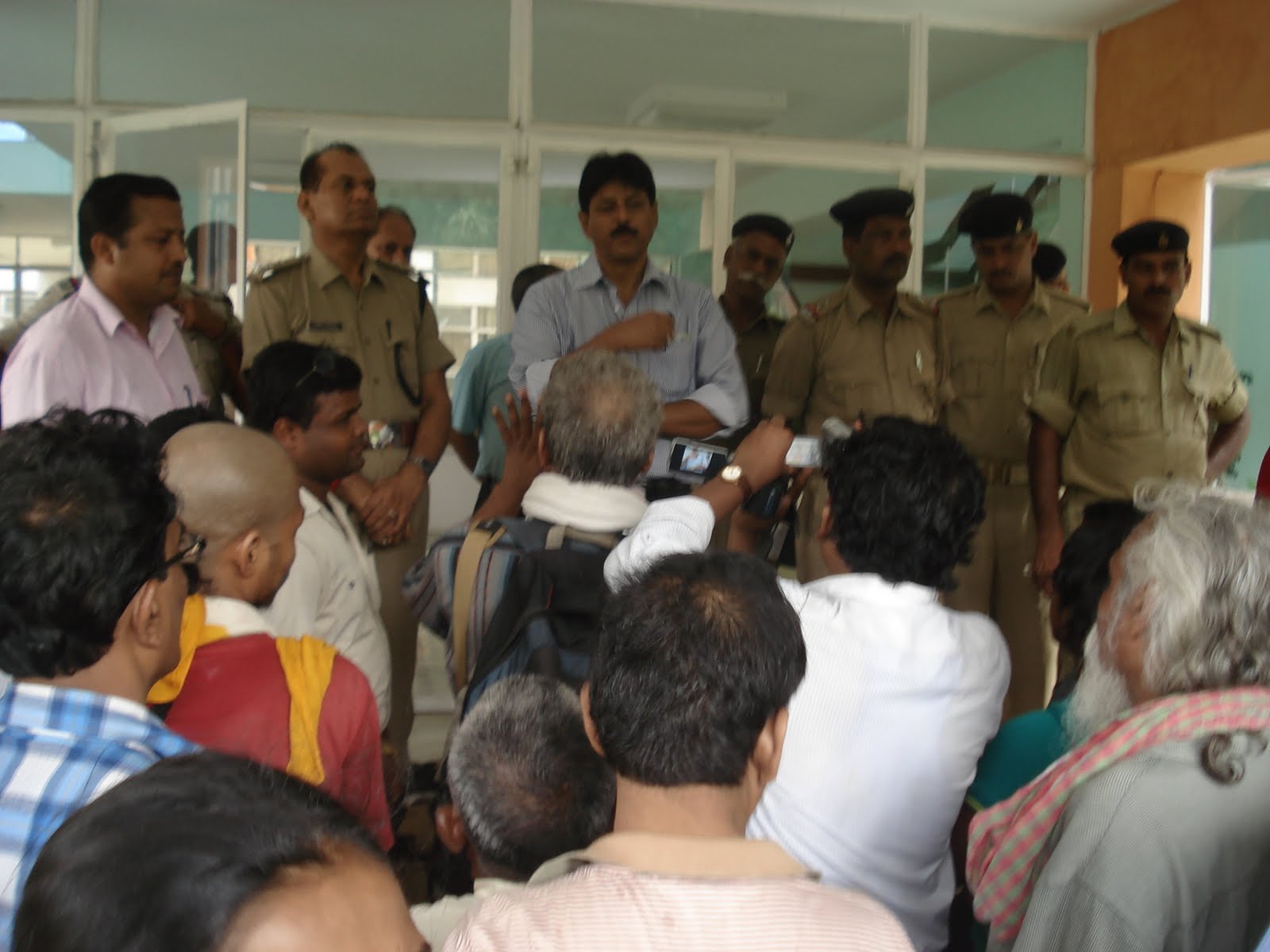
Once again the UCIL shamelessly used the poor villagers who are dependent on mines for livelihood as their defence against those who are opposed to the mining project, and are well aware of the falsities of EIA/EMP report. Several persons paid by the company to obstruct the hearing cordoned off the premises of the public hearing and several people were not allowed to enter in particular those who sought to question the EIA/EMP report.

The police and the local administration blatantly refused to intervene and maintain a congenial environment for the public hearing. The police and the local administration resorted to making callous remarks such as “we cannot do anything, the people of the village don’t want you to go inside”. This is absolutely shocking. Even several media persons were prevented from entering the premises, this is the first instance of hte media being denied access. Journalists from the Hindu, Dopwn to Earth, Statesman, even the local media were not allowed. . Drunk men were not allowing vehicles to get to the spot of the public hearing. Hence it is absolutely clear that the public hearing was a complete farce and the role of the State Pollution Control Board, local police and administration is highly questionable. An immediate inquiry must be conducted on these complaints, and the various public authorities must be held responsible for the abdication of their responsibility and the illegal collusion with the UCIL. The public hearing held must be cancelled and a fresh public hearing be organized.


As far as the EIA report is concerned it is a complete farce and does not qualify even the minimum technical/scientific/legal standards. The data analysed in the report is manipulated. Some highly questionable aspects of the EIA report are: 1. The EIA report was made three years back 2. The data analysed in the report was collected over a period of three moths 3.The report uses German standards, without any explanation.
Further the State Pollution Control Board, and the local administration did not fulfill any of its duties of circulating the draft EIA report/summary report, the report was not even given to the panchayat mukhiya. The villagers were not even informed of the date of the hearing. The newspaper report stated that the public hearing would be held in the Bhatin football ground, however it was finally held at the Bhatin UCIL Colony. It can be guaranteed that no person in any of the villages affected by the mining project is aware of what the EIA report states. Ironically the SDM, who was on the panel that chaired the public hearing has stated on record before media persons that he himself has not read the EIA report.
The so called success of today's public hearing and the manipulated public support is likely to be used by the government as an example to site before the people of Meghalaya, Karnataka, and other parts of the country where uranium mining projects are pending. This is an attempt to silence peoples movements, and question their credibility. We therefore demand an end to this farce and we demand a fare and impartial public hearing.
26 May 2011
Ghanshyam Biruly (JOAR, Jaduguda)
Dasmath Murmu (Majhi Pargana Mahal)
Shishir Tudu (Jharkhandi Organization Against Nuclear Reactor, Chapdi)
Anup Agarwal, Rajni Soren, (Human Rights Law Network, Jharkhand)
Aparna Ghosh (Lok Jan, Kolkata)
Indranil Bate (Parmanu Vidhut Virodhi Prachar Prasar Andolan, Kolkata)
Baichition, Kolkata
Mita (Shatabadi, Kolkata)
Supremely fallible
The present ruling by the Supreme Court of India on the Bhopal Gas Disaster questions the finality of its own orders.
On 11 May, the Supreme Court of India dismissed the curative petition filed by the Central Bureau of Investigation (CBI) to recall the 1996 judgment of the Court quashing the charge of ‘culpable homicide not amounting to murder’ and declaring that the lesser offence of ‘death by rash and negligent act’ was made out with regard to the 1984 Bhopal Gas Leak. While doing so, it also observed that the Chief Judicial Magistrate (CJM) in Bhopal, the capital of the state of Madhya Pradesh, was mistaken in thinking that the 1996 Supreme Court judgment, which quashed the ‘culpable homicide’ charge, was binding and therefore, forbade him to alter the charge himself in exercise of powers under the Criminal Procedure Code (CrPC).
At the time of the gas leak on the night of 2-3 December 1984, Keshub Mahindra headed Union Carbide Corporation (UCC). The noxious fumes killed thousands and maimed more, with continuing ill-effects to this day. However, convicting Mahindra and others accountable for India’s worst mass disaster took 26 years. In June 2010, the Chief Judicial Magistrate finally sentenced the convicted, but for only two years in prison. It was the maximum sentence imposable under Section 304 A of the Indian Penal Code (IPC) for ‘death by rash and negligent act’. The minor nature of the offence, under which the accused were tried and convicted, meant that bail was immediately granted. Today, while Mr Mahindra remains the comfortable Chairman of Mahindra & Mahindra, India’s largest SUV manufacturer, the survivors in Bhopal lead a pitiable existence in pain, with paltry compensation and inadequate medical facilities. Over the years, increasingly more persons have died from effects of the leaked Methyl Isocyanate (MIC) gas.
The verdict, unsurprisingly, led to mass protests by the survivors. The central government, which had not heeded pleas for diligent prosecution until then, succumbed to public pressure. In August 2010, fourteen years later, the Central Bureau of Investigation (CBI) filed a curative petition assailing the 1996 dilution of the charges from the ‘culpable homicide not amounting to murder’ to ‘death by rash and negligent act’ by the Supreme Court. The CBI argued that there was adequate evidence constituting the former offence and that the Court committed a serious error in quashing the charge of culpable homicide under Section 304 Part II of the IPC. The CBI also concluded that the Chief Judicial Magistrate (CJM), Bhopal, had enough material to commit the case to a Sessions Court for trial for culpable homicide. However, the categorical finding recorded in the Supreme Court’s binding 1996 judgment barred the CJM from exercising his power to alter the charge.
Déjà vu
The curative petition filed under public pressure invokes a feeling of déjà vu. Back in 1984 the tremendous public outrage and protest after the disaster forced a reluctant government to lodge a First Information Report and initiate criminal proceedings. The predominant attitude of the government so far seems to have been of concern that it should not ruffle the feathers of multinationals. The arrest of Warren Anderson, then Chairman of Union Carbide Corporation (UCC), on 7 December 1984, consisted of being comfortably ensconced in the company guest-house and released on a bond of INR 25,000 the same day. Even conditions such as remaining in the city and depositing the passport in court, routinely imposed while granting bail were not sought by the prosecution in a case where the likelihood of the accused fleeing the jurisdiction of the court were high. Instead, the State government well protected Anderson from the media glare and flew him safely to New Delhi in an official aircraft. Since then, the farce of an ‘untraceable’ disappearance of a well-known individual such as Anderson is still in act.
In 1985, the Government of India (GOI) enacted the Bhopal Gas Tragedy (Processing of Claims) Act arrogating to itself the exclusive rights to represent and act on behalf of the survivors/victims of the Gas Leak disaster. Thereafter, the GOI proceeded to enter a settlement for a completely inadequate and paltry sum of USD 470 million with UCC. In 1989, the Supreme Court endorsed this proceeding, citing ostensibly, on grounds and in view of ‘the enormity of human suffering occasioned by the Bhopal Gas Leak Disaster and the pressing urgency to provide immediate and substantial relief to [its] victims’. Subsequently, the Claims Tribunals awarded measly sums as compensation to the survivors and the beneficiaries of the victims while the bulk of the money remained intact until 2004. Even then, a few hundred dollars was distributed to over 500,000 claimants.
As part of the settlement with UCC, the GOI, shockingly, agreed to drop all criminal charges against the corporation. Even though serious charges like culpable homicide are not compoundable under Indian law and cannot be quashed by an agreement between the parties, the Supreme Court affixed its seal of approval on the Settlement. Strident protests and review petitions resulted in the Indian Supreme Court setting aside the part of the ’89 Settlement quashing the criminal charges with regard to the Gas Tragedy.
In the criminal proceedings the CJM took the view that the offence of culpable homicide not amounting to murder was made out and committed the case to the Sessions Court. Subsequently, on 8 April 1993, the ninth Additional Sessions Judge of Bhopal framed charges under Section 304 part II of the IPC. Although in 1995 the Madhya Pradesh High Court dismissed the appeal of the accused, the Supreme Court in 1996 reduced the charges of ‘culpable homicide’ to a case of ‘death by rash and negligent act’, usually used for traffic accidents. Then in 1997, the Supreme Court dismissed review petitions filed by organizations of survivors. Amidst this background the CBI had submitted its curative petition.
Instead of dismissing the petition outright on the ground that it came 14 years too late, the Supreme Court chose to entertain the petition, raising hopes of justice among the survivors. Eventually, on 11 May, it did dismiss the curative petition citing two reasons: The CBI did not question the 1996 judgment for 14 long years, and it did not support the application and the review petition, asking to raise the level of the charge to section 304 Part II IPC, by the survivors.
Catch 22
Remarkably, the Supreme Court also clarified that the 1996 judgment was not binding on the CJM, suggesting that the Magistrate had misread the Judgment. The Court stated that the 1996 ruling was based on materials at the stage of the ‘framing of charge’; if additional evidence came on record, the Magistrate was free to exercise power under the Criminal Procedure Code (CrPC) and proceed to alter the charge. It is important to keep in mind that the framing of charge takes place after the charge sheet has been filed in court. The charge sheet is the culmination of investigation and contains all the evidence collected against the accused. It is difficult to follow the Catch 22 reasoning offered by the Court. The Magistrate did exercise powers under CrPC when in 1993 it committed the case to the Sessions Court under Section 304 Part II IPC. The 1996 Judgment struck down this charge and held that only the lesser one under Section 304 A of the IPC was applicable. The 11 May 2011 judgment of the Supreme Court offers the fig leaf of the material present at the stage the 1996 judgment, as the justification for altering the charge to death by rash and negligent act.
During the 1996 judgment, one of the materials presented at the stage of the ruling was the 1982 report by a team of UCC experts from the United States. The report entitled ‘Operational Safety Survey Report’, published after an examination of the Bhopal plant, clearly indicated the potential for the release of toxic materials in the phosgene/MIC Unit and storage areas either due to equipment failure, operating malfunctions or maintenance problems. The report also recorded the potential for contamination, overpressure, or overfilling of the Sevin MIC feed tank. In its list of potential sources of leakage, it had even included the contamination of the feed tank with material from the vent gas scrubber – the source of the Bhopal Gas Disaster. The deficiencies pointed out as early as 1982 were not corrected leading to the 1984 Gas Leak.
Post-disaster, a team headed by Dr S Vardarajan, then Director General of Council for Scientific and Industrial Research (CSIR), studied the scientific and technical aspects of the plant and submitted a report to GOI. Among the various defects, the report lists, in particular, problems with the storage tank, and instrumentation and control system. It points out that the volatile and toxic MIC was not kept at the required temperature or pressure. Neither was a high-pressure alarm system installed to alert the operators about the pressure build-up. In addition, large quantities of MIC were needlessly stored for long periods of time; precautionary steps in design and construction were insufficient; warning systems were inadequate; and quick effective disposal of material exhibiting instability was lacking – all of which led to the leakage.
Evidence also suggested that the plant was making loss and therefore, was to be dismantled and shifted out of India. The owners and management were no longer interested in having it function safely. The offence of ‘culpable homicide’ requires the knowledge – but not the intention – that the act is likely to cause death. At the stage of the framing of charge, the court does not have to examine the evidence in detail; it merely has to see whether a prima facie case can be made. At the time of the 1996 ruling by the Court, the report submitted by the experts from the United States and the findings from the Vardarajan Committee clearly suggest that the running of the plant in the stage it was, was likely to cause death. The 11 May order refused to acknowledge any error on the part of the Court in 1996.
The CBI has declared that it will seek early hearing of the appeals. Unfortunately, the fact that the trial court verdict came after 26 years does not inspire much confidence in the processing of the case at the appellate stages. The court saga of the Bhopal Gas Disaster highlights the inadequacies of the Indian legal system in handling matters of liability, compensation and punishment at times of industrial disasters. This has implications for the areas of civil and criminal liability in the controversial Civil Nuclear Liability Bill. Governments and courts need to prioritize lives and safety of their citizens, rather than being unduly concerned about displeasing multi-national corporations and foreign investors. They can start by admitting their error in judgment.
Rakesh Shukla practices law at the Supreme Court of India, New Delhi
http://www.himalmag.com/component/content/article/4463-supremely-fallible.html
On 11 May, the Supreme Court of India dismissed the curative petition filed by the Central Bureau of Investigation (CBI) to recall the 1996 judgment of the Court quashing the charge of ‘culpable homicide not amounting to murder’ and declaring that the lesser offence of ‘death by rash and negligent act’ was made out with regard to the 1984 Bhopal Gas Leak. While doing so, it also observed that the Chief Judicial Magistrate (CJM) in Bhopal, the capital of the state of Madhya Pradesh, was mistaken in thinking that the 1996 Supreme Court judgment, which quashed the ‘culpable homicide’ charge, was binding and therefore, forbade him to alter the charge himself in exercise of powers under the Criminal Procedure Code (CrPC).
At the time of the gas leak on the night of 2-3 December 1984, Keshub Mahindra headed Union Carbide Corporation (UCC). The noxious fumes killed thousands and maimed more, with continuing ill-effects to this day. However, convicting Mahindra and others accountable for India’s worst mass disaster took 26 years. In June 2010, the Chief Judicial Magistrate finally sentenced the convicted, but for only two years in prison. It was the maximum sentence imposable under Section 304 A of the Indian Penal Code (IPC) for ‘death by rash and negligent act’. The minor nature of the offence, under which the accused were tried and convicted, meant that bail was immediately granted. Today, while Mr Mahindra remains the comfortable Chairman of Mahindra & Mahindra, India’s largest SUV manufacturer, the survivors in Bhopal lead a pitiable existence in pain, with paltry compensation and inadequate medical facilities. Over the years, increasingly more persons have died from effects of the leaked Methyl Isocyanate (MIC) gas.
The verdict, unsurprisingly, led to mass protests by the survivors. The central government, which had not heeded pleas for diligent prosecution until then, succumbed to public pressure. In August 2010, fourteen years later, the Central Bureau of Investigation (CBI) filed a curative petition assailing the 1996 dilution of the charges from the ‘culpable homicide not amounting to murder’ to ‘death by rash and negligent act’ by the Supreme Court. The CBI argued that there was adequate evidence constituting the former offence and that the Court committed a serious error in quashing the charge of culpable homicide under Section 304 Part II of the IPC. The CBI also concluded that the Chief Judicial Magistrate (CJM), Bhopal, had enough material to commit the case to a Sessions Court for trial for culpable homicide. However, the categorical finding recorded in the Supreme Court’s binding 1996 judgment barred the CJM from exercising his power to alter the charge.
Déjà vu
The curative petition filed under public pressure invokes a feeling of déjà vu. Back in 1984 the tremendous public outrage and protest after the disaster forced a reluctant government to lodge a First Information Report and initiate criminal proceedings. The predominant attitude of the government so far seems to have been of concern that it should not ruffle the feathers of multinationals. The arrest of Warren Anderson, then Chairman of Union Carbide Corporation (UCC), on 7 December 1984, consisted of being comfortably ensconced in the company guest-house and released on a bond of INR 25,000 the same day. Even conditions such as remaining in the city and depositing the passport in court, routinely imposed while granting bail were not sought by the prosecution in a case where the likelihood of the accused fleeing the jurisdiction of the court were high. Instead, the State government well protected Anderson from the media glare and flew him safely to New Delhi in an official aircraft. Since then, the farce of an ‘untraceable’ disappearance of a well-known individual such as Anderson is still in act.
In 1985, the Government of India (GOI) enacted the Bhopal Gas Tragedy (Processing of Claims) Act arrogating to itself the exclusive rights to represent and act on behalf of the survivors/victims of the Gas Leak disaster. Thereafter, the GOI proceeded to enter a settlement for a completely inadequate and paltry sum of USD 470 million with UCC. In 1989, the Supreme Court endorsed this proceeding, citing ostensibly, on grounds and in view of ‘the enormity of human suffering occasioned by the Bhopal Gas Leak Disaster and the pressing urgency to provide immediate and substantial relief to [its] victims’. Subsequently, the Claims Tribunals awarded measly sums as compensation to the survivors and the beneficiaries of the victims while the bulk of the money remained intact until 2004. Even then, a few hundred dollars was distributed to over 500,000 claimants.
As part of the settlement with UCC, the GOI, shockingly, agreed to drop all criminal charges against the corporation. Even though serious charges like culpable homicide are not compoundable under Indian law and cannot be quashed by an agreement between the parties, the Supreme Court affixed its seal of approval on the Settlement. Strident protests and review petitions resulted in the Indian Supreme Court setting aside the part of the ’89 Settlement quashing the criminal charges with regard to the Gas Tragedy.
In the criminal proceedings the CJM took the view that the offence of culpable homicide not amounting to murder was made out and committed the case to the Sessions Court. Subsequently, on 8 April 1993, the ninth Additional Sessions Judge of Bhopal framed charges under Section 304 part II of the IPC. Although in 1995 the Madhya Pradesh High Court dismissed the appeal of the accused, the Supreme Court in 1996 reduced the charges of ‘culpable homicide’ to a case of ‘death by rash and negligent act’, usually used for traffic accidents. Then in 1997, the Supreme Court dismissed review petitions filed by organizations of survivors. Amidst this background the CBI had submitted its curative petition.
Instead of dismissing the petition outright on the ground that it came 14 years too late, the Supreme Court chose to entertain the petition, raising hopes of justice among the survivors. Eventually, on 11 May, it did dismiss the curative petition citing two reasons: The CBI did not question the 1996 judgment for 14 long years, and it did not support the application and the review petition, asking to raise the level of the charge to section 304 Part II IPC, by the survivors.
Catch 22
Remarkably, the Supreme Court also clarified that the 1996 judgment was not binding on the CJM, suggesting that the Magistrate had misread the Judgment. The Court stated that the 1996 ruling was based on materials at the stage of the ‘framing of charge’; if additional evidence came on record, the Magistrate was free to exercise power under the Criminal Procedure Code (CrPC) and proceed to alter the charge. It is important to keep in mind that the framing of charge takes place after the charge sheet has been filed in court. The charge sheet is the culmination of investigation and contains all the evidence collected against the accused. It is difficult to follow the Catch 22 reasoning offered by the Court. The Magistrate did exercise powers under CrPC when in 1993 it committed the case to the Sessions Court under Section 304 Part II IPC. The 1996 Judgment struck down this charge and held that only the lesser one under Section 304 A of the IPC was applicable. The 11 May 2011 judgment of the Supreme Court offers the fig leaf of the material present at the stage the 1996 judgment, as the justification for altering the charge to death by rash and negligent act.
During the 1996 judgment, one of the materials presented at the stage of the ruling was the 1982 report by a team of UCC experts from the United States. The report entitled ‘Operational Safety Survey Report’, published after an examination of the Bhopal plant, clearly indicated the potential for the release of toxic materials in the phosgene/MIC Unit and storage areas either due to equipment failure, operating malfunctions or maintenance problems. The report also recorded the potential for contamination, overpressure, or overfilling of the Sevin MIC feed tank. In its list of potential sources of leakage, it had even included the contamination of the feed tank with material from the vent gas scrubber – the source of the Bhopal Gas Disaster. The deficiencies pointed out as early as 1982 were not corrected leading to the 1984 Gas Leak.
Post-disaster, a team headed by Dr S Vardarajan, then Director General of Council for Scientific and Industrial Research (CSIR), studied the scientific and technical aspects of the plant and submitted a report to GOI. Among the various defects, the report lists, in particular, problems with the storage tank, and instrumentation and control system. It points out that the volatile and toxic MIC was not kept at the required temperature or pressure. Neither was a high-pressure alarm system installed to alert the operators about the pressure build-up. In addition, large quantities of MIC were needlessly stored for long periods of time; precautionary steps in design and construction were insufficient; warning systems were inadequate; and quick effective disposal of material exhibiting instability was lacking – all of which led to the leakage.
Evidence also suggested that the plant was making loss and therefore, was to be dismantled and shifted out of India. The owners and management were no longer interested in having it function safely. The offence of ‘culpable homicide’ requires the knowledge – but not the intention – that the act is likely to cause death. At the stage of the framing of charge, the court does not have to examine the evidence in detail; it merely has to see whether a prima facie case can be made. At the time of the 1996 ruling by the Court, the report submitted by the experts from the United States and the findings from the Vardarajan Committee clearly suggest that the running of the plant in the stage it was, was likely to cause death. The 11 May order refused to acknowledge any error on the part of the Court in 1996.
The CBI has declared that it will seek early hearing of the appeals. Unfortunately, the fact that the trial court verdict came after 26 years does not inspire much confidence in the processing of the case at the appellate stages. The court saga of the Bhopal Gas Disaster highlights the inadequacies of the Indian legal system in handling matters of liability, compensation and punishment at times of industrial disasters. This has implications for the areas of civil and criminal liability in the controversial Civil Nuclear Liability Bill. Governments and courts need to prioritize lives and safety of their citizens, rather than being unduly concerned about displeasing multi-national corporations and foreign investors. They can start by admitting their error in judgment.
Rakesh Shukla practices law at the Supreme Court of India, New Delhi
http://www.himalmag.com/component/content/article/4463-supremely-fallible.html
China's Three Gorges Dam: An Environmental Catastrophe
The government official in charge of the project admitted that Three Gorges held "hidden dangers" that could breed disaster. "We can't lower our guard," Wang Xiaofeng, who oversees the project for China's State Council, said during a meeting of Chinese scientists and government reps in Chongqing, an independent municipality of around 31 million abutting the dam. "We simply cannot sacrifice the environment in exchange for temporary economic gain."
Full article at http://www.scientificamerican.com/article.cfm?id=chinas-three-gorges-dam-disaster
Full article at http://www.scientificamerican.com/article.cfm?id=chinas-three-gorges-dam-disaster
Swiss to phase out nuclear power by 2034
Written By krishna on Wednesday, May 25, 2011 | 9:46 PM
The Swiss cabinet will gradually decommission all Switzerland’s nuclear power plants by 2034.
Energy Minister Doris Leuthard said the country’s five nuclear power stations would not be replaced when they reach the end of their lifespan.
The government’s recommendation on Wednesday will now be discussed by parliament from June 8 and a final decision is expected in the middle of next month.
Leuthard said the government was going on a lifespan of 50 years, meaning the first of five power stations would have to close in 2019 and the last in 2034.
Other options had included maintaining the status quo and replacing the three oldest plants or abandoning entirely and rapidly the use of nuclear energy.
The government’s decision on the future of nuclear power comes days after an estimated 20,000 people participated in the biggest anti-nuclear protest in Switzerland for 25 years.
On Sunday, anti-nuclear protesters, chanting and waving placards, marched in two groups to the site of Beznau, Switzerland’s oldest nuclear power plant which is located in canton Aargau.
The protesters called on the government to immediately shut down the Mühleberg and Beznau power stations, the two oldest of the country’s five nuclear power plants.
FukushimaSome 40 per cent of Switzerland’s energy needs are supplied by the country’s five nuclear power plants, which generate some 26 billion kilowatt hours a year.
In the wake of the crisis at the Fukushima nuclear power plant in Japan, the Swiss government suspended all processes relating to the building of new power plants and ordered a review of options for the country’s energy mix in the future.
Source: swissinfo.ch and agencies
Energy Minister Doris Leuthard said the country’s five nuclear power stations would not be replaced when they reach the end of their lifespan.
The government’s recommendation on Wednesday will now be discussed by parliament from June 8 and a final decision is expected in the middle of next month.
Leuthard said the government was going on a lifespan of 50 years, meaning the first of five power stations would have to close in 2019 and the last in 2034.
Other options had included maintaining the status quo and replacing the three oldest plants or abandoning entirely and rapidly the use of nuclear energy.
The government’s decision on the future of nuclear power comes days after an estimated 20,000 people participated in the biggest anti-nuclear protest in Switzerland for 25 years.
On Sunday, anti-nuclear protesters, chanting and waving placards, marched in two groups to the site of Beznau, Switzerland’s oldest nuclear power plant which is located in canton Aargau.
The protesters called on the government to immediately shut down the Mühleberg and Beznau power stations, the two oldest of the country’s five nuclear power plants.
FukushimaSome 40 per cent of Switzerland’s energy needs are supplied by the country’s five nuclear power plants, which generate some 26 billion kilowatt hours a year.
In the wake of the crisis at the Fukushima nuclear power plant in Japan, the Swiss government suspended all processes relating to the building of new power plants and ordered a review of options for the country’s energy mix in the future.
Source: swissinfo.ch and agencies
Delhi High Court Apprised of Legal Violations by Jindal’s Okhla Waste Incinerator
Written By mediavigil on Tuesday, May 24, 2011 | 7:03 AM
Press Release
High Court Apprised of Legal Violations by Jindal’s Okhla Waste Incinerator
Asian Development Bank (ADB) withdrawal of funds under its Asia Pacific Carbon Fund merits attention
New Delhi/ May 24: In the Delhi High Court, Arvind Nigam, counsel in the matter of Sukhdev Vihar Residents Welfare Association and Others presented on May 23, 2011 a list of legal violations by respondents in constructing the waste-to-energy plant incinerators at Okhla. The plant based on hazardous incinerator technology is being set up by Timarpur-Okhla Municipal Solid Waste Management Company Pvt. Ltd (TOWMCL), 100 % subsidiary of O P Jindal Group’s Jindal ITF Urban Infrastructure Ltd.
ToxicsWatch Alliance (TWA) has been campaigning against this incinerator technology based plant from the time TOWMCL was a subsidiary of Infrastructure Leasing & Financial Services Ltd. TWA has pointed out from 2005 that the plant is based on Ministry of Science & Technology's Technology Information, Forecasting and Assessment Council (TIFAC) patented technology for incineration of Refuse Derived Fuel (RDF) made of municipal solid waste. The project was due to start on August 2006 and get completed in April 2008.
It was in March 2009 that Sukhdev Vihar Residents filed the Writ Petition (Civil) which was initially dismissed on 12th August, 2009 because of misrepresentation of facts by A S Chandiok Additional Solicitor General. The court later found that it was misled earlier which had led to it dismissing the petition. The Petition was restored and the bench headed by the Chief Justice, Delhi High Court in an order dated 15th January, 2010 observed, “that the project in question” and “the location of the pilot project in Delhi was neither recommended by the Expert Committee nor approved by the Supreme Court.” In a letter to Lt Governor, Delhi and Union Ministry of New and Renewable Energy (MNRE), TWA pointed such acts of omission and commission to promote the waste to energy incinerator plant must be stopped.
Some 21 years after the Municipal Corporation of Delhi (MCD) shut down its waste-to-energy power plant at Timarpur, efforts are on to revive it just to benefit from clean development mechanism under the Kyoto Protocol to earn carbon credits. Its real purpose is not waste management and the Union Ministry of New and Renewable Energy underlines that waste management does not fall under their jurisdiction; energy generation is their driving concern.
What Delhi Government chooses to remain oblivious of is that started in 1990, the RDF plant at Timarpur was based on a technology imported from Danish firm Volund Milijotecknik. The plant was designed to incinerate 300 tonnes of municipal solid waste every day and generate 3.75 mw of power. Later it was realized that the Delhi waste didn’t have enough calorific value and the plant was shut after 21 days of operation. MCD would have us believe that now, the calorific value of the waste has increased over the years and the plant is bound to work this time.
This is technology is based on incineration, which will lead to serious air pollution including green house gases as per Annexure A of Kyoto Protocol; it also disqualifies the project for CDM benefits. The project is misleading for it does not reveal about the health hazards from emissions of Persistent Organic Pollutants (POPs) like Dioxins and Furan that are covered under Stockholm Convention on POPs.
The written statement was submitted to the High Court on 23rd May when respondents including Jindal Ecopolis, Govt of National Capital Region (NCR) and Delhi Pollution Control Committee (DPCC) asked for a deferment of hearing to the case which had come up for final disposal. Chief Justice Deepak Misra noted the seniority of counsel and allowed the written submission, copies of which were given to respondents and the fact recorded. Chief Justice Misra then posted the next hearing for June 1, 2011.
Violations include that of Supreme Court rulings in 2005 and 2007 restricting plants using waste-to-energy (WTE) technology to pilot projects. What is coming up at Okhla, it was submitted, was a full-scale industry burning 2010 tonnes of municipal solid waste to produce 16 megawatts of electricity. TWA had repeatedly pointed out these violations in its letters to MNRE since 2005.
Counsel for the residents pointed out land use violations. It was submitted that the site was earmarked for green activity, such as district parks, and for educational and research institutions as per the Zonal Development Plan of Zone F (South Delhi-1) of 1998. The use of the said land continued as above until substituted by Zonal Plan of Jun 2010 pursuant to Master Plan 2021.
However, various clearances were granted by DPCC, Ministry of Environment and Forests (MoEF), Municipal Corporation Delhi, Govt of NCR when amended Zonal Plan 2010 was not in force and are therefore in violation of the law and also of PIL filed in 2009.
As per the directions of the Supreme Court heavy and polluting industries in Delhi, including Okhla, were moved out. Also since 1970 a number of residential colonies – Sukhdev Vihar, Jasola Vihar and Sarita Vihar – containing flats as well as plotted colonies – Sukhdev vihar, Ishwar Nagar etc and urban villages Masihgarh, Jasola, Julaina, Gaffar Manzil, Noor Nagar, Haji colony and Harikesh Nagar were approved thereby changing the profile of Okhla, which now has a10 lakh population.
However, now an attempt is being made to again change land use. About 13.5 acres of land was transferred to Jindal Ecopolis without prior permission from the Delhi Development Authority, violating DDA rules and procedures.
The plant violates the Municipal Solid Waste (Management and Handling) Rules 2000 which require any incinerator to be integral to an existing landfill site, whereas the nearest landfill is located at Tughlakabad about 12 kms away from Jindal’s WTE.
While the Municipal waste Handling Rules 2000 require technology used in a WTE to be approved by the Central Pollution Control Board (CPCB) no such approval has been obtained by respondents. CPCB rules also caution local bodies against adopting “expensive technologies of power generation, fuel pelletisation, incineration etc” until proven under Indian conditions and certified by the Government of India.
Under procedural violations the residents have submitted that there was no worthwhile public hearing, the submission said. This has been acknowledged by the Minister of Environment of Forests (MoEF). Further the State has a duty to disclose fully the size, the technology to be used, likely hazards and the full impact of the project to the public.
Environmental clearance for the project was given originally to the Industrial Leasing and Financing Services (IL&FS), but the company auctioned it to Jindal Ecopolis which failed to approach the MoEF as required by law. This too has been acknowleged by MoEF Minister, Jairam Ramesh and he has written about this in a complaint to the chief minister of Delhi. There is overwhelming evidence that plants of this type produce toxic gases, residues and respirable particles, the Okhla WTE is being set up just 100 metres away from the nearest established residences.
Counsel also submitted that operation of the plant would result in 300 truck-loads of municipal waste or flyash daily moving to and from the plant would seriously disrupt traffic on Mathura Road and Ring Road.
ToxicsWatch Alliance (TWA) has been raising the issue of controversial "waste-to-energy (WTE)" incinerators that are proposed in Delhi since 2005. These WTE projects in Delhi are meant for 62.2 MW of power at Okhla, Timarpur, Ghazipur and Narela-Bawana has been proposed. The plants at Okhla and Timarpur will generate 16 MW energy and Gazipur will generate 10 MW. The Narela-Bawana plant will generate 36 MW was mentioned in MCD's Budget of December 2010.
February 2011, the Asian Development Bank (ADB) withdrew funding to the plant under its Asia Pacific Carbon Fund, but the Timarpur Okhla Waste Management Company claims it will be able to reduce carbon emissions by 262,791 tonnes per year for the next ten years, and has filed for carbon credits. TWA was in correspondence with ADB and it had revealed ADB’s decision to media.
For Details: Gopal Krishna, ToxicsWatch Alliance, Mb: 9818089660
E-mail: krishna2777@gmail.com, toxicswatchalliance@gmail.com
Prof H B Singh, formerly with Chemistry Department, Delhi University, General Secretary, Jasola Residents Welfare Association Mb: 9899818550, E-mail: jasolarwa@hotmail.com
Vivek Dhupa, President, New Friends Colony RWA ( 9313746051)
Arif Khan, General Secretary, Haji Colony RWA . Mobile: 9891519844
Anant Trivedi, RWA member, Ishwar Nagar.
Vanya Joshi, Coordinator, Okhla Anti-Incineration Committee - 9873980694
Asha Arora, Co-coordinator, Okhla Anti-incineration Committee. Mobile-9711408421 .
Padma Agarwal Gen. Secy RWA Jasola Vihar - 9312212419
Praveen Shrivastava, RWA, Sarita Vihar - 9871039616
S. Khurana, Vice President, Sukhdev Vihar RWA – 9810218150
Web: toxicswatch.blogspot.com
Facebook page Okhla ka Ghosla
http://www.facebook.com/home.php#!/ghoslaokhla
High Court Apprised of Legal Violations by Jindal’s Okhla Waste Incinerator
Asian Development Bank (ADB) withdrawal of funds under its Asia Pacific Carbon Fund merits attention
New Delhi/ May 24: In the Delhi High Court, Arvind Nigam, counsel in the matter of Sukhdev Vihar Residents Welfare Association and Others presented on May 23, 2011 a list of legal violations by respondents in constructing the waste-to-energy plant incinerators at Okhla. The plant based on hazardous incinerator technology is being set up by Timarpur-Okhla Municipal Solid Waste Management Company Pvt. Ltd (TOWMCL), 100 % subsidiary of O P Jindal Group’s Jindal ITF Urban Infrastructure Ltd.
ToxicsWatch Alliance (TWA) has been campaigning against this incinerator technology based plant from the time TOWMCL was a subsidiary of Infrastructure Leasing & Financial Services Ltd. TWA has pointed out from 2005 that the plant is based on Ministry of Science & Technology's Technology Information, Forecasting and Assessment Council (TIFAC) patented technology for incineration of Refuse Derived Fuel (RDF) made of municipal solid waste. The project was due to start on August 2006 and get completed in April 2008.
It was in March 2009 that Sukhdev Vihar Residents filed the Writ Petition (Civil) which was initially dismissed on 12th August, 2009 because of misrepresentation of facts by A S Chandiok Additional Solicitor General. The court later found that it was misled earlier which had led to it dismissing the petition. The Petition was restored and the bench headed by the Chief Justice, Delhi High Court in an order dated 15th January, 2010 observed, “that the project in question” and “the location of the pilot project in Delhi was neither recommended by the Expert Committee nor approved by the Supreme Court.” In a letter to Lt Governor, Delhi and Union Ministry of New and Renewable Energy (MNRE), TWA pointed such acts of omission and commission to promote the waste to energy incinerator plant must be stopped.
Some 21 years after the Municipal Corporation of Delhi (MCD) shut down its waste-to-energy power plant at Timarpur, efforts are on to revive it just to benefit from clean development mechanism under the Kyoto Protocol to earn carbon credits. Its real purpose is not waste management and the Union Ministry of New and Renewable Energy underlines that waste management does not fall under their jurisdiction; energy generation is their driving concern.
What Delhi Government chooses to remain oblivious of is that started in 1990, the RDF plant at Timarpur was based on a technology imported from Danish firm Volund Milijotecknik. The plant was designed to incinerate 300 tonnes of municipal solid waste every day and generate 3.75 mw of power. Later it was realized that the Delhi waste didn’t have enough calorific value and the plant was shut after 21 days of operation. MCD would have us believe that now, the calorific value of the waste has increased over the years and the plant is bound to work this time.
This is technology is based on incineration, which will lead to serious air pollution including green house gases as per Annexure A of Kyoto Protocol; it also disqualifies the project for CDM benefits. The project is misleading for it does not reveal about the health hazards from emissions of Persistent Organic Pollutants (POPs) like Dioxins and Furan that are covered under Stockholm Convention on POPs.
The written statement was submitted to the High Court on 23rd May when respondents including Jindal Ecopolis, Govt of National Capital Region (NCR) and Delhi Pollution Control Committee (DPCC) asked for a deferment of hearing to the case which had come up for final disposal. Chief Justice Deepak Misra noted the seniority of counsel and allowed the written submission, copies of which were given to respondents and the fact recorded. Chief Justice Misra then posted the next hearing for June 1, 2011.
Violations include that of Supreme Court rulings in 2005 and 2007 restricting plants using waste-to-energy (WTE) technology to pilot projects. What is coming up at Okhla, it was submitted, was a full-scale industry burning 2010 tonnes of municipal solid waste to produce 16 megawatts of electricity. TWA had repeatedly pointed out these violations in its letters to MNRE since 2005.
Counsel for the residents pointed out land use violations. It was submitted that the site was earmarked for green activity, such as district parks, and for educational and research institutions as per the Zonal Development Plan of Zone F (South Delhi-1) of 1998. The use of the said land continued as above until substituted by Zonal Plan of Jun 2010 pursuant to Master Plan 2021.
However, various clearances were granted by DPCC, Ministry of Environment and Forests (MoEF), Municipal Corporation Delhi, Govt of NCR when amended Zonal Plan 2010 was not in force and are therefore in violation of the law and also of PIL filed in 2009.
As per the directions of the Supreme Court heavy and polluting industries in Delhi, including Okhla, were moved out. Also since 1970 a number of residential colonies – Sukhdev Vihar, Jasola Vihar and Sarita Vihar – containing flats as well as plotted colonies – Sukhdev vihar, Ishwar Nagar etc and urban villages Masihgarh, Jasola, Julaina, Gaffar Manzil, Noor Nagar, Haji colony and Harikesh Nagar were approved thereby changing the profile of Okhla, which now has a10 lakh population.
However, now an attempt is being made to again change land use. About 13.5 acres of land was transferred to Jindal Ecopolis without prior permission from the Delhi Development Authority, violating DDA rules and procedures.
The plant violates the Municipal Solid Waste (Management and Handling) Rules 2000 which require any incinerator to be integral to an existing landfill site, whereas the nearest landfill is located at Tughlakabad about 12 kms away from Jindal’s WTE.
While the Municipal waste Handling Rules 2000 require technology used in a WTE to be approved by the Central Pollution Control Board (CPCB) no such approval has been obtained by respondents. CPCB rules also caution local bodies against adopting “expensive technologies of power generation, fuel pelletisation, incineration etc” until proven under Indian conditions and certified by the Government of India.
Under procedural violations the residents have submitted that there was no worthwhile public hearing, the submission said. This has been acknowledged by the Minister of Environment of Forests (MoEF). Further the State has a duty to disclose fully the size, the technology to be used, likely hazards and the full impact of the project to the public.
Environmental clearance for the project was given originally to the Industrial Leasing and Financing Services (IL&FS), but the company auctioned it to Jindal Ecopolis which failed to approach the MoEF as required by law. This too has been acknowleged by MoEF Minister, Jairam Ramesh and he has written about this in a complaint to the chief minister of Delhi. There is overwhelming evidence that plants of this type produce toxic gases, residues and respirable particles, the Okhla WTE is being set up just 100 metres away from the nearest established residences.
Counsel also submitted that operation of the plant would result in 300 truck-loads of municipal waste or flyash daily moving to and from the plant would seriously disrupt traffic on Mathura Road and Ring Road.
ToxicsWatch Alliance (TWA) has been raising the issue of controversial "waste-to-energy (WTE)" incinerators that are proposed in Delhi since 2005. These WTE projects in Delhi are meant for 62.2 MW of power at Okhla, Timarpur, Ghazipur and Narela-Bawana has been proposed. The plants at Okhla and Timarpur will generate 16 MW energy and Gazipur will generate 10 MW. The Narela-Bawana plant will generate 36 MW was mentioned in MCD's Budget of December 2010.
February 2011, the Asian Development Bank (ADB) withdrew funding to the plant under its Asia Pacific Carbon Fund, but the Timarpur Okhla Waste Management Company claims it will be able to reduce carbon emissions by 262,791 tonnes per year for the next ten years, and has filed for carbon credits. TWA was in correspondence with ADB and it had revealed ADB’s decision to media.
For Details: Gopal Krishna, ToxicsWatch Alliance, Mb: 9818089660
E-mail: krishna2777@gmail.com, toxicswatchalliance@gmail.com
Prof H B Singh, formerly with Chemistry Department, Delhi University, General Secretary, Jasola Residents Welfare Association Mb: 9899818550, E-mail: jasolarwa@hotmail.com
Vivek Dhupa, President, New Friends Colony RWA ( 9313746051)
Arif Khan, General Secretary, Haji Colony RWA . Mobile: 9891519844
Anant Trivedi, RWA member, Ishwar Nagar.
Vanya Joshi, Coordinator, Okhla Anti-Incineration Committee - 9873980694
Asha Arora, Co-coordinator, Okhla Anti-incineration Committee. Mobile-9711408421 .
Padma Agarwal Gen. Secy RWA Jasola Vihar - 9312212419
Praveen Shrivastava, RWA, Sarita Vihar - 9871039616
S. Khurana, Vice President, Sukhdev Vihar RWA – 9810218150
Web: toxicswatch.blogspot.com
Facebook page Okhla ka Ghosla
http://www.facebook.com/home.php#!/ghoslaokhla