

Massive Legal Win for Kebaowek First Nation And Allies Against Proposed
Nuclear Waste Dump in Canada
-
Federal Court of Appeal Upholds Victory for Kebaowek First Nation
and Allies in “Species at Risk” Case Against Chalk River Nuclear Waste
Project Kebaow...
Latest Post
Thirty 'New' Toxic Chemicals to Avoid
Written By mediavigil on Monday, June 29, 2009 | 9:28 AM
California has identified 30 chemicals that may cause cancer, reproductive problems and other serious health concerns.
California, the state with the nation's most strict chemical reporting laws, is poised to identify another 30 chemicals that could cause cancer or reproductive and developmental health problems, according to the Natural Resources Defense Council, which led a coalition of labor and environmental groups seeking greater protection from suspect chemicals.
The newly listed chemicals are being made public as Gov. Arnold Schwarzenegger and the legislature, facing a budget crisis, plan to dissolve the office that tests chemicals.
They include several chemicals that people are likely to come into contact with -- including household weed killers and insecticides, and gasoline additives; as well as many industrial chemicals used to manufacture plastics, adhesives, other chemicals and a variety of other products.
Below is a list of the newly listed chemicals, how each is used, and the health issue California researchers associated with it. The grim accounting: 12 compounds that may harm the male reproductive system; 11 that may cause cancer; eight that may interfere with the normal development of fetuses, babies and children; and two that may harm the female reproductive system. (Note: Chemicals are listed twice if they have effects on more than one body system.)
Male Reproductive Toxicantsn-Butyl glycidyl ether, a chemical used to make epoxy resins with a number of uses in common products
Carbaryl, a household pesticide used to kill a range of insects, and sold as Sevin by GardenTech and Bayer (also a developmental toxicant)
2-Chloropropionic acid, a chemical used to make herbicides
Dichloroacetic acid, which forms in drinking water as a byproduct of disinfection using chlorine
Diglycidyl ether, a chemical used to make epoxy resins
Ethylene oxide, a chemical mainly used in the manufacturing of chemicals like antifreeze and polyester (also a developmental toxicant)
Ethyl-tert-butyl ether, a common gasoline additive
Methyl chloride, a chemical used primarily to make silicone polymers, but also used in other processes, including the oil refining
Methyl n-butyl ketone, an industrial solvent
Phenyl glycidyl ether, an industrial chemical
1,3,5-Triglycidyl-s-triazinetrione, a constituent of some paints
4-Vinyl-cyclohexene, a chemical used in the production of epoxy resins (also a female reproductive toxicant)
Carcinogens
Amsacrine, a chemotherapy drug
Bleomycins, antibiotics used in chemotherapy treatments
Chlorophenoxy herbicides, including 2,4-D, are common weedkillers sold for lawn and garden use
Marine diesel fuel
Progestins, synthetic hormones found in some birth controls
Styrene, an ingredient in many plastic and foam products
Toxins derived from Fusarium moniliforme (Fusarium verticillioides), a fungus
Vinyl acetate, a compound used to make polymers used in plastics, films, lacquers, adhesives, inks, water-based emulsion paints, floor tiling, safety glasses, cosmetics and personal care products and other goods
Wood dust
Zalcitabine, an HIV drug sold as Hivid
Zidovudine (AZT), an HIV drug
Developmental Toxicants
Tert-Amyl methyl ether, a common fuel additive
Carbaryl, a household pesticide used to kill a range of insects, and sold as Sevin by GardenTech and Bayer (also a male reproductive toxicant)
Chloroform, which is used in the manufacturing of other chemicals, and which can form in drinking water as a byproduct of disinfection using chlorine
N,N-dimethylacetamide, a solvent used in industries ranging from fibers and adhesives to pharmaceuticals and plasticizers
Ethylene oxide, a chemical mainly used in the manufacturing of chemicals like antifreeze and polyester (also a male reproductive toxicant)
2-Ethylhexanoic acid, a chemical associated with phthalates and PVC plastics
p,p’-Oxybis (benzenesulfonyl hydrazide), an industrial chemical
Phenylphosphine, an industrial chemical
Female Reproductive Toxicants
Toluene, a constituent of oil, is found in gasoline and is used to make paints, paint thinners, fingernail polish, lacquers, adhesives and rubber
4-Vinyl-cyclohexene, a chemical used in the production of epoxy resins (also a male reproductive toxicant)
Find this article at: http://www.thedailygreen.com/environmental-news/latest/toxic-chemicals-47061601
These (scientific) studies indicate serious health risks associated with GM food consumption including infertility, immune dysregulation, accelerated aging, dysregulation of genes associated with cholesterol synthesis,insulin regulation, cell signaling, and protein formation, and changes in the liver, kidney, spleen and gastrointestinal system. Because GM foods pose a serious health risk, the AAEM believes that it is imperative to adopt the precautionary principle. - American Academy of Environmental Medicine.
California, the state with the nation's most strict chemical reporting laws, is poised to identify another 30 chemicals that could cause cancer or reproductive and developmental health problems, according to the Natural Resources Defense Council, which led a coalition of labor and environmental groups seeking greater protection from suspect chemicals.
The newly listed chemicals are being made public as Gov. Arnold Schwarzenegger and the legislature, facing a budget crisis, plan to dissolve the office that tests chemicals.
They include several chemicals that people are likely to come into contact with -- including household weed killers and insecticides, and gasoline additives; as well as many industrial chemicals used to manufacture plastics, adhesives, other chemicals and a variety of other products.
Below is a list of the newly listed chemicals, how each is used, and the health issue California researchers associated with it. The grim accounting: 12 compounds that may harm the male reproductive system; 11 that may cause cancer; eight that may interfere with the normal development of fetuses, babies and children; and two that may harm the female reproductive system. (Note: Chemicals are listed twice if they have effects on more than one body system.)
Male Reproductive Toxicantsn-Butyl glycidyl ether, a chemical used to make epoxy resins with a number of uses in common products
Carbaryl, a household pesticide used to kill a range of insects, and sold as Sevin by GardenTech and Bayer (also a developmental toxicant)
2-Chloropropionic acid, a chemical used to make herbicides
Dichloroacetic acid, which forms in drinking water as a byproduct of disinfection using chlorine
Diglycidyl ether, a chemical used to make epoxy resins
Ethylene oxide, a chemical mainly used in the manufacturing of chemicals like antifreeze and polyester (also a developmental toxicant)
Ethyl-tert-butyl ether, a common gasoline additive
Methyl chloride, a chemical used primarily to make silicone polymers, but also used in other processes, including the oil refining
Methyl n-butyl ketone, an industrial solvent
Phenyl glycidyl ether, an industrial chemical
1,3,5-Triglycidyl-s-triazinetrione, a constituent of some paints
4-Vinyl-cyclohexene, a chemical used in the production of epoxy resins (also a female reproductive toxicant)
Carcinogens
Amsacrine, a chemotherapy drug
Bleomycins, antibiotics used in chemotherapy treatments
Chlorophenoxy herbicides, including 2,4-D, are common weedkillers sold for lawn and garden use
Marine diesel fuel
Progestins, synthetic hormones found in some birth controls
Styrene, an ingredient in many plastic and foam products
Toxins derived from Fusarium moniliforme (Fusarium verticillioides), a fungus
Vinyl acetate, a compound used to make polymers used in plastics, films, lacquers, adhesives, inks, water-based emulsion paints, floor tiling, safety glasses, cosmetics and personal care products and other goods
Wood dust
Zalcitabine, an HIV drug sold as Hivid
Zidovudine (AZT), an HIV drug
Developmental Toxicants
Tert-Amyl methyl ether, a common fuel additive
Carbaryl, a household pesticide used to kill a range of insects, and sold as Sevin by GardenTech and Bayer (also a male reproductive toxicant)
Chloroform, which is used in the manufacturing of other chemicals, and which can form in drinking water as a byproduct of disinfection using chlorine
N,N-dimethylacetamide, a solvent used in industries ranging from fibers and adhesives to pharmaceuticals and plasticizers
Ethylene oxide, a chemical mainly used in the manufacturing of chemicals like antifreeze and polyester (also a male reproductive toxicant)
2-Ethylhexanoic acid, a chemical associated with phthalates and PVC plastics
p,p’-Oxybis (benzenesulfonyl hydrazide), an industrial chemical
Phenylphosphine, an industrial chemical
Female Reproductive Toxicants
Toluene, a constituent of oil, is found in gasoline and is used to make paints, paint thinners, fingernail polish, lacquers, adhesives and rubber
4-Vinyl-cyclohexene, a chemical used in the production of epoxy resins (also a male reproductive toxicant)
Find this article at: http://www.thedailygreen.com/environmental-news/latest/toxic-chemicals-47061601
These (scientific) studies indicate serious health risks associated with GM food consumption including infertility, immune dysregulation, accelerated aging, dysregulation of genes associated with cholesterol synthesis,insulin regulation, cell signaling, and protein formation, and changes in the liver, kidney, spleen and gastrointestinal system. Because GM foods pose a serious health risk, the AAEM believes that it is imperative to adopt the precautionary principle. - American Academy of Environmental Medicine.
Breaking the climate deadlock
Written By mediavigil on Thursday, June 25, 2009 | 7:37 AM
India’s new strategy should accept capping of its emissions to 75 per cent of projected emissions by 2030 in exchange for deep emission cuts by industrialised nations without any offsets
Today, international climate change negotiations appear to have reached a deadlock. The run-up to the Copenhagen conference in December 2009 is producing little of substance even as an impressive body of evidence indicates that time is running out for averting irreversible climate change.
The central fault-line in the climate change debate is the issue of equity. Despite the acknowledgment of equity issues in the 1992 U.N. Framework Convention on Climate Change (UNFCCC) and the formulation of “common but differentiated responsibilities” of all nations, it has proved extraordinarily hard to concretise this principle in practice. But translating this into national and international strategies has come up against the interests of the rich, both between and within nations.
Developed countries, responsible for over three-quarters of accumulated greenhouse gases (GHGs) in the atmosphere, have taken little serious action to reduce their emissions. Despite the passage of the Kyoto Protocol requiring the so-called Annex-I advanced countries to reduce their emissions by 5 per cent below 1990 levels by 2005, emissions of Annex-I countries have actually increased by 17 per cent since 1992. The United States, until very recently the biggest emitter of GHGs in absolute terms and even now the highest emitter in per capita terms, despite the Obama Presidency, has made no commitment to binding emission reduction targets.
The Kyoto Protocol diluted the climate equity and justice perspective of the UNFCCC by sanctioning market-driven mechanisms for reducing emissions. The Clean Development Mechanism (CDM) allowed polluters in developed countries to buy carbon credits from developing countries that implemented carbon “sinks” or from their industries that implemented lower emission technologies. These “offsets” reduced the meagre 5 per cent Kyoto target to an effective 2 per cent approximately. The European Union introduced its own emission permits and carbon markets for its existing polluters. No penalties for failing to meet emission reduction targets or violating permits have been prescribed in any of the above mechanisms. Not surprisingly, these measures have not led to any meaningful reduction of emissions from either the Annex I countries, or indeed the world as a whole.
Consequently, of the various scenarios of rising GHG emissions modelled by the Inter-governmental Panel on Climate Change (IPCC), we are now on the worst-case trajectory. There are also worrying signs that the EU may backtrack from its earlier acceptance of deep cuts in emissions by industrialised countries. Further, industrialised nations continue to regard the financing of low-carbon emitting technologies in the developing world as an opportunity for foreign direct investment with all attendant benefits, and not as a climate change equity issue.
The advanced industrialised nations, particularly the U.S., are attempting to shift the burden of cuts in emissions on to the developing countries. They insist that China and India be also brought within the ambit of binding emission cuts, contrary to the Kyoto principle of “differentiated responsibility.” This amounts to legitimising the appropriation by the advanced countries of the global atmospheric “commons” in which their current stock of accumulated emissions constitute more than 75 per cent.
In per capita terms, developing countries’ emissions are far below those of the industrialised nations. India’s GHG emissions are about one-fourth that of China’s and less than a fifteenth of the U.S. The large mass of India’s poor consumes very little energy. As poverty reduces, India’s emissions will rise, and it cannot negotiate away its environmental “space” to do so.
The Indian and Chinese stand rejecting emission cuts therefore has obvious legitimacy. However the discussion of the international climate negotiations cannot be left here. Already more than half the current flow of GHGs being added to the atmosphere comes from developing countries, especially from large ones such as China and India. This proportion is expected to go up to around 75 per cent by 2050. China is already the highest GHG emitter, having overtaken the U.S. this year. While India is not yet in the same league, it is nevertheless the world’s fourth largest emitter. Both China and India being large economies with relatively high growth rates, their contribution of GHG emissions will only rise in the decades to come.
An on-going independent modelling study (undertaken by the Delhi Science Forum in collaboration with the All India Peoples Science Network and the Tata Institute of Social Sciences) makes clear that even the modest goal of stabilising atmospheric carbon dioxide concentrations at around 450 ppmv (parts per million by volume) — compared to present levels of around 390 ppmv — cannot be met only through cuts, however deep, by the developed countries alone. The 450 ppmv target can be achieved only if China and India — along with other emerging economies — reduce current emission growth rates, and further, start reducing absolute emissions in roughly two decades. This has to run alongside deep cuts by Annex-I countries.
How do we then square the circle of equitable sharing of the atmospheric commons while ensuring that the world as we know it does not perish due to uncontrolled GHG emissions? We believe that meeting this challenge provides a new opportunity for India to seize the initiative on the climate change issue.
We suggest that India announce a non-binding but self-declared cut in projected emissions by 2030. India would therefore effectively implement a reduction in emission growth rates till 2030 rather than an absolute cut in emissions, conditional upon the U.S. and other Annex-I developed countries undertaking deep emission cuts. India could be joined by other emerging economies with similar targets.
On the international plane, this proposal would send out a powerful message that India and other developing countries are conscious of their responsibilities, particularly to the world’s poor and most vulnerable. It combines legitimate demands based on equitable sharing of the atmospheric commons, with substantive quantitative commitments. It also signals to low-emission least developing countries and small island states that India is not joining the rich in their game of obduracy.
At the national level, India needs to commit itself to equitable development in concrete terms, particularly on the energy question, beyond the generalities of India’s National Action Plan on Climate Change (NAPCC). The differential between the rural poor and the urban middle-class in energy consumption and GHG emissions is as wide as that between India and the U.S. India must also recognise that the Kyoto cap-and-trade policies have failed. It cannot argue against quantitative emission restrictions for itself on the grounds of equity and climate justice and yet be a party to “trading” pollution for money. India could adopt the following strategy in the current international negotiations leading up to Copenhagen in December 2009.
(i) India would declare non-binding targets to restrict emissions to 25 per cent below projected emission levels in 2030 adhering to the principle of “common but differentiated responsibility” conditional upon (ii), (iii) and (iv) below.
(ii) Annex-I countries including the U.S. verifiably meet binding targets of reducing emissions by 50 per cent below 1990 levels by 2030 and 90 per cent by 2050, these targets being for actual emissions reductions not discounted through any offsets or trading measures.
(iii) Annex-I countries pay into a Climate Fund under UNFCCC a sum equivalent to the UNFCCC-determined carbon value of any deficits in target achievement.
(iv) All emission reduction technologies be placed in the public domain.
Such a proposal would enable India to lead again from the front on climate change issues and would provide a fresh impetus to break the current deadlock in international climate negotiations.
D. Raghunandan, Prabir Purkayastha & T. Jayaraman
(The first two authors are with the Delhi Science Forum and the third is with the Tata Institute of Social Sciences.
Email at mail.dsf@gmail.com or tjayaraman@tiss.edu.)
Today, international climate change negotiations appear to have reached a deadlock. The run-up to the Copenhagen conference in December 2009 is producing little of substance even as an impressive body of evidence indicates that time is running out for averting irreversible climate change.
The central fault-line in the climate change debate is the issue of equity. Despite the acknowledgment of equity issues in the 1992 U.N. Framework Convention on Climate Change (UNFCCC) and the formulation of “common but differentiated responsibilities” of all nations, it has proved extraordinarily hard to concretise this principle in practice. But translating this into national and international strategies has come up against the interests of the rich, both between and within nations.
Developed countries, responsible for over three-quarters of accumulated greenhouse gases (GHGs) in the atmosphere, have taken little serious action to reduce their emissions. Despite the passage of the Kyoto Protocol requiring the so-called Annex-I advanced countries to reduce their emissions by 5 per cent below 1990 levels by 2005, emissions of Annex-I countries have actually increased by 17 per cent since 1992. The United States, until very recently the biggest emitter of GHGs in absolute terms and even now the highest emitter in per capita terms, despite the Obama Presidency, has made no commitment to binding emission reduction targets.
The Kyoto Protocol diluted the climate equity and justice perspective of the UNFCCC by sanctioning market-driven mechanisms for reducing emissions. The Clean Development Mechanism (CDM) allowed polluters in developed countries to buy carbon credits from developing countries that implemented carbon “sinks” or from their industries that implemented lower emission technologies. These “offsets” reduced the meagre 5 per cent Kyoto target to an effective 2 per cent approximately. The European Union introduced its own emission permits and carbon markets for its existing polluters. No penalties for failing to meet emission reduction targets or violating permits have been prescribed in any of the above mechanisms. Not surprisingly, these measures have not led to any meaningful reduction of emissions from either the Annex I countries, or indeed the world as a whole.
Consequently, of the various scenarios of rising GHG emissions modelled by the Inter-governmental Panel on Climate Change (IPCC), we are now on the worst-case trajectory. There are also worrying signs that the EU may backtrack from its earlier acceptance of deep cuts in emissions by industrialised countries. Further, industrialised nations continue to regard the financing of low-carbon emitting technologies in the developing world as an opportunity for foreign direct investment with all attendant benefits, and not as a climate change equity issue.
The advanced industrialised nations, particularly the U.S., are attempting to shift the burden of cuts in emissions on to the developing countries. They insist that China and India be also brought within the ambit of binding emission cuts, contrary to the Kyoto principle of “differentiated responsibility.” This amounts to legitimising the appropriation by the advanced countries of the global atmospheric “commons” in which their current stock of accumulated emissions constitute more than 75 per cent.
In per capita terms, developing countries’ emissions are far below those of the industrialised nations. India’s GHG emissions are about one-fourth that of China’s and less than a fifteenth of the U.S. The large mass of India’s poor consumes very little energy. As poverty reduces, India’s emissions will rise, and it cannot negotiate away its environmental “space” to do so.
The Indian and Chinese stand rejecting emission cuts therefore has obvious legitimacy. However the discussion of the international climate negotiations cannot be left here. Already more than half the current flow of GHGs being added to the atmosphere comes from developing countries, especially from large ones such as China and India. This proportion is expected to go up to around 75 per cent by 2050. China is already the highest GHG emitter, having overtaken the U.S. this year. While India is not yet in the same league, it is nevertheless the world’s fourth largest emitter. Both China and India being large economies with relatively high growth rates, their contribution of GHG emissions will only rise in the decades to come.
An on-going independent modelling study (undertaken by the Delhi Science Forum in collaboration with the All India Peoples Science Network and the Tata Institute of Social Sciences) makes clear that even the modest goal of stabilising atmospheric carbon dioxide concentrations at around 450 ppmv (parts per million by volume) — compared to present levels of around 390 ppmv — cannot be met only through cuts, however deep, by the developed countries alone. The 450 ppmv target can be achieved only if China and India — along with other emerging economies — reduce current emission growth rates, and further, start reducing absolute emissions in roughly two decades. This has to run alongside deep cuts by Annex-I countries.
How do we then square the circle of equitable sharing of the atmospheric commons while ensuring that the world as we know it does not perish due to uncontrolled GHG emissions? We believe that meeting this challenge provides a new opportunity for India to seize the initiative on the climate change issue.
We suggest that India announce a non-binding but self-declared cut in projected emissions by 2030. India would therefore effectively implement a reduction in emission growth rates till 2030 rather than an absolute cut in emissions, conditional upon the U.S. and other Annex-I developed countries undertaking deep emission cuts. India could be joined by other emerging economies with similar targets.
On the international plane, this proposal would send out a powerful message that India and other developing countries are conscious of their responsibilities, particularly to the world’s poor and most vulnerable. It combines legitimate demands based on equitable sharing of the atmospheric commons, with substantive quantitative commitments. It also signals to low-emission least developing countries and small island states that India is not joining the rich in their game of obduracy.
At the national level, India needs to commit itself to equitable development in concrete terms, particularly on the energy question, beyond the generalities of India’s National Action Plan on Climate Change (NAPCC). The differential between the rural poor and the urban middle-class in energy consumption and GHG emissions is as wide as that between India and the U.S. India must also recognise that the Kyoto cap-and-trade policies have failed. It cannot argue against quantitative emission restrictions for itself on the grounds of equity and climate justice and yet be a party to “trading” pollution for money. India could adopt the following strategy in the current international negotiations leading up to Copenhagen in December 2009.
(i) India would declare non-binding targets to restrict emissions to 25 per cent below projected emission levels in 2030 adhering to the principle of “common but differentiated responsibility” conditional upon (ii), (iii) and (iv) below.
(ii) Annex-I countries including the U.S. verifiably meet binding targets of reducing emissions by 50 per cent below 1990 levels by 2030 and 90 per cent by 2050, these targets being for actual emissions reductions not discounted through any offsets or trading measures.
(iii) Annex-I countries pay into a Climate Fund under UNFCCC a sum equivalent to the UNFCCC-determined carbon value of any deficits in target achievement.
(iv) All emission reduction technologies be placed in the public domain.
Such a proposal would enable India to lead again from the front on climate change issues and would provide a fresh impetus to break the current deadlock in international climate negotiations.
D. Raghunandan, Prabir Purkayastha & T. Jayaraman
(The first two authors are with the Delhi Science Forum and the third is with the Tata Institute of Social Sciences.
Email at mail.dsf@gmail.com or tjayaraman@tiss.edu.)
27 US lawmakers ask Dow to do the right thing in Bhopal gas tragedy
Written By mediavigil on Thursday, June 18, 2009 | 2:10 AM

As many as 27 American lawmakers have asked Dow Chemical Company, which now owns Union Carbide, to immediately take steps towards providing medical and economic rehabilitation to victims of the Bhopal gas tragedy.
'We request that Dow ensures a representative appear in the ongoing legal cases in India regarding Bhopal, that Dow meets the demands of the survivors for medical and economic rehabilitation, and cleans up the soil and groundwater contamination in and around the factory site,' the lawmakers said in a letter to Andrew Liveris, the Dow chairman and CEO.
The letter endorsed the survivors' demands for remediation, as put forth by the International Campaign for Justice in Bhopal, chiefly that Dow provide medical and economic rehabilitation and clean up the factory and groundwater contamination.
Congressman Frank Pallone led the effort to support the ICJB demands. A coalition of Bhopal survivors and their supporters worldwide, ICJB is working to force Dow to face trial in India and to pay for the disaster cleanup.
Nearly a quarter century after the initial disaster, the factory sits in ruins, with toxic chemicals strewn about the grounds, just yards from the homes of thousands of Bhopali families, ICJB said in a statement.
"After 25 years, the human and environmental tragedy of the Bhopal chemical disaster remains with us," Pallone said, adding that while thousands continue to suffer, Union Carbide and its successor, Dow Chemical, have yet to be brought to justice.
Members of Congress will continue to fight against companies that evade civil and criminal liability by exploiting international borders and legal jurisdictions, he said.
The "polluter pays" principle in the domestic laws of both India and America state that the polluter, rather than the public agencies or taxpayers, should be held responsible for its environmental pollution in its entirety, the Congressmen said in the letter.
'Despite repeated public requests and protests around the world, Union Carbide has refused to appear before the Bhopal District Court to face the criminal charges pending against it for the disaster,' the letter said.
Union Carbide was served with a summons to appear in Bhopal district court in 1992 and publicly stated it would not respond to the summons.
'Although Dow Chemical set aside USD 2.2 billion in 2002 to put towards Union Carbide's pending asbestos liabilities in the United States, it has continued to evade the liabilities it inherited from Bhopal,' the lawmaker said.
'However, the disaster continues, and is likely to worsen,' their letter said.
Lalit K Jha in Washington, DC
June 18, 2009
Cement Kilns to Face Tough Emission Regulations in US
Written By mediavigil on Wednesday, June 17, 2009 | 6:23 AM
The U.S. cement industry faces stiffer federal regulation of emissions from its kilns, including mercury, which environmentalists say is overdue but industry advocates believe will put some domestic plants out of business.
The U.S. Environmental Protection Agency (EPA) proposed new emissions rules and increased monitoring of the energy-intensive kilns that make cement two months ago. On Tuesday it held a public hearing on proposals in Los Angeles, with hearings to be held in Dallas on Wednesday and Arlington, Virginia on Thursday.
There are currently no EPA regulations on mercury emissions from the kilns at 104 U.S. plants in 35 states.
Industry advocates say the proposed regulations would go into effect just as a hoped for recovery from a recession increases demand for a primary material to build roads, bridges, homes and other buildings.
The EPA proposal is for no more than 43 pounds per million tons of production, averaged over 30 days. The EPA came to that level by using the performance of the top one-eighth of U.S. kilns now, a method it uses often when proposing new rules.
Andy O'Hare, vice president of the industry group Portland Cement Association, said such a method is unfair because the amount of mercury emitted by each plant is mainly connected to the concentration of the metal in limestone, and some plants easily exceed the proposed limit. Limestone makes up about 80 percent of the raw material used in cement.
Among the health effects of mercury are that it can accumulate in the body and cause birth defects and brain damage in small children.
O'Hare says U.S. plant operators are not against regulation, but the current proposals are too onerous and will shift cement production to foreign plants.
MORE CEMENT IMPORTS?
In 2007, before an economic slowdown lead to a fall in the share of imported cement to meet U.S. demand, 22 percent of cement used in the United States was imported.
China is the world's top producer of cement, followed by India and the United States.
If the EPA's proposed rules were implemented, more than 43 percent of U.S. demand would be met by foreign production, O'Hare said. The new rules could be finalized next spring and if they are, they will be implemented in 2013.
"These rules would be put in place at the time we expect to be in an economic recovery when we will need a lot more cement," said O'Hare of the group that represents the 45 companies that operate U.S. plants in 35 states.
About 80 percent of U.S. cement plants are owned by foreign firms such as Switzerland's Holcim (HOLN.VX), Lafarge (LAFP.PA) of France, Germany's Heidelberg Cement (HEIG.DE), Italcementi (ITAI.MI), Cemex (CX.N) of Mexico and Japan's Taiheiyo Cement (5233.T).
U.S. demand for cement will rise 30 percent by 2020, said O'Hare.
A spokeswoman for the EPA said the agency is in "listening mode" and would consider suggestions from the cement industry.
The EPA estimates that it will cost the cement industry from $222 million to $684 million in the first year the regulations are in place.
It also estimates that the first full year will bring from $4.4 billion to $11 billion in savings, including the value of 620 to 1,600 premature deaths avoided from the new rules.
"It's really important to us to consider the health costs," said Miriam Rotkin-Ellman of the National Resources Defense Council. "Mercury is a very potent neurotoxin. We think the standards as proposed are really strong steps forward in terms of protecting public health from this industry."
In addition to mercury, the EPA seeks new regulations at existing cement kilns for total hydrocarbons, particulate matter and hydrochloric acid. (Reporting by Bernie Woodall; Editing by Dhara Ranasinghe)
http://www.reuters.com/article/latestCrisis/idUSN16308517
The U.S. Environmental Protection Agency (EPA) proposed new emissions rules and increased monitoring of the energy-intensive kilns that make cement two months ago. On Tuesday it held a public hearing on proposals in Los Angeles, with hearings to be held in Dallas on Wednesday and Arlington, Virginia on Thursday.
There are currently no EPA regulations on mercury emissions from the kilns at 104 U.S. plants in 35 states.
Industry advocates say the proposed regulations would go into effect just as a hoped for recovery from a recession increases demand for a primary material to build roads, bridges, homes and other buildings.
The EPA proposal is for no more than 43 pounds per million tons of production, averaged over 30 days. The EPA came to that level by using the performance of the top one-eighth of U.S. kilns now, a method it uses often when proposing new rules.
Andy O'Hare, vice president of the industry group Portland Cement Association, said such a method is unfair because the amount of mercury emitted by each plant is mainly connected to the concentration of the metal in limestone, and some plants easily exceed the proposed limit. Limestone makes up about 80 percent of the raw material used in cement.
Among the health effects of mercury are that it can accumulate in the body and cause birth defects and brain damage in small children.
O'Hare says U.S. plant operators are not against regulation, but the current proposals are too onerous and will shift cement production to foreign plants.
MORE CEMENT IMPORTS?
In 2007, before an economic slowdown lead to a fall in the share of imported cement to meet U.S. demand, 22 percent of cement used in the United States was imported.
China is the world's top producer of cement, followed by India and the United States.
If the EPA's proposed rules were implemented, more than 43 percent of U.S. demand would be met by foreign production, O'Hare said. The new rules could be finalized next spring and if they are, they will be implemented in 2013.
"These rules would be put in place at the time we expect to be in an economic recovery when we will need a lot more cement," said O'Hare of the group that represents the 45 companies that operate U.S. plants in 35 states.
About 80 percent of U.S. cement plants are owned by foreign firms such as Switzerland's Holcim (HOLN.VX), Lafarge (LAFP.PA) of France, Germany's Heidelberg Cement (HEIG.DE), Italcementi (ITAI.MI), Cemex (CX.N) of Mexico and Japan's Taiheiyo Cement (5233.T).
U.S. demand for cement will rise 30 percent by 2020, said O'Hare.
A spokeswoman for the EPA said the agency is in "listening mode" and would consider suggestions from the cement industry.
The EPA estimates that it will cost the cement industry from $222 million to $684 million in the first year the regulations are in place.
It also estimates that the first full year will bring from $4.4 billion to $11 billion in savings, including the value of 620 to 1,600 premature deaths avoided from the new rules.
"It's really important to us to consider the health costs," said Miriam Rotkin-Ellman of the National Resources Defense Council. "Mercury is a very potent neurotoxin. We think the standards as proposed are really strong steps forward in terms of protecting public health from this industry."
In addition to mercury, the EPA seeks new regulations at existing cement kilns for total hydrocarbons, particulate matter and hydrochloric acid. (Reporting by Bernie Woodall; Editing by Dhara Ranasinghe)
http://www.reuters.com/article/latestCrisis/idUSN16308517
Hollow claims of Nokia & SEZ Exposed
Public price of Nokia SEZ’s ‘success’ in India: A Citizens’ Research Collective report
17th June 2009, Chennai/Delhi/Finland: The Tamil Nadu government granted financial sops worth Rs 645.4 crore for the “success” of Nokia Telecom Special Economic Zone located in Sriperumbadur, Kancheepuram. A Citizens’ Research Collective’s report based on information obtained through Right To Information Act 2005 titled -The Public Price of Success: The costs of the Nokia Telecom SEZ in Chennai for the government and workers, reveals how liberal fiscal incentives under SEZ Act 2005/Rules 2006 and an unreasonably favourable Memorandum of Understanding (MOU) signed by TN govt. ensured that Nokia made profit at the cost of public money.
The MOU signed between TN govt. and Nokia in July 2005 reveal that the Tamil Nadu government offered an added fiscal incentive to Nokia by offering to reimburse the Value Added Tax (VAT) paid by the company with a condition that it would not “cumulatively exceed the investment made by Nokia in eligible fixed assets within 3 years of signing of MOU. Which adds up to approximately Rs 638 crore that the TN govt. would have reimbursed to Nokia for its investments in fixed assets, thereby in effect paying for Nokia’s infrastructure investments. The VAT reimbursement also indicates that Nokia all along had planned to sell most of its phones in the Indian market and not for export since VAT is only applicable when a product is sold within India.
Further, the TN govt. cut the price of land by half and assured the company that “no other state/municipal levies would be applicable on purchases/sales made by units within SEZ”. This resulted in a loss of Rs. 7.4 crore for the State Industrial Promotion Corporation of Tamil Nadu, as per a 2007 report by the Comptroller Auditor General. The MoU also exempted Nokia from paying stamp duty on the land which was earlier set to 4% of land value or Rs. 38 lakh. Furthermore, it allowed Nokia to sublet the land at a higher price.
A number of anti-labour clauses were also offered by the TN government to Nokia. The MOU says “[t]he State shall declare the SEZ Site to be a ‘Public Utility’ to curb labour indiscipline” severely limiting the right for workers to go on strike. Frequent use of contract labour and low wages ranging from Rs. 3,400 to 5,400 have also been found. The report also reveals 45-fold difference in salaries between Nokia global staff and workers in its India plant.
That’s not all. The state largesse to Nokia included waiver of various other taxes such as Works Contract Tax, Lease Tax and Entry Tax, and electricity tax for the first five years of commercial production (offered to any investment of Rs 200 crore as per New Industrial Policy 2003).
The report clearly exposes as hollow the various claims of “success” by Nokia as an “export centre” and “driver for infrastructure improvements”. It shows that the generous gifts bestowed on Nokia far outweigh the gains to the state. For all its claims of being a ‘flagship’ SEZ, Nokia has failed to meet the stated objectives of SEZs. This clearly reiterates the fundamental flaws in the SEZ policy and legislation. It demonstrates that the success of an SEZ comes at an enormous public price.
For more information: Citizens’ Research Collective, 42 A, 1st Floor, 5th Avenue, Besant Nagar, Chennai 600090.
Website: http://sez.icrindia.org
File: http://sez.icrindia.org/files/Nokia_SEZ.pdf
Contact No.: 044-45587071
17th June 2009, Chennai/Delhi/Finland: The Tamil Nadu government granted financial sops worth Rs 645.4 crore for the “success” of Nokia Telecom Special Economic Zone located in Sriperumbadur, Kancheepuram. A Citizens’ Research Collective’s report based on information obtained through Right To Information Act 2005 titled -The Public Price of Success: The costs of the Nokia Telecom SEZ in Chennai for the government and workers, reveals how liberal fiscal incentives under SEZ Act 2005/Rules 2006 and an unreasonably favourable Memorandum of Understanding (MOU) signed by TN govt. ensured that Nokia made profit at the cost of public money.
The MOU signed between TN govt. and Nokia in July 2005 reveal that the Tamil Nadu government offered an added fiscal incentive to Nokia by offering to reimburse the Value Added Tax (VAT) paid by the company with a condition that it would not “cumulatively exceed the investment made by Nokia in eligible fixed assets within 3 years of signing of MOU. Which adds up to approximately Rs 638 crore that the TN govt. would have reimbursed to Nokia for its investments in fixed assets, thereby in effect paying for Nokia’s infrastructure investments. The VAT reimbursement also indicates that Nokia all along had planned to sell most of its phones in the Indian market and not for export since VAT is only applicable when a product is sold within India.
Further, the TN govt. cut the price of land by half and assured the company that “no other state/municipal levies would be applicable on purchases/sales made by units within SEZ”. This resulted in a loss of Rs. 7.4 crore for the State Industrial Promotion Corporation of Tamil Nadu, as per a 2007 report by the Comptroller Auditor General. The MoU also exempted Nokia from paying stamp duty on the land which was earlier set to 4% of land value or Rs. 38 lakh. Furthermore, it allowed Nokia to sublet the land at a higher price.
A number of anti-labour clauses were also offered by the TN government to Nokia. The MOU says “[t]he State shall declare the SEZ Site to be a ‘Public Utility’ to curb labour indiscipline” severely limiting the right for workers to go on strike. Frequent use of contract labour and low wages ranging from Rs. 3,400 to 5,400 have also been found. The report also reveals 45-fold difference in salaries between Nokia global staff and workers in its India plant.
That’s not all. The state largesse to Nokia included waiver of various other taxes such as Works Contract Tax, Lease Tax and Entry Tax, and electricity tax for the first five years of commercial production (offered to any investment of Rs 200 crore as per New Industrial Policy 2003).
The report clearly exposes as hollow the various claims of “success” by Nokia as an “export centre” and “driver for infrastructure improvements”. It shows that the generous gifts bestowed on Nokia far outweigh the gains to the state. For all its claims of being a ‘flagship’ SEZ, Nokia has failed to meet the stated objectives of SEZs. This clearly reiterates the fundamental flaws in the SEZ policy and legislation. It demonstrates that the success of an SEZ comes at an enormous public price.
For more information: Citizens’ Research Collective, 42 A, 1st Floor, 5th Avenue, Besant Nagar, Chennai 600090.
Website: http://sez.icrindia.org
File: http://sez.icrindia.org/files/Nokia_SEZ.pdf
Contact No.: 044-45587071
India's first magazine on Nanotechnology Launched

Hyderabad brings out India's first magazine on Nanotechnology
India's Nano Messiah Prof. CNR Rao launches first issue of Nano Digest Government agreed to give Rs 1000 crore for the Nano Mission to implement the various projects. Mission to set up two institutes of Nano-science and Technology, one in Bangalore and other in Chandigarh: Nano Mission Chairman
The one-stop source for information and news about Nano Technology - Nano Digest, an English monthly magazine hits the news stands. India’s first magazine on Nanotechnology, Nano Digest is produced from Hyderabad. ‘Nano Messiah’, world’s great scientist and Father of Indian Nanotechnology Prof. C.N.R. Rao just unveiled the inaugural edition.
The Government of India started the National Nano Mission just about a year and half ago. We have been asking the Government of India to invest a substantial amount of money for research and development in Nanoscience and technology for sometime. The government agreed to give Rs.1000 crore for the Nano Mission to implement the various projects, informed Prof. CNR Rao, Chairman of Nano Mission in India in a cover story published in first issue of Nano Digest. Speaking about plans of Nano Mission in India, Rao said in the interview that the Nano Mission will be setting up two institutes of Nanoscience and Technology at Bangalore and Chandigarh.
The cover story features Prof. CNR Rao, FRS who is Chair of the Scientific Advisory Council to India’s Prime Minister and National Research Professor, Linus Pauling Research Professor and Jawaharalal Nehru Centre for Advanced Scientific Research (JNCASR). Who could be a better personality than Prof Rao to feature on the cover of our maiden issue said K. Jayadev, Editor of Nano Digest in his editorial. Prof Rao has received worldwide recognition for his contribution to solid state and materials Chemistry and is an author of over 1500 research papers and 41 books. He has received honorary doctorates from 46 Universities. He has been honored with several national and international scientific awards except the Nobel Prize mentions the cover story. In this cover story, Prof Rao speaks about the state of Nanotechnology in India, the directions it needs to take and also what it has got in store for every Indian.
The inaugural issue of the monthly magazine has 52 pages with a significant printrun. It is targeted at Nano Professionals and industry personnel and is priced at Rs.100/- only. The One-fourth dummy magazine printed on art paper covers among other things, events, news updates, a success story. There is a column on Nano Community, a special centre spread pull out on education and careers in Nano Technology, features on one hundred reasons to be a scientist, Molecular Manufacturing, Nano technology impact on Veterinary Applications, Nano trends, products and profiles, Industry watch and others.
The promotional issue brought prior to the launch of Nano Digest yielded a very good response from the industry, informed K. Hari Prasad, Chief Executive Officer.
Nano science and technology is the future of the world. Nanotechnology is the next industrial revolution, which will transform the world radically. Nanotechnology has the potential to create many new materials and devices with wide-ranging applications, such as in medicine, electronics, and energy production. Just like IT, Nanotech is expected to be embodied in many products in the coming times. It is spreading its wings to each and every field. ‘Nano Digest’ is devoted to bring research, development, technological advances, trends and business news for nanotechnology professionals and students alike, informed K. Jayadev, Editor - Nano Digest.
For more details and copies, please contact: Nano Digest, Tel: 23235414, Email: nanodigest@gmail.com
Nanotech Claims 'Dropped' for Fear of Consumer Recoil
High-level experts meeting last week in Brussels, Belgium, at a conference of consumer groups from the European Union and the United States, say that finding reliable information about products containing nanomaterials is becoming increasingly difficult.
Products containing nanoparticles often do not mention this on their labels and other products falsely claim to have enhanced their products with nanotechnology.
Dr. Andrew Maynard, chief science advisor to the Project on Emerging Nanotechnologies (PEN) at the Woodrow Wilson Center, is concerned that the controversy surrounding nanotechnology, and whether or not it is safe, has led manufacturers to remove any mention of nanomaterials from their products.
"We have seen some companies drop the 'nano' claim while continuing to use nanotechnology. This suggests nanotechnology is going underground," he said. Another expert, Harald Throne, a researcher at the National Institute for Consumer Research in Norway, believes that companies are becoming less inclined to highlight nanomaterials in their products, as they may now view "nano" as a negative label rather than an added value.
Steffi Friedrichs, director of the Nanotechnology Industries Association disagrees, saying that there is confusion over the definition of nanotechnology - consumer groups define something as "nano" if is it smaller than 300 nanometers, while industry uses less than 100 nanometers - and claims that industry has been upfront about its use of the technology.
Friedrichs said "[V]arying definitions leads to claims that the industry is not open with information. But nobody is lying and nobody is misleading the public or authorities. Let's agree on what we're talking about and work together to inform consumers."
Source: EurActiv.com
The original article may still be available at http://www.euractiv.com/en/science/nanotech-claims-dropped-fear-consumer-recoil/article-183183
Products containing nanoparticles often do not mention this on their labels and other products falsely claim to have enhanced their products with nanotechnology.
Dr. Andrew Maynard, chief science advisor to the Project on Emerging Nanotechnologies (PEN) at the Woodrow Wilson Center, is concerned that the controversy surrounding nanotechnology, and whether or not it is safe, has led manufacturers to remove any mention of nanomaterials from their products.
"We have seen some companies drop the 'nano' claim while continuing to use nanotechnology. This suggests nanotechnology is going underground," he said. Another expert, Harald Throne, a researcher at the National Institute for Consumer Research in Norway, believes that companies are becoming less inclined to highlight nanomaterials in their products, as they may now view "nano" as a negative label rather than an added value.
Steffi Friedrichs, director of the Nanotechnology Industries Association disagrees, saying that there is confusion over the definition of nanotechnology - consumer groups define something as "nano" if is it smaller than 300 nanometers, while industry uses less than 100 nanometers - and claims that industry has been upfront about its use of the technology.
Friedrichs said "[V]arying definitions leads to claims that the industry is not open with information. But nobody is lying and nobody is misleading the public or authorities. Let's agree on what we're talking about and work together to inform consumers."
Source: EurActiv.com
The original article may still be available at http://www.euractiv.com/en/science/nanotech-claims-dropped-fear-consumer-recoil/article-183183
P ABRAHAM, THE PROJECT PROMOTER CHAIRS ENVIRONMENT CLEARANCE COMMITTEE
Written By mediavigil on Monday, June 15, 2009 | 1:53 AM
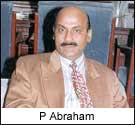
Note: It is noteworthy that in his report on Tipaimukh project, P Abraham, former Union Power Secretary & Chairman, Expert Appraisal Committee for River Valley and Hydroelectric Projects, Union Ministry of Environment & Forests chose to ignore the prospect of submerging 3 sq kilometres of Zailad Wild Life Sanctuary and overlooked the State Forest Department on the issue of bio-diversity. And noted that the project would be more helpful in controlling flood in Lower
Assam!
Notably, the State Government has submitted a report to the central Environment Ministry stating that 3 sq kilometre of Zailad Lake Wild Life Sanctuary would be submerged in water by the project.
P Abraham, when he became the power secretary to the Government of India in 1994, the power purchase agreement (PPA) with Enron was already through but it was he who conceived the counter-guarantee given by the Government of India to Enron.
The private power sector policy was decided in 1991-92 and the resolution authorising the private power sector was passed in March 1992.
He finalised the terms of the counter-guarantee: what should be the amount of payment to be made, what is to be guaranteed and in case the counter-guarantee is invoked we have to pay first and then get it from RBI. That has not come under dispute now. Consider the nature of the counter-guarantees. The Indian government staked all its assets (including those abroad, except diplomatic and military) as surety for the payments due to Enron.
Even as Abraham remains non-traceable, one is yet to know about developments at the 27th meeting of Expert Appraisal Committee for River Valley and Hydroelectric Projects that was to be held on 15-16 June, 2009 at Scope Complex, Opposite Jawaharlal Nehru Stadium, Lodhi Road, New Delhi -110003.
If there is any sense of natural justice, such manifest conflict of interest (as outlined in the letter to environment minister) should be deemed unacceptable. It is high time he and other members step down and face inquiry.
COMPOSITION OF RIVER VALLEY AND HYDROELECTRIC PROJECTS Dated : 15 Jun 2009
1 Dr. B.P. Das
717, Sahid Nagar, Bhubaneshwar-751007, Orissa.E-mail: bishnupdas@hotmail.com
Member
2 Dr. Pushpam Kumar
Institute of Economic Growth, University of Delhi, North Campus, Delhi-110007.
Member
3 Shri P. Abraham
Flat No,.5-C, Girdhar Apartments, 28, Firoze Shah Road, New Delhi-110001.E-mail:
pabraham1962@yahoo.co.in Chairman
9811255170
4 Dr. J.K. Sharma
School of Environment & Natural Resources, Doon University, Kedarpur, Mothrawala
Road, PO-Ajabpur, Dehradun -248 001, Uttarakhand.E-mail:
jyotikumarsharma@gmail.com Member
5 Dr.A.K.Bhattacharya
Flat No.805, Pocket-3, Akshardham Apartments, Sector-19, Dwaraka, New Delhi-110
075; b_ashimkumar@yahoo.co.in Member
9818764990
6 Dr. O.P. Sisodia
89, Kailash Hills, East of Kailash, New Delhi -110 065. E-mail:
opsisodia@rediffmail.com Member
7 Chief Engineer (EMO)
Central Water Commission (CWC), Sewa Bhawan, R.K. Puram, New Delhi -110 066
Member
8 Dr. S. Bhowmik
Ministry of Environmnet & Forests, 'Paryavaran Bhawan', R. No. 548, C.G. O.
Complex, Lodhi Road, New Delhi- 110003.E-mail: bhowmik@delhi.nic.in Member
Secretary
011-24362827, Bhowmik@menf.delhi.nic.in
9 Dr. Dipak Sarkar
Regional Centre, Block-DK, Sector-II, Salt Lake, Kolkata-700091. Member
10 Sh. Dinesh Kr. Alva
Sowparnakaa, Vyasanagar, Behing KPT Kadri Hills, Mangalore-575004(D.K).E-mail:
alvadk@yahoo.com Member
11 Dr. A.R. Yousuf
Dept. of Env. sciences, Hazratbal, University of Kashmir,
Srinagar-190006.E-mail: aryousuf@rediffmail.com Member
12 Prof. D. K. Paul
Department of Earthquake Engineering, IIT, Roorkee - 247 667, Uttarakhand.
E-mail: dpaulfeq@iitrernet.in Member
01332-285228/09897065522
LETTER SENT TO ENVIRONMENT MINISTER: TEST FOR UPA’S CLAIMS ON GOVERNANCE
For over two years now, Mr. P Abhraham who is on the Board of several hydropower and dam companies has been chairing the Ministry of Environment and Forests’ Expert Appraisal Committee on River Valley and Hydropower projects. The committee, set up under the EIA Notification 2006 and EPA 1986, screens proposals for dams and hydropower projects for clearances at various stages. The committee also takes decisions on several very crucial policies governing the clearances for these projects. There is clear conflict of interest here between Abraham’s role as director of companies and as this most crucial regulatory position in the Ministry of Environment and Forests. Over the past two years, there has been at least six occasions when a project of the companies where Abraham is a director has come for clearance before the committee he chairs. This is a completely unacceptable situation and a number of social and environment groups have written to the New Union Environment Minister to remove Abraham from this position, before the next meeting of the committee he chairs happens (it is scheduled for June 15-16, 2009).
Among many other power and dam companies, Abraham is on the Board of Lanco Infratech, GVK Industries Ltd, JSW Energy Ltd, PTC Ltd, Nagarjun Construction and Maharashtra Power Generation Company. Some of the projects from such companies that came up before the EAC that Abraham chairs over the last two years include the 3000 MW Demwe Hydropower project (Arunachal Pradesh), the 76 MW Phata Byung HEP (Uttarakhand), the 76 MW Rambara HEP (Uttarakhand), the 170 MW Bogudiyar-Sirkari Bhyol HEP (Uttarakhand), the 200 MW Mapang Bogudiyar HEP (Uttarakhand) and the 260 MW Kuther HEP (Himachal Pradesh). Abraham has been abstaining from the meetings whenever these projects came up before the EAC, but this is clearly not sufficient.
Moreover, on June 11 Abraham was also appointed on a Ministry of Power Committee “to review slow pace of capacity addition and make recommendations to give much needed push for it”, which again is in conflict with Abraham’s regulatory role as EAC chairman.
The letter that was sent to the Union Environment Minister on June 12, 2009 suggested that besides immediate removal of Abraham from the chair of the EAC on River Valley and Hydropower projects, the Minister needs to review the decisions taken by the EAC in situations of conflict of interests, review the situation of all members of all the EAC committees and also to review the guidelines of appointment of members and chairs of these committees so that such stark misgovernance is not repeated in future and in stead truly independent members are appointed on such committees. These steps are immediately required, even as the minister reviews the larger policy and governance issues. The letter was sent well in time for the minister to postpone the meeting of June 15-16, pending other steps and was sent on behalf of South Asia Network on Dams, Rivers & People, Kalpavriksh Environmental Action Group, Affected Citizens of Teesta (Sikkim), All Idu Mishmi Students Union (Arunachal Pradesh), Peoples Movement for Subansiri-Brahmaputra Valley (Assam), Gopal Krishna, Waterwatch Alliance and has since been endorsed by the National Alliance for Peoples Movements (NAPM). The letter is copied below.
These instances in fact signifies very serious misgovernance and the steps that the new Environment Minister takes in this regard will also test UPA government’s claims about focus on good governance.
For more details please contact
Affected Citizens of Teesta (ACT) "cten lepcha" golden_hope@hotmail.com
All Idu Mishmi Students Union (AIMSU)
Peoples Movement for Subansiri-Brahmaputra Valley (PMSBV)
Gopal Krishna, Waterwatch Alliance, krishnagreen@gmail.com
Neeraj Vagholikar, Kalpavriksh Environmental Action Group (09822021371) nvagho@gmail.com
Himanshu Thakkar, South Asia Network on Dams, Rivers & People (09968242798) ht.sandrp@gmail.com
----------------------------------------
LETTER TO UNION ENVIRONMENT MINISTER:
(FOR URGENT ATTENTION) June 12, 2009
To
Shri Jairam Ramesh
Union Minister of State for Environment and Forests (Independent Charge),
New Delhi
Jairam54@gmail.com, mosef@nic.in
Subject: Conflict of Interest for EAC Chair for River Valley Projects
Respected Sir,
Let us take this opportunity to congratulate you for becoming the minister for this important ministry and wish you all the success in protecting the country’s environment.
We are writing this rather urgent letter, since the subject requires some urgent action from the ministry.
Mr. P. Abraham is the chairman of the Expert Appraisal Committee on River Valley and Hydropower projects, which plays a critical role in deciding the environmental and social viability of river valley projects and recommending whether to grant or reject clearance to such projects. But Mr. Abraham is also on the board of a number of power companies that are involved in the power sector in general and hydropower in particular, as we describe below. This is a clear conflict of interest and is unacceptable as per basic principles of governance. There have been many instances over the past two years when the projects from the companies on whose board he is have come for clearances before the EAC chaired by him.
Even though he has been in this position for over two years, the ministry has allowed such a situation of conflict of interest to continue, despite knowledge of the situation since information on his direct association with the power companies is publicly available. Mr. Abraham has been continuing to work in this conflict of interest by excusing himself whenever a project of companies where he is on board comes to the committee for clearance (as is apparent from the minutes of the meetings of the EAC uploaded on the MoEF website). But this is clearly not sufficient. The EAC also sets up policies that could turn out to be beneficial to the developers and he is taking environmental decisions related to companies which are potential competitors. His role on the board of these companies could provide them undue insights into the working of the committee and thus provide them an undue advantage during the decision-making process. He can also be significantly influential for other members of the committee, thus even in his absence, the decisions can be influenced, directly or indirectly. Thus we do not think this is an acceptable situation.
As we said above, he has been in this position since April 2007. However, the first meeting that he will chair under your minister ship will be on June 15-16, 2009, early next week. Hence we are urging you to take steps to ensure that this unacceptable situation does not continue under you.
We request you to:
ü Remove Mr. P. Abraham from the chairmanship of the EAC for RV and hydro projects. The EAC meeting scheduled on June 15-16 in the meantime can be postponed.
ü Review the situation for other members of all the committees to ensure that there are no other such instances of conflict of interest.
ü Take this opportunity to also review the criteria of members of EAC to ensure that such conflict of interest does not occur in future and instead, independent persons are on the committees.
ü Review the decisions of the committees where such conflict of interest prevailed even though such members may have abstained during such decisions.
Abraham on Lanco Infratech Board
SEE: http://markets.ft.com/ft/tearsheets/businessProfile.asp?s=5935488
P Abraham is on Board of Directors of Lanco Infratech, which is also involved in Hydro business. On 16 Jan 2008, the EAC recommended EC to Phata Byung HEP by Lanco Infrastructure. (Chair remained absent, but that is not good enough). The minutes noted for this item, “Dr. Bhattacharya chaired the meeting in the absence of the Chairman.” On 16-17 Oct 2008, the EAC considered Rambara H. E. Project (76 MW) by M/s Lanco Hydro Energy Pvt. Ltd for Adequacy of TOR. The Minutes, interestingly said just for this last listed item on agenda of that item (except the customary any other items with permission of chair), “Dr A. K. Bhattacharya chaired the session as Chairman had to leave for some urgent work”.
Abraham on GVK Board (SEE: http://www.gvk.com/i/Board%20of%20Directors_revised.pdf)
P Abraham is on Board of Directors of GVK Industries Limited, their project Bogudiyar-Sirkari Bhyol HEP 170 MW and Mapang Bogudiyar HEP 200 MW, both in Uttarakhand, came up for clearance before the EAC on May 14-15, 2009.
Abraham on JSW Energy Limited Board (SEE: http://www.sebi.gov.in/dp/jswdraft.pdf)
He is on JSW Energy Board, as on Jan 2006 and also currently, as per http://jswel.net/, the website of the company. On 20-21 Feb 2008 meeting, the EAC considered the Kuther HEP in Himachal Pradesh for TOR by M/s JSW Energy Ltd. For this item no 2.6, the minutes said, “Dr. B P Das chaired the meeting in the absence of the chairman.” Abraham on other relevant boards He is Chaiman of Maharashtra Power Generation Company. He is on board of Nagarjun Construction company, involved in dam building.
Mr. P. Abraham, is also (complete list including those mentioned above):
I) Director:
a) LANCO
b) GVK Power & Infrastructure Co. Ltd.
c) Maharashtra State Power Generation Co.
d) Futura Polyster Ltd.
e) PTC Ltd. (Which is co promoter of the 3000 MW Demwe HEP, which came up before the EAC on 200208)
f) Flex Industries Ltd.
g) JSW Energy Ltd.
h) Vijay Electricals Ltd.
i) Nagarjuna Construction Co. Ltd.
j) Himalayan Green Energy Pvt. Ltd.
k) Green Infrastructure Pvt. Ltd.
II) Member, Audit Committee
a) GVK Power and Infrastructure Co. Ltd.
b) JSW Energy Ltd.
c) Vijay Electricals Ltd.
III) Chairman
a) Investor Grievances Committee of PTC
Abraham on MoP committee to push Power projects Now, just on June 11, 2009, Union Power Minister set up a committee “to review slow pace of capacity addition and make recommendations to give much needed push for it” (FE 120609). The Committee Chaired by Power Minister Shinde includes P. Abraham. This we also see as clear conflict of interest with Abraham’s regulatory role in EAC.
We hope you will take urgent and appropriate action. We will look forward to hearing from you.
Thanking you,
Yours Sincerely,
Himanshu Thakkar South Asia Network on Dams, Rivers & People, 86-D, AD block, Shalimar Bagh, Delhi 110088
ht.sandrp@gmail.com, www.sandrp.in, Ph: 27484655/ 9968242798
On Behalf of:
South Asia Network on Dams, Rivers & People (SANDRP)
Kalpavriksh Environmental Action Group, "Neeraj Vagholikar" nvagho@gmail.com
Affected Citizens of Teesta (ACT) "cten lepcha" golden_hope@hotmail.com
All Idu Mishmi Students Union (AIMSU)
Peoples Movement for Subansiri-Brahmaputra Valley (PMSBV)
Gopal Krishna, Waterwatch Alliance, krishnagreen@gmail.com
Bonn Climate Change Talks
Written By mediavigil on Sunday, June 07, 2009 | 10:15 PM
Sources present in Bonn have revealed that the overall negotiations on climate change treaty are unfortunately in sorry shape. The industrialized countries are backpedaling on their previous commitments (both to reduce emissions and to provide financing to the less industrialized countries) and this is threatening the entire treaty.
Financing mitigation in developing countries is still a sticking point in the negotiations, and requires looking far beyond the CDM. There is a pre-existing gulf on how to bridge the gap between the funding made available by developed countries and the mitigation needs of developing countries.
The US and Japan are even talking about getting rid of the Kyoto Protocol entirely. Detailed updates and position papers are available: http://www.twnside.org.sg/
The thirtieth sessions of the UNFCCC Convention subsidiary bodies - SBSTA and SBI, the sixth session of the AWG-LCA and the eighth session of the AWG-KP are taking place from Monday 1 June till Friday 12 June 2009 in Maritim, Bonn.
Delegates from 182 countries meeting in Bonn are to discuss, for the first time, key negotiating texts which can serve as the basis for an ambitious and effective international climate change deal, to be clinched in Copenhagen in December.
Climate crisis is also about agricultural crisis. The state of vegetation cover as affected by climate is linked to human well-being. There is a need to recognize that food security is threatened by climate change. Climate change will frustrate efforts to provide food sustainably and vulnerable communities must be offered support to enhance their coping capacity. The local-specific nature of the effects calls for increased local knowledge, awareness and policies. For the sake of food security a substantial financial commitment is needed, both in research and implementation.
There is talk of conservation agriculture in Bonn for instance with with Faidherbia albida. Some 60 years of research shows on each hectare, mature trees supply the equivalent of 300kgof complete fertiliser and 250kg of lime. This can sustain a maize yield of 4 tons/ha. Faidherbia is indigenous in many African countries. Is it possible to use it in countries like India?
World cereal production will fall 3 percent in the next marketing year, while demand will expand by 1.3 percent, the United Nations’ Food and Agriculture Organization said on June 4. Prices of wheat, rice and corn rose to records last year, sparking riots. The number of hungry people in the world will increase to a record 1 billion this year, the FAO said last month.
Financing mitigation in developing countries is still a sticking point in the negotiations, and requires looking far beyond the CDM. There is a pre-existing gulf on how to bridge the gap between the funding made available by developed countries and the mitigation needs of developing countries.
The US and Japan are even talking about getting rid of the Kyoto Protocol entirely. Detailed updates and position papers are available: http://www.twnside.org.sg/
The thirtieth sessions of the UNFCCC Convention subsidiary bodies - SBSTA and SBI, the sixth session of the AWG-LCA and the eighth session of the AWG-KP are taking place from Monday 1 June till Friday 12 June 2009 in Maritim, Bonn.
Delegates from 182 countries meeting in Bonn are to discuss, for the first time, key negotiating texts which can serve as the basis for an ambitious and effective international climate change deal, to be clinched in Copenhagen in December.
Climate crisis is also about agricultural crisis. The state of vegetation cover as affected by climate is linked to human well-being. There is a need to recognize that food security is threatened by climate change. Climate change will frustrate efforts to provide food sustainably and vulnerable communities must be offered support to enhance their coping capacity. The local-specific nature of the effects calls for increased local knowledge, awareness and policies. For the sake of food security a substantial financial commitment is needed, both in research and implementation.
There is talk of conservation agriculture in Bonn for instance with with Faidherbia albida. Some 60 years of research shows on each hectare, mature trees supply the equivalent of 300kgof complete fertiliser and 250kg of lime. This can sustain a maize yield of 4 tons/ha. Faidherbia is indigenous in many African countries. Is it possible to use it in countries like India?
World cereal production will fall 3 percent in the next marketing year, while demand will expand by 1.3 percent, the United Nations’ Food and Agriculture Organization said on June 4. Prices of wheat, rice and corn rose to records last year, sparking riots. The number of hungry people in the world will increase to a record 1 billion this year, the FAO said last month.
Five things the environment minister must do
Written By mediavigil on Saturday, June 06, 2009 | 3:17 AM
Our new Environment Minister Jairam Ramesh has a reputation of sensitivity towards ecology carved through his exemplary speech in the Rajya Sabha wherein he had eloquently denounced the world's biggest and most ecologically disastrous project of interlinking of India's rivers.
Armed with rigorous facts and figures, he noted, "India's track record in resettlement and rehabilitation has been pathetic. This is a blot on our collective conscience. With the type of track record that we have had, if we embark on this fanciful scheme of river linking with 30 storage reservoirs involving massive displacement of people, I think, it is going to be fraught with grave consequences."
In one of his first responses sent to the 'Campaign for Environmental Justice � India' on May 29 which hoped that there will be drastic change for the better in the way this ministry is led, he said, "I don't know what I can do but I will listen and try to make a difference."
Environmental researchers and activists are keeping their fingers crossed because one of the very next few things the environment minister has revealed is that "The prime minister has told me to clear this impression that the environment ministry was a regulatory hurdle in the process of economic growth."
Clearly, the Cabinet Committee on Economic Affairs (CCEA) and the prime minister are not yet alive to the collapsing ecosystem.
The stark question is whether the CCEA will let the environment ministry make the structural changes required in terms of reversing the current policies which have resulted in manifest adverse impact on environmental health or whether poisoning of our blood streams and amputation of river basin system would continue to be deemed collateral damage.
The threat to the integrity of the natural systems is a threat to human health and such threats have become routine because of myopic industrial agriculture, blind urban development, regressive transport systems and criminal neglect of non-human species.
While legislative safeguards for environmental protection do seem to exist on paper, the role of political class which is funded by corporations illustrates homicidal ecological lawlessness that has led to rampant industrial pollution, soil erosion, agricultural pollution and genetic erosion of plant resources is quite crucial and merits more acknowledgment.
Be it blood contamination, congenital disorders, preventable but incurable cancer or extinction of known and unknown living species on our planet, it creates a compelling logic to re-examine the premises of the Industrial Revolution and design a new one. In the developed world the model of development is under interrogation because of environmental problems.
Between 1975 and 1995 the Indian economy grew 2.5 times, industrial pollution went up four-fold, and vehicular pollution went up eight-fold. This analysis seems factually correct but it has ended up internalising the pollution and externalising the human cost of pollution. In such a context health indicators of deteriorating environment is witnessed in terms of a double burden of disease but the political class seems to have been rendered spineless by the corporate empires.
A beginning seems to have been made with the appointment of a seemingly sensible minister after a long while but environmental crisis merits more than rhetoric or cosmetic solutions. If one were to identify five key areas seeking immediate an urgent remedial attention, it would be:
1. Adopt mandatory emission cuts as a national, domestic and enforceable objective even as we affirm the validity of 'principle of historical responsibility' which is indisputable and incontrovertible. The current stance which states, 'subjecting national aspirational efforts to an international compliance regime may result in lower ambitions' is fine but our ability to reach a certain emission reduction target under a national plan as a national legal obligation would enhance India's negotiating position. In fact National Action Plan for Climate Change should be revisited to ensure visible and truly 'credible actions' within our own framework. It is inconsequential for citizens whether some post-dated international humanitarian law is being followed in letter or not, what is of consequence is whether or not its governmental actions factor in the spirit behind a law that will have ramifications not only for the present generation but also for the future generations. Disassociation with carbon trade is also a must because benefits from it are suspect.
2. Get the National Water Policy and National Environment Policy that was drafted by the BJP-led NDA government besides the industrial policy rewritten. The UPA government must disassociate itself from it because among other things it entails agreeing with Tamil Nadu's irrational demand for interlinking of rivers. As part of the same effort, overhauling the National River Conservation Directorate to ensure a river basin approach is a must to undo the unhealthy legacy of bulldozing rivers, flood plains, forests, biodiversity, natural drainage etc in a manner as if citizens are irrelevant. The National Council for Applied Economic Research has also made recommendations for the setting up National Commission for Basin Management. This is required also as a response to UN's Intergovernmental Panel on Climate Change's fourth assessment report that states, "Glaciers in the Himalayas are receding faster than in any other part of the world and, if the present rate continues, the likelihood of them disappearing by the year 2035 and perhaps sooner is very high if the Earth keeps warming at the current rate. The River Basin Authority must be fashioned in manner that it does not remain a rubber stamp or a paper tiger because if all industrial projects are cleared by Cabinet Committee on Economic Affairs, what role can a effete body of the environment ministry do to undo the wrongs committed by the CCEA.�In fact if one undertakes an investigation of institutional accountability for Bhopal gas leak disaster, it is quite likely that the buck would stop at CCEA. The environment ministry must save itself from its regressive influence.
3. Publish a database of environmental criminals and fugitives with their photographs and profiles with the name of the companies which fall under the 64 heavily polluting industries under Red category (highly polluting industries), 34 moderately polluting industries ('Orange' category) and 54 'marginally' polluting units ('Green' category). Also publish a list of India's Most Wanted Environmental Criminals with wanted posters.
4. The environment ministry must get enhanced budgetary allocation for rejuvenating the decaying institutional infrastructure including the Central Pollution Control Board. One parliamentary report too calls for saving the CPCB, the nodal body for regulating environmental norms. Currently, environment clearance, compliance and monitoring are in a very sorry state. It should be strengthened. The Parliamentary Standing Committee on Science and Technology, Environment and Forests said the CPCB is being 'reduced to a near-defunct body'. The 141-page report of the steering committee on the environment and forests sector for the eleventh five year plan prepared by Planning Commission deals with environment and development. It refers to "The regulatory challenge" and states: "In the past some years, intensive economic growth, which has increased economic wealth, has led to massive pollution and degradation of the natural environment. One of the main reasons for this is that the regulatory and institutional framework to control pollution and degradation of natural resources is unable to keep pace with the rapidly changing economic, social and environmental situation in the country."
"The number of polluting activities -- and the quantum of pollution generated -- has increased in the last several years. Furthermore, newer and newer environmental challenges are thrown up -- from solid waste disposal, to disposal and recycling of hazardous waste, to toxins like mercury, dioxins and activities like ship-breaking to management of vehicular pollution."
It is high time environmental regulation keeps pace with environmental crimes even Interpol has a Pollution & Environment Crime Working group, India also needs one.
5. Stopping transboundary movement of polluting technologies, hazardous wastes, creating an inventory of hazardous chemicals and wastes besides conducting an environmental health audit along with the ministry of health to ascertain the body burden through investigation of industrial chemicals, pollutants and pesticides in umbilical cord blood. In one such study in the US, of the 287 chemicals detected in umbilical cord blood, 180 were known to cause cancer in humans or animals, 217 are toxic to the brain and nervous system, and 208 cause birth defects or abnormal development in animal tests. Absence of such studies in India does not mean that a similar situation does not exist in India. Until and unless we diagnose the current unacknowledged crisis, how will he regulatory bodies predict, prevent and provide remedy.
Currently, India is a victim of the unfolding Lawrence Summers Principle. Lawrence Summers, Director of the White House's National Economic Council for US President Barack Obama as a World Bank chief economist, sent a memo to one of his subordinates justifying transfer of harmful chemicals from developed countries to developing countries. Indian position on Basel Convention, Rotterdam Convention and the recently adopted IMO Convention reveals the same.
Our ecological space is a living entity but it is faced with the cannibalistic propensities of illegitimately totalitarian scientism which is married with political consensus. Its linear, piecemeal and closed technological thinking fails to acknowledge that no unlimited development is possible in the nature of things.�
While a beginning can be made with the above steps, it must be realised that the economic ideology that has led to the current global financial crisis is the same ideology that is accountable for the ongoing ecological disorder of lunatic ilk.
Therefore, nothing short of the death of old industrial policies of pre-climate crisis era and rebirth of enlightened policy making that takes into account intergenerational equity with regard to natural resources would be sufficient.
Gopal Krishna is a New Delhi-based environmental activist
URL for this article:
http://news.rediff.com/column/2009/jun/05/guest-five-things-the-environment-minister-must-do.htm
Armed with rigorous facts and figures, he noted, "India's track record in resettlement and rehabilitation has been pathetic. This is a blot on our collective conscience. With the type of track record that we have had, if we embark on this fanciful scheme of river linking with 30 storage reservoirs involving massive displacement of people, I think, it is going to be fraught with grave consequences."
In one of his first responses sent to the 'Campaign for Environmental Justice � India' on May 29 which hoped that there will be drastic change for the better in the way this ministry is led, he said, "I don't know what I can do but I will listen and try to make a difference."
Environmental researchers and activists are keeping their fingers crossed because one of the very next few things the environment minister has revealed is that "The prime minister has told me to clear this impression that the environment ministry was a regulatory hurdle in the process of economic growth."
Clearly, the Cabinet Committee on Economic Affairs (CCEA) and the prime minister are not yet alive to the collapsing ecosystem.
The stark question is whether the CCEA will let the environment ministry make the structural changes required in terms of reversing the current policies which have resulted in manifest adverse impact on environmental health or whether poisoning of our blood streams and amputation of river basin system would continue to be deemed collateral damage.
The threat to the integrity of the natural systems is a threat to human health and such threats have become routine because of myopic industrial agriculture, blind urban development, regressive transport systems and criminal neglect of non-human species.
While legislative safeguards for environmental protection do seem to exist on paper, the role of political class which is funded by corporations illustrates homicidal ecological lawlessness that has led to rampant industrial pollution, soil erosion, agricultural pollution and genetic erosion of plant resources is quite crucial and merits more acknowledgment.
Be it blood contamination, congenital disorders, preventable but incurable cancer or extinction of known and unknown living species on our planet, it creates a compelling logic to re-examine the premises of the Industrial Revolution and design a new one. In the developed world the model of development is under interrogation because of environmental problems.
Between 1975 and 1995 the Indian economy grew 2.5 times, industrial pollution went up four-fold, and vehicular pollution went up eight-fold. This analysis seems factually correct but it has ended up internalising the pollution and externalising the human cost of pollution. In such a context health indicators of deteriorating environment is witnessed in terms of a double burden of disease but the political class seems to have been rendered spineless by the corporate empires.
A beginning seems to have been made with the appointment of a seemingly sensible minister after a long while but environmental crisis merits more than rhetoric or cosmetic solutions. If one were to identify five key areas seeking immediate an urgent remedial attention, it would be:
1. Adopt mandatory emission cuts as a national, domestic and enforceable objective even as we affirm the validity of 'principle of historical responsibility' which is indisputable and incontrovertible. The current stance which states, 'subjecting national aspirational efforts to an international compliance regime may result in lower ambitions' is fine but our ability to reach a certain emission reduction target under a national plan as a national legal obligation would enhance India's negotiating position. In fact National Action Plan for Climate Change should be revisited to ensure visible and truly 'credible actions' within our own framework. It is inconsequential for citizens whether some post-dated international humanitarian law is being followed in letter or not, what is of consequence is whether or not its governmental actions factor in the spirit behind a law that will have ramifications not only for the present generation but also for the future generations. Disassociation with carbon trade is also a must because benefits from it are suspect.
2. Get the National Water Policy and National Environment Policy that was drafted by the BJP-led NDA government besides the industrial policy rewritten. The UPA government must disassociate itself from it because among other things it entails agreeing with Tamil Nadu's irrational demand for interlinking of rivers. As part of the same effort, overhauling the National River Conservation Directorate to ensure a river basin approach is a must to undo the unhealthy legacy of bulldozing rivers, flood plains, forests, biodiversity, natural drainage etc in a manner as if citizens are irrelevant. The National Council for Applied Economic Research has also made recommendations for the setting up National Commission for Basin Management. This is required also as a response to UN's Intergovernmental Panel on Climate Change's fourth assessment report that states, "Glaciers in the Himalayas are receding faster than in any other part of the world and, if the present rate continues, the likelihood of them disappearing by the year 2035 and perhaps sooner is very high if the Earth keeps warming at the current rate. The River Basin Authority must be fashioned in manner that it does not remain a rubber stamp or a paper tiger because if all industrial projects are cleared by Cabinet Committee on Economic Affairs, what role can a effete body of the environment ministry do to undo the wrongs committed by the CCEA.�In fact if one undertakes an investigation of institutional accountability for Bhopal gas leak disaster, it is quite likely that the buck would stop at CCEA. The environment ministry must save itself from its regressive influence.
3. Publish a database of environmental criminals and fugitives with their photographs and profiles with the name of the companies which fall under the 64 heavily polluting industries under Red category (highly polluting industries), 34 moderately polluting industries ('Orange' category) and 54 'marginally' polluting units ('Green' category). Also publish a list of India's Most Wanted Environmental Criminals with wanted posters.
4. The environment ministry must get enhanced budgetary allocation for rejuvenating the decaying institutional infrastructure including the Central Pollution Control Board. One parliamentary report too calls for saving the CPCB, the nodal body for regulating environmental norms. Currently, environment clearance, compliance and monitoring are in a very sorry state. It should be strengthened. The Parliamentary Standing Committee on Science and Technology, Environment and Forests said the CPCB is being 'reduced to a near-defunct body'. The 141-page report of the steering committee on the environment and forests sector for the eleventh five year plan prepared by Planning Commission deals with environment and development. It refers to "The regulatory challenge" and states: "In the past some years, intensive economic growth, which has increased economic wealth, has led to massive pollution and degradation of the natural environment. One of the main reasons for this is that the regulatory and institutional framework to control pollution and degradation of natural resources is unable to keep pace with the rapidly changing economic, social and environmental situation in the country."
"The number of polluting activities -- and the quantum of pollution generated -- has increased in the last several years. Furthermore, newer and newer environmental challenges are thrown up -- from solid waste disposal, to disposal and recycling of hazardous waste, to toxins like mercury, dioxins and activities like ship-breaking to management of vehicular pollution."
It is high time environmental regulation keeps pace with environmental crimes even Interpol has a Pollution & Environment Crime Working group, India also needs one.
5. Stopping transboundary movement of polluting technologies, hazardous wastes, creating an inventory of hazardous chemicals and wastes besides conducting an environmental health audit along with the ministry of health to ascertain the body burden through investigation of industrial chemicals, pollutants and pesticides in umbilical cord blood. In one such study in the US, of the 287 chemicals detected in umbilical cord blood, 180 were known to cause cancer in humans or animals, 217 are toxic to the brain and nervous system, and 208 cause birth defects or abnormal development in animal tests. Absence of such studies in India does not mean that a similar situation does not exist in India. Until and unless we diagnose the current unacknowledged crisis, how will he regulatory bodies predict, prevent and provide remedy.
Currently, India is a victim of the unfolding Lawrence Summers Principle. Lawrence Summers, Director of the White House's National Economic Council for US President Barack Obama as a World Bank chief economist, sent a memo to one of his subordinates justifying transfer of harmful chemicals from developed countries to developing countries. Indian position on Basel Convention, Rotterdam Convention and the recently adopted IMO Convention reveals the same.
Our ecological space is a living entity but it is faced with the cannibalistic propensities of illegitimately totalitarian scientism which is married with political consensus. Its linear, piecemeal and closed technological thinking fails to acknowledge that no unlimited development is possible in the nature of things.�
While a beginning can be made with the above steps, it must be realised that the economic ideology that has led to the current global financial crisis is the same ideology that is accountable for the ongoing ecological disorder of lunatic ilk.
Therefore, nothing short of the death of old industrial policies of pre-climate crisis era and rebirth of enlightened policy making that takes into account intergenerational equity with regard to natural resources would be sufficient.
Gopal Krishna is a New Delhi-based environmental activist
URL for this article:
http://news.rediff.com/column/2009/jun/05/guest-five-things-the-environment-minister-must-do.htm
E-waste status in India
Vaishali Bhambri, a journalist with a news agency (IANS) in conversation with environmental health analyst, Gopal Krishna
1.What are the techniques used in India to recycle electronic waste?
There is no technique involved besides manual & primitive dismantling operations which are occurring in unorganized/informal sector in hazardous manner. The “disposal process” of e-waste that includes three main categories of end-of-life large household appliances, IT and telecom and consumer equipment (especially their twenty six common components) is characterized as hazardous processes under the law.
Guidelines on e-waste refer to even radioactive substances in e-waste but there is no technique or law that can regulate its handling by recycling workers as of now.
The recycle and recovery includes the unit operations beginning with dismantling, removal of parts containing dangerous substances, removal of easily accessible parts containing valuable substances, segregation of ferrous metal, non-ferrous metal and plastic, treatment & disposal of dangerous materials and waste. In fact the value of recovery from the elements would be much higher if appropriate technologies are
used.
2. Is it true that still a lot of developed countries dump their electronic waste in India or ports surrounding India?
Yes, in order to escape and externalize their pollution costs, it is true that developed countries dump their electronic wastes and other hazardous wastes in India. Lax environmental regulations and gullible and conniving officials are hand in glove with activities. Existing Indian laws attempt to promote such hazardous wastes as recycling materials in a manifest exercise of linguistic corruption wherein
waste is being defined as waste as non-waste. It estimated that the amount of discarded electronics imported to India is growing at the rate of 10 percent each year.
3. Anything that Green custom is doing on the world environment day, in context of e-waste recycling?
Illegal traffic in hazardous wastes or other wastes is criminal, and countries are obligated to “introduce appropriate national/domestic legislation to prevent and punish illegal traffic” under a multilateral environment, UN's Basel Convention on the Control of Transboundary Movements of Hazardous Wastes and Their Disposal. It covers all discarded/disposed materials that possess hazardous characteristics as well as all wastes considered hazardous on a national basis. E-waste is considered hazardous under Article 1 of the Convention.
World Customs Organisation and United Nations Environment Programme have launched a Green Customs Initiative, in collaboration with 10 international organisations and UN convention Secretariats concerned with the implementation or enforcement of multilateral environmental agreements with trade-related aspects because customs officers on the frontline of facilitating and monitoring international trade wherein certain “environmentally sensitive” substances and commodities cross borders to the detriment of human health or ecosystems because of their inherent hazardous qualities, their potential for misuse etc. Such items include banned or restricted chemicals, hazardous and toxic waste etc. When a shipment gives rise to suspicions, the Customs officer take action. Successful detection and prosecution of illegal traffic require the co-operation of all enforcement agencies at the national level.
Customs officers cannot combat illegal traffic alone; they have to rely on the relevant national environmental agencies to provide them with the appropriate legal and technical information so they are in a position to identify instances of illegal traffic and know what steps to take. Conversely, national environment agencies and enforcement agencies need the support of the Customs agencies to ensure that cases of suspected illegal traffic are detected as early as possible at the border and are signalled to the appropriate national authorities. But if the national authorities are persuaded by various considerations to define waste as non-waste (hazardous waste as recyclable material) in that e-waste dumping becomes a routine activity. Waste of one country is declared as resource in our country under the influence of the unscrupulous scrap metal traders and the recycling industry with impunity.
4. what percentage of E waste is recycled in India ?
According to the CPCB estimates, based on the obsolescence rate of electronic goods, it is expected that e-waste would exceed 8,00,000 tonnes by 2012. The total amount of India's e-waste imports for 2009 is expected to be around 434,000 metric tons, as per a study by our Department of Scientific and Industrial Research.
5.Where all is it recycled?
All the e-waste recycling units are operating in un-organized sector. There are two e-waste dismantling facilities in formal sector in India. These facilities are M/s. Trishiraya Recycling facilities, Chennai and M/s E-Parisara, Bangalore.
Among top ten cities generating e-waste, Mumbai ranks first followed by Delhi, Bangalore, Chennai, Kolkata, Ahmedabad, Hyderabad, Pune, Surat and Nagpur.There are some sixty-five cities in India generate more than 60% of the total e-waste generated in India. In Delhi and its vicinity various recycling operations are undertaken in places like Turkman Gate, Mayapuri, Old Seelampur Market, Shastri Park, Lajpat Nagar, Kirti Nagar, Karkarduma, Mustafabad, Mandoli, Meerut, Ferozabad and many other places. Recycling of end of life mobile phones is a rapidly emerging area. Ten states generate 70% of the total e-waste generated in India. Maharashtra ranks first followed by Tamil Nadu, Andhra Pradesh, Uttar Pradesh, West Bengal, Delhi, Karnataka, Gujarat, Madhya Pradesh and Punjab in the list of e-waste generating states in India.
1.What are the techniques used in India to recycle electronic waste?
There is no technique involved besides manual & primitive dismantling operations which are occurring in unorganized/informal sector in hazardous manner. The “disposal process” of e-waste that includes three main categories of end-of-life large household appliances, IT and telecom and consumer equipment (especially their twenty six common components) is characterized as hazardous processes under the law.
Guidelines on e-waste refer to even radioactive substances in e-waste but there is no technique or law that can regulate its handling by recycling workers as of now.
The recycle and recovery includes the unit operations beginning with dismantling, removal of parts containing dangerous substances, removal of easily accessible parts containing valuable substances, segregation of ferrous metal, non-ferrous metal and plastic, treatment & disposal of dangerous materials and waste. In fact the value of recovery from the elements would be much higher if appropriate technologies are
used.
2. Is it true that still a lot of developed countries dump their electronic waste in India or ports surrounding India?
Yes, in order to escape and externalize their pollution costs, it is true that developed countries dump their electronic wastes and other hazardous wastes in India. Lax environmental regulations and gullible and conniving officials are hand in glove with activities. Existing Indian laws attempt to promote such hazardous wastes as recycling materials in a manifest exercise of linguistic corruption wherein
waste is being defined as waste as non-waste. It estimated that the amount of discarded electronics imported to India is growing at the rate of 10 percent each year.
3. Anything that Green custom is doing on the world environment day, in context of e-waste recycling?
Illegal traffic in hazardous wastes or other wastes is criminal, and countries are obligated to “introduce appropriate national/domestic legislation to prevent and punish illegal traffic” under a multilateral environment, UN's Basel Convention on the Control of Transboundary Movements of Hazardous Wastes and Their Disposal. It covers all discarded/disposed materials that possess hazardous characteristics as well as all wastes considered hazardous on a national basis. E-waste is considered hazardous under Article 1 of the Convention.
World Customs Organisation and United Nations Environment Programme have launched a Green Customs Initiative, in collaboration with 10 international organisations and UN convention Secretariats concerned with the implementation or enforcement of multilateral environmental agreements with trade-related aspects because customs officers on the frontline of facilitating and monitoring international trade wherein certain “environmentally sensitive” substances and commodities cross borders to the detriment of human health or ecosystems because of their inherent hazardous qualities, their potential for misuse etc. Such items include banned or restricted chemicals, hazardous and toxic waste etc. When a shipment gives rise to suspicions, the Customs officer take action. Successful detection and prosecution of illegal traffic require the co-operation of all enforcement agencies at the national level.
Customs officers cannot combat illegal traffic alone; they have to rely on the relevant national environmental agencies to provide them with the appropriate legal and technical information so they are in a position to identify instances of illegal traffic and know what steps to take. Conversely, national environment agencies and enforcement agencies need the support of the Customs agencies to ensure that cases of suspected illegal traffic are detected as early as possible at the border and are signalled to the appropriate national authorities. But if the national authorities are persuaded by various considerations to define waste as non-waste (hazardous waste as recyclable material) in that e-waste dumping becomes a routine activity. Waste of one country is declared as resource in our country under the influence of the unscrupulous scrap metal traders and the recycling industry with impunity.
4. what percentage of E waste is recycled in India ?
According to the CPCB estimates, based on the obsolescence rate of electronic goods, it is expected that e-waste would exceed 8,00,000 tonnes by 2012. The total amount of India's e-waste imports for 2009 is expected to be around 434,000 metric tons, as per a study by our Department of Scientific and Industrial Research.
5.Where all is it recycled?
All the e-waste recycling units are operating in un-organized sector. There are two e-waste dismantling facilities in formal sector in India. These facilities are M/s. Trishiraya Recycling facilities, Chennai and M/s E-Parisara, Bangalore.
Among top ten cities generating e-waste, Mumbai ranks first followed by Delhi, Bangalore, Chennai, Kolkata, Ahmedabad, Hyderabad, Pune, Surat and Nagpur.There are some sixty-five cities in India generate more than 60% of the total e-waste generated in India. In Delhi and its vicinity various recycling operations are undertaken in places like Turkman Gate, Mayapuri, Old Seelampur Market, Shastri Park, Lajpat Nagar, Kirti Nagar, Karkarduma, Mustafabad, Mandoli, Meerut, Ferozabad and many other places. Recycling of end of life mobile phones is a rapidly emerging area. Ten states generate 70% of the total e-waste generated in India. Maharashtra ranks first followed by Tamil Nadu, Andhra Pradesh, Uttar Pradesh, West Bengal, Delhi, Karnataka, Gujarat, Madhya Pradesh and Punjab in the list of e-waste generating states in India.
Recycled radioactive metal contaminates consumer products
Written By mediavigil on Friday, June 05, 2009 | 7:14 AM
“…documented 18,740 cases involving radioactive material in consumer products, metal intended for their manufacture and other inadvertent exposures to the public, the vast majority since 1990… A recent example emerged last summer… a beat-up kitchen cheese grater… giving off the equivalent of a chest X-ray over 36 hours of use…”
Recycled radioactive metal contaminates consumer products
By Isaac Wolf
Thousands of everyday products and materials containing radioactive metals are surfacing across the United States and around the world.
Common kitchen cheese graters, reclining chairs, women's handbags and tableware manufactured with contaminated metals have been identified, some after having been in circulation for as long as a decade. So have fencing wire and fence posts, shovel blades, elevator buttons, airline parts and steel used in construction.
A Scripps Howard News Service investigation has found that -- because of haphazard screening, an absence of oversight and substantial disincentives for businesses to report contamination -- no one knows how many tainted goods are in circulation in the United States.
But thousands of consumer goods and millions of pounds of unfinished metal and its byproducts have been found to contain low levels of radiation, and experts think the true amount could be much higher, perhaps by a factor of 10.
Government records of cases of contamination, obtained through state and federal Freedom of Information Act requests, illustrate the problem.
In 2006 in Texas, for example, a recycling facility inadvertently created 500,000 pounds of radioactive steel byproducts after melting metal contaminated with Cesium-137, according to U.S. Nuclear Regulatory Commission records. In Florida in 2001, another recycler unintentionally did the same, and wound up with 1.4 million pounds of radioactive material. And in 1998, 430,000 pounds of steel laced with Cobalt-60 made it to the U.S. heartland from Brazil.
But an accounting of the magnitude of the problem is unknown because U.S. and state governments do not require scrap yards, recyclers and other businesses -- a primary line of defense against rogue radiation -- to screen metal goods and materials for radiation or report it when found. And no federal agency is responsible for oversight.
"Nobody's going to know -- nobody -- how much has been melted into consumer goods," said Ray Turner, an international expert on radiation with Fort Mitchell, Ky.-based River Metals Recycling. He has helped decontaminate seven metal-recycling facilities that unwittingly melted scrap containing radioactive isotopes.
"It's your worst nightmare," Turner said.
It is also one that has only barely begun to register as a potential threat to health and safety.
What is known now is that -- despite the shared belief of officials in six state and federal agencies that tainted metal is potentially dangerous, should be prevented from coming in unnecessary contact with people and the environment, and should be barred from entering the United States -- there is no one in charge of making sure that happens.
In fact, the Scripps investigation found:
-- Reports are mounting that manufacturers and dealers from China, India, former Soviet bloc nations and some African countries are exporting contaminated material and goods, taking advantage of the fact that the United States has no regulations specifying what level of radioactive contamination is too much in raw materials and finished goods. Compounding the problem is the inability of U.S. agents to fully screen every one of the 24 million cargo containers arriving in the United States each year.
-- U.S. metal recyclers and scrap yards are not required by any state or federal law to check for radiation in the castoff material they collect or report it when they find some.
-- No federal agency is responsible for determining how much tainted material exists in how many consumer and other goods. No one is in charge of reporting, tracking or analyzing cases once they occur. In fact, the recent discovery of a radioactive cheese grater triggered a bureaucratic game of hot potato, with no agency taking responsibility.
-- It can be far cheaper and easier for a facility stuck with "hot" items to sell them to an unwitting manufacturer or dump them surreptitiously than to pay for proper disposal and cleaning, which can cost a plant as much as $50 million.
-- For facilities in 36 states that want to do the right thing, there is nowhere they can legally dump the contaminated stuff since the shutdown last year of a site in South Carolina, the only U.S. facility available to them for the disposal.
-- A U.S. government program to collect the worst of the castoff radioactive items has a two-year waiting list and a 9,000-item backlog -- and is fielding requests to collect an additional 2,000 newly detected items a year.
Experts say you needn't empty your home of metal implements for fear of radiation. The peril from most individual items is generally not considered great, although some could be hazardous on their own.
In fact, everyone is exposed every day to the "background" radiation found in nature. For instance, some ceramic pots emanate low levels of radiation that occurs in clay. Granite countertops often contain measurable, but individually insignificant, amounts of naturally occurring uranium.
Other exposures come from small and contained amounts of radiation used in smoke detectors and medical devices.
The potential danger comes, however, from the cumulative effect of proximity to radiation, particularly over time and in relation to other contaminants. The precise degree of that danger has not yet been definitively determined for low-level radiation, such as that contained in commonplace goods and materials.
One scientific school of thought, which has been losing favor in recent years, holds that low levels of radiation mean low-level threats. An opposite camp contends that exposure to any level of radiation -- especially if it is chronic -- carries health risks. The U.S. government has so far sidestepped the issue of how little radiation is too much.
According to a 2006 report by a National Academy of Sciences panel, there is a direct relationship between radiation and an increased risk of cancer. Prolonged exposure can also lead to birth defects and cataracts, studies have shown.
Because the amount of tainted metals in circulation is unknown, the cumulative overall health effect -- now and over time -- is impossible to calculate. Whatever it is, there is little debate that unnecessary exposure to radiation is best avoided.
"There is no threshold of exposure below which low levels of ionizing radiation can be demonstrated to be harmless or beneficial," said Richard Monson, chairman of the Committee to Assess Health Risks from Exposure to Low Levels of Ionizing Radiation, at the release of the National Academy report.
There are no reports of anyone dying or being hurt in the United States after contact with the contaminated metal goods and materials. But the U.S. Environmental Protection Agency leaves no doubt that tainted metal poses a particular threat.
"Radioactively contaminated scrap threatens both human health and the environment," reads a cautionary statement on the EPA's Web site.
The Scripps investigation used the federal Freedom of Information Act to gain access to a previously un-mined NRC database, the only official assemblage of reports of radiologically contaminated items that have turned up in scrap yards, trash dumps and manufactured goods since 1990.
But because such reporting is neither required nor consistent, neither state nor federal environmental officials -- nor many in the scrap-metal industry -- consider the NRC accounts an accurate reflection of the problem's true dimensions. (The only mandatory rule is that anyone knowingly transporting radioactive material must notify the U.S. Department of Transportation.)
"Typically, these go unreported," said Carolyn Mac Kenzie (cq), a U.S. Department of Energy physicist who is a world expert in radioactive metals. "Whatever number you come up with would not reflect reality."
One of the most conservative estimates comes from the U.S. Government Accountability Office, which put the number of radioactively contaminated metal objects unaccounted for in the United States in 2005 at 500,000. Others suggest the amount is far higher. The most recent NRC estimate -- made a decade ago -- is 20 million pounds of contaminated waste.
What is known is that the NRC's national Nuclear Material Events Database has documented 18,740 cases involving radioactive material in consumer products, metal intended for their manufacture and other inadvertent exposures to the public, the vast majority since 1990. State environmental reports -- obtained under state freedom of information requests -- also reveal dozens of others.
A recent example emerged last summer, when a Flint, Mich., scrap plant discovered a beat-up kitchen cheese grater that was radioactive. The China-made grater bearing the well-known EKCO brand name was laced with the isotope Cobalt-60. Tests showed the gadget to be giving off the equivalent of a chest X-ray over 36 hours of use, according to NRC documents.
Estimated to have been in circulation for as long as a decade, the grater likely was four to five times more radioactive when it was new. EKCO's parent company, World Kitchen, of Rosemont, Ill., described the incident as isolated and found no need to issue a recall, spokesman Bryan Glancy said.
It was not the only cheese grater found. NRC documents show that another Cobalt-60-tainted grater had turned up in Jacksonville, Fla., in 2006. The reports do not indicate what brand of grater it was or if it was related to the one that surfaced in Michigan.
Cobalt-60 also tainted a 430,000-pound shipment of metal from Brazil in 1998. Part of that load found its way to Michigan and then Indiana, where it was used to make brackets for 1,000 La-Z-Boy recliners.
The contamination was detected by a radiation monitor when scrap leftover from the brackets job was shipped to the Butler, Ind., steel recycler Steel Dynamics, according to NRC documents.
The Cobalt-60 tainted Reclina-Rocker chairs, which would have given off a chest X-ray's worth of radiation every 1,000 hours, were still in warehouses when the contamination was discovered, and never made it to stores or living rooms, according to Rex Bowser, director of the Indoor Air and Radiological Health Emergency Response Program of the Indiana State Department of Health.
The recliners' radiation levels were "enough above background to be a concern for people sitting in La-Z-Boy chairs," Bowser said.
In many instances where contamination is identified -- generally by companies that have invested in costly detection equipment -- the contamination comes from the inadvertent blending of radioactive sources with piles of other scrap that metal recyclers reprocess and later sell.
Often, when a factory shuts down or a plant relocates, industrial smoke detectors, measuring gauges and other machines and parts that contain small amounts of radioactive material are left behind. Because they commonly are encased in a protective shell, the devices pose little risk when the plant is operating.
But when a facility closes, the devices frequently are trashed as scrap. If those radioactive parts are later heated during reprocessing, the radiation can escape and blend with the finished recycled product.
Many large scrap outfits invest in radiation detectors -- which can cost $50,000 each -- that provide a measure of protection. Steel company Gerdau Ameristeel, based in Toronto and Tampa, Fla., installs as many as six levels of detection at its scrap mills, at a cost of as much as $1 million for each facility, said Jim Turner, corporate environmental director.
But even scrap and recycling operations that are diligent in scanning incoming and outgoing loads can unknowingly wind up with tainted material.
One reason is that monitoring devices are not all strong enough to penetrate a full truckload of scrap and may miss the radioactive sources. And even the weather can foul things up, as Gerdau Ameristeel learned when a 2001 thunderstorm disturbed detectors at its Jacksonville, Fla., recycling operation, permitting radioactive Cesium-137 to slip through. The plant's cleanup cost was $10 million, according to an NRC report.
Sometimes the devices containing radiation simply disappear. In January, for instance, Wal-Mart admitted that it could not account for about 15,000 illuminated exit signs, which each contain tritium, a radioactive isotope, according to the NRC.
And other times, they are purposely masked in an attempt to dump the hot items on someone else, often to avoid the cost of proper disposal. Those fees have mushroomed in the past three decades from $1 per cubic foot to more than $400, with forecasts for them to more than double in coming years, according to a 2004 estimate by Robin Nazzaro, the audit agency GAO's natural-resources and environment director.
Recycler Doug Kramer, owner of Los Angeles-based Kramer Metals, recounted how workers once found a radioactive object wrapped in lead and hidden in a beer keg -- presumably to keep the radiation from being detected.
The global dimension of the recycling of radiation problem is large, and growing, experts say.
Between 2006 and 2007, for instance, authorities in the Netherlands found about 900 women's handbags that had originated in India and were decorated with metal rings laced with Cobalt-60 on each bag's shoulder strap. Once discovered, they were sent to a radioactive waste site in the Netherlands.
Last fall, radioactive metal also from India was used by a Connecticut company to make 500 sets of buttons for Otis elevators in France and Sweden. No one realized the elevator buttons -- which had been installed -- were radioactive until a similar shipment tripped radiation alarms at the U.S. border with Mexico, according to Otis Elevator spokesman Dilip Rangnekar.
Otis scrambled to remove the tainted buttons from the elevator cabs, Rangnekar said. But an international authority on rogue radiation said it is likely even more of the buttons remain in circulation.
"Thousands and thousands were produced," said Abel Gonzalez, a former director of the International Atomic Energy Agency's division of radiation and waste safety. "I doubt they have found all of them."
U.S. officials and metal experts say evidence is mounting that radioactive metal from abroad is increasingly --- and intentionally -- being sent to the United States, sometimes decades after the contaminated material was first detected and returned to its source.
In 1991, an Indian supplier sent to the United States more than 50 shipments of chain-link fencing, some of which was tainted. Investigators found the fencing scattered around the country, including in Florida, Tennessee, New York and Washington state.
"The NRC told them not to ship more material to the U.S., but it allowed them to keep what was here, here," said Paul Frame, a radiation expert at the Oak Ridge Institute for Science and Education in Oak Ridge, Tenn.
But a decade later, another shipment of tainted Indian fencing reached the United States, Frame said.
"My guess was that it was the same stuff," he said. "You suspect that in some cases they know the material is radioactive but they're going to ship it out anyway because it's money."
John Williamson, administrator of Florida's radiation control bureau, agrees and predicts that tainted steel from China and products from India will continue to surface, at the borders and on the plant floors.
One reason is that, after U.S. customs rejects a load of contaminated material, no one knows what happens once it is sent back to its overseas producer because no tracking system exists, he and other front-line experts said.
"In China and India, who knows what happens?" Williamson said. "My belief is it goes back into the hopper."
NRC reports give weight to his belief. Construction reinforcement materials from Mexico laced with Cobalt-60 that were detected at the border in 2006 were traced back to metal from a contaminated batch produced and exported more than 20 years before by two Juarez, Mexico, foundries.
Some experts say the United States bears some blame for the infiltration of tainted metal and products. Even though there is little debate that radiation-laced material is unwelcome, neither Congress nor federal agencies have established a "safe" level of contamination, despite two decades of wrestling with the issue.
That has created a loophole that overseas metal dealers and product manufacturers can exploit, critics say. But forbidding all radioactive material in metal would throw a damaging and costly wrench into the recycling industry, according to John Gilstrap, safety director for the Institute of Scrap Recycling Industries trade group.
"If we set the thresholds unrealistically low, we're inflicting pain on businesses for no necessary reason," Gilstrap said.
But Gerdau Ameristeel's Turner disagrees. Asked what the allowable level of radiation in metal should be, Turner replied via e-mail: "ZERO."
To officials in several states, it is the absence of federal oversight and indistinct rules about materials and goods tainted with low-level radiation that is causing undue pain. After the South Carolina waste site closed last summer, six states called on Congress to act. So far, it has not.
"There is no one federal agency responsible for regulating all ionizing radiation, and therefore regulations are fragmented or non-existent in some areas," said Michael Mobley, head of a commission formed last summer by officials from Alabama, Florida, Georgia, Mississippi, Tennessee and Virginia.
"If we address all radioactive materials across the board and the waste that is generated from them, we will protect public health and the environment to a greater extent than we do now," he said.
E-mail Isaac Wolf at wolfi(at)shns.com
Scripps Howard News Service
http://www.scrippsnews.com/node/43577
Recycled radioactive metal contaminates consumer products
By Isaac Wolf
Thousands of everyday products and materials containing radioactive metals are surfacing across the United States and around the world.
Common kitchen cheese graters, reclining chairs, women's handbags and tableware manufactured with contaminated metals have been identified, some after having been in circulation for as long as a decade. So have fencing wire and fence posts, shovel blades, elevator buttons, airline parts and steel used in construction.
A Scripps Howard News Service investigation has found that -- because of haphazard screening, an absence of oversight and substantial disincentives for businesses to report contamination -- no one knows how many tainted goods are in circulation in the United States.
But thousands of consumer goods and millions of pounds of unfinished metal and its byproducts have been found to contain low levels of radiation, and experts think the true amount could be much higher, perhaps by a factor of 10.
Government records of cases of contamination, obtained through state and federal Freedom of Information Act requests, illustrate the problem.
In 2006 in Texas, for example, a recycling facility inadvertently created 500,000 pounds of radioactive steel byproducts after melting metal contaminated with Cesium-137, according to U.S. Nuclear Regulatory Commission records. In Florida in 2001, another recycler unintentionally did the same, and wound up with 1.4 million pounds of radioactive material. And in 1998, 430,000 pounds of steel laced with Cobalt-60 made it to the U.S. heartland from Brazil.
But an accounting of the magnitude of the problem is unknown because U.S. and state governments do not require scrap yards, recyclers and other businesses -- a primary line of defense against rogue radiation -- to screen metal goods and materials for radiation or report it when found. And no federal agency is responsible for oversight.
"Nobody's going to know -- nobody -- how much has been melted into consumer goods," said Ray Turner, an international expert on radiation with Fort Mitchell, Ky.-based River Metals Recycling. He has helped decontaminate seven metal-recycling facilities that unwittingly melted scrap containing radioactive isotopes.
"It's your worst nightmare," Turner said.
It is also one that has only barely begun to register as a potential threat to health and safety.
What is known now is that -- despite the shared belief of officials in six state and federal agencies that tainted metal is potentially dangerous, should be prevented from coming in unnecessary contact with people and the environment, and should be barred from entering the United States -- there is no one in charge of making sure that happens.
In fact, the Scripps investigation found:
-- Reports are mounting that manufacturers and dealers from China, India, former Soviet bloc nations and some African countries are exporting contaminated material and goods, taking advantage of the fact that the United States has no regulations specifying what level of radioactive contamination is too much in raw materials and finished goods. Compounding the problem is the inability of U.S. agents to fully screen every one of the 24 million cargo containers arriving in the United States each year.
-- U.S. metal recyclers and scrap yards are not required by any state or federal law to check for radiation in the castoff material they collect or report it when they find some.
-- No federal agency is responsible for determining how much tainted material exists in how many consumer and other goods. No one is in charge of reporting, tracking or analyzing cases once they occur. In fact, the recent discovery of a radioactive cheese grater triggered a bureaucratic game of hot potato, with no agency taking responsibility.
-- It can be far cheaper and easier for a facility stuck with "hot" items to sell them to an unwitting manufacturer or dump them surreptitiously than to pay for proper disposal and cleaning, which can cost a plant as much as $50 million.
-- For facilities in 36 states that want to do the right thing, there is nowhere they can legally dump the contaminated stuff since the shutdown last year of a site in South Carolina, the only U.S. facility available to them for the disposal.
-- A U.S. government program to collect the worst of the castoff radioactive items has a two-year waiting list and a 9,000-item backlog -- and is fielding requests to collect an additional 2,000 newly detected items a year.
Experts say you needn't empty your home of metal implements for fear of radiation. The peril from most individual items is generally not considered great, although some could be hazardous on their own.
In fact, everyone is exposed every day to the "background" radiation found in nature. For instance, some ceramic pots emanate low levels of radiation that occurs in clay. Granite countertops often contain measurable, but individually insignificant, amounts of naturally occurring uranium.
Other exposures come from small and contained amounts of radiation used in smoke detectors and medical devices.
The potential danger comes, however, from the cumulative effect of proximity to radiation, particularly over time and in relation to other contaminants. The precise degree of that danger has not yet been definitively determined for low-level radiation, such as that contained in commonplace goods and materials.
One scientific school of thought, which has been losing favor in recent years, holds that low levels of radiation mean low-level threats. An opposite camp contends that exposure to any level of radiation -- especially if it is chronic -- carries health risks. The U.S. government has so far sidestepped the issue of how little radiation is too much.
According to a 2006 report by a National Academy of Sciences panel, there is a direct relationship between radiation and an increased risk of cancer. Prolonged exposure can also lead to birth defects and cataracts, studies have shown.
Because the amount of tainted metals in circulation is unknown, the cumulative overall health effect -- now and over time -- is impossible to calculate. Whatever it is, there is little debate that unnecessary exposure to radiation is best avoided.
"There is no threshold of exposure below which low levels of ionizing radiation can be demonstrated to be harmless or beneficial," said Richard Monson, chairman of the Committee to Assess Health Risks from Exposure to Low Levels of Ionizing Radiation, at the release of the National Academy report.
There are no reports of anyone dying or being hurt in the United States after contact with the contaminated metal goods and materials. But the U.S. Environmental Protection Agency leaves no doubt that tainted metal poses a particular threat.
"Radioactively contaminated scrap threatens both human health and the environment," reads a cautionary statement on the EPA's Web site.
The Scripps investigation used the federal Freedom of Information Act to gain access to a previously un-mined NRC database, the only official assemblage of reports of radiologically contaminated items that have turned up in scrap yards, trash dumps and manufactured goods since 1990.
But because such reporting is neither required nor consistent, neither state nor federal environmental officials -- nor many in the scrap-metal industry -- consider the NRC accounts an accurate reflection of the problem's true dimensions. (The only mandatory rule is that anyone knowingly transporting radioactive material must notify the U.S. Department of Transportation.)
"Typically, these go unreported," said Carolyn Mac Kenzie (cq), a U.S. Department of Energy physicist who is a world expert in radioactive metals. "Whatever number you come up with would not reflect reality."
One of the most conservative estimates comes from the U.S. Government Accountability Office, which put the number of radioactively contaminated metal objects unaccounted for in the United States in 2005 at 500,000. Others suggest the amount is far higher. The most recent NRC estimate -- made a decade ago -- is 20 million pounds of contaminated waste.
What is known is that the NRC's national Nuclear Material Events Database has documented 18,740 cases involving radioactive material in consumer products, metal intended for their manufacture and other inadvertent exposures to the public, the vast majority since 1990. State environmental reports -- obtained under state freedom of information requests -- also reveal dozens of others.
A recent example emerged last summer, when a Flint, Mich., scrap plant discovered a beat-up kitchen cheese grater that was radioactive. The China-made grater bearing the well-known EKCO brand name was laced with the isotope Cobalt-60. Tests showed the gadget to be giving off the equivalent of a chest X-ray over 36 hours of use, according to NRC documents.
Estimated to have been in circulation for as long as a decade, the grater likely was four to five times more radioactive when it was new. EKCO's parent company, World Kitchen, of Rosemont, Ill., described the incident as isolated and found no need to issue a recall, spokesman Bryan Glancy said.
It was not the only cheese grater found. NRC documents show that another Cobalt-60-tainted grater had turned up in Jacksonville, Fla., in 2006. The reports do not indicate what brand of grater it was or if it was related to the one that surfaced in Michigan.
Cobalt-60 also tainted a 430,000-pound shipment of metal from Brazil in 1998. Part of that load found its way to Michigan and then Indiana, where it was used to make brackets for 1,000 La-Z-Boy recliners.
The contamination was detected by a radiation monitor when scrap leftover from the brackets job was shipped to the Butler, Ind., steel recycler Steel Dynamics, according to NRC documents.
The Cobalt-60 tainted Reclina-Rocker chairs, which would have given off a chest X-ray's worth of radiation every 1,000 hours, were still in warehouses when the contamination was discovered, and never made it to stores or living rooms, according to Rex Bowser, director of the Indoor Air and Radiological Health Emergency Response Program of the Indiana State Department of Health.
The recliners' radiation levels were "enough above background to be a concern for people sitting in La-Z-Boy chairs," Bowser said.
In many instances where contamination is identified -- generally by companies that have invested in costly detection equipment -- the contamination comes from the inadvertent blending of radioactive sources with piles of other scrap that metal recyclers reprocess and later sell.
Often, when a factory shuts down or a plant relocates, industrial smoke detectors, measuring gauges and other machines and parts that contain small amounts of radioactive material are left behind. Because they commonly are encased in a protective shell, the devices pose little risk when the plant is operating.
But when a facility closes, the devices frequently are trashed as scrap. If those radioactive parts are later heated during reprocessing, the radiation can escape and blend with the finished recycled product.
Many large scrap outfits invest in radiation detectors -- which can cost $50,000 each -- that provide a measure of protection. Steel company Gerdau Ameristeel, based in Toronto and Tampa, Fla., installs as many as six levels of detection at its scrap mills, at a cost of as much as $1 million for each facility, said Jim Turner, corporate environmental director.
But even scrap and recycling operations that are diligent in scanning incoming and outgoing loads can unknowingly wind up with tainted material.
One reason is that monitoring devices are not all strong enough to penetrate a full truckload of scrap and may miss the radioactive sources. And even the weather can foul things up, as Gerdau Ameristeel learned when a 2001 thunderstorm disturbed detectors at its Jacksonville, Fla., recycling operation, permitting radioactive Cesium-137 to slip through. The plant's cleanup cost was $10 million, according to an NRC report.
Sometimes the devices containing radiation simply disappear. In January, for instance, Wal-Mart admitted that it could not account for about 15,000 illuminated exit signs, which each contain tritium, a radioactive isotope, according to the NRC.
And other times, they are purposely masked in an attempt to dump the hot items on someone else, often to avoid the cost of proper disposal. Those fees have mushroomed in the past three decades from $1 per cubic foot to more than $400, with forecasts for them to more than double in coming years, according to a 2004 estimate by Robin Nazzaro, the audit agency GAO's natural-resources and environment director.
Recycler Doug Kramer, owner of Los Angeles-based Kramer Metals, recounted how workers once found a radioactive object wrapped in lead and hidden in a beer keg -- presumably to keep the radiation from being detected.
The global dimension of the recycling of radiation problem is large, and growing, experts say.
Between 2006 and 2007, for instance, authorities in the Netherlands found about 900 women's handbags that had originated in India and were decorated with metal rings laced with Cobalt-60 on each bag's shoulder strap. Once discovered, they were sent to a radioactive waste site in the Netherlands.
Last fall, radioactive metal also from India was used by a Connecticut company to make 500 sets of buttons for Otis elevators in France and Sweden. No one realized the elevator buttons -- which had been installed -- were radioactive until a similar shipment tripped radiation alarms at the U.S. border with Mexico, according to Otis Elevator spokesman Dilip Rangnekar.
Otis scrambled to remove the tainted buttons from the elevator cabs, Rangnekar said. But an international authority on rogue radiation said it is likely even more of the buttons remain in circulation.
"Thousands and thousands were produced," said Abel Gonzalez, a former director of the International Atomic Energy Agency's division of radiation and waste safety. "I doubt they have found all of them."
U.S. officials and metal experts say evidence is mounting that radioactive metal from abroad is increasingly --- and intentionally -- being sent to the United States, sometimes decades after the contaminated material was first detected and returned to its source.
In 1991, an Indian supplier sent to the United States more than 50 shipments of chain-link fencing, some of which was tainted. Investigators found the fencing scattered around the country, including in Florida, Tennessee, New York and Washington state.
"The NRC told them not to ship more material to the U.S., but it allowed them to keep what was here, here," said Paul Frame, a radiation expert at the Oak Ridge Institute for Science and Education in Oak Ridge, Tenn.
But a decade later, another shipment of tainted Indian fencing reached the United States, Frame said.
"My guess was that it was the same stuff," he said. "You suspect that in some cases they know the material is radioactive but they're going to ship it out anyway because it's money."
John Williamson, administrator of Florida's radiation control bureau, agrees and predicts that tainted steel from China and products from India will continue to surface, at the borders and on the plant floors.
One reason is that, after U.S. customs rejects a load of contaminated material, no one knows what happens once it is sent back to its overseas producer because no tracking system exists, he and other front-line experts said.
"In China and India, who knows what happens?" Williamson said. "My belief is it goes back into the hopper."
NRC reports give weight to his belief. Construction reinforcement materials from Mexico laced with Cobalt-60 that were detected at the border in 2006 were traced back to metal from a contaminated batch produced and exported more than 20 years before by two Juarez, Mexico, foundries.
Some experts say the United States bears some blame for the infiltration of tainted metal and products. Even though there is little debate that radiation-laced material is unwelcome, neither Congress nor federal agencies have established a "safe" level of contamination, despite two decades of wrestling with the issue.
That has created a loophole that overseas metal dealers and product manufacturers can exploit, critics say. But forbidding all radioactive material in metal would throw a damaging and costly wrench into the recycling industry, according to John Gilstrap, safety director for the Institute of Scrap Recycling Industries trade group.
"If we set the thresholds unrealistically low, we're inflicting pain on businesses for no necessary reason," Gilstrap said.
But Gerdau Ameristeel's Turner disagrees. Asked what the allowable level of radiation in metal should be, Turner replied via e-mail: "ZERO."
To officials in several states, it is the absence of federal oversight and indistinct rules about materials and goods tainted with low-level radiation that is causing undue pain. After the South Carolina waste site closed last summer, six states called on Congress to act. So far, it has not.
"There is no one federal agency responsible for regulating all ionizing radiation, and therefore regulations are fragmented or non-existent in some areas," said Michael Mobley, head of a commission formed last summer by officials from Alabama, Florida, Georgia, Mississippi, Tennessee and Virginia.
"If we address all radioactive materials across the board and the waste that is generated from them, we will protect public health and the environment to a greater extent than we do now," he said.
E-mail Isaac Wolf at wolfi(at)shns.com
Scripps Howard News Service
http://www.scrippsnews.com/node/43577
Community monitoring of environment necessary
Wider Policy Changes Needed To Check River Pollution
There has been increasing concern that the pollution of rivers is worsening despite the implementation of much publicised projects and other efforts of the government. Gopal Krishna, Delhi-based convenor of Water Watch Alliance, an international network on water related issues, speaks to Reshma Bharti about the wider changes that are needed to save our rivers from pollution.
Why have the existing efforts failed to make any significant contribution to reduce pollution levels in India?
Issues of water quality, water quantity and land use are interlinked because one cannot deal with them as if they are separate from the river basin but this is precisely what is being done since the inception of British rule. There is no alternative to genuine river basin approach. Some problems relating to weaknesses of our laws and the limitations of our sewage plants have already received some recognition. What is not so well-recognised is that the worsening pollution of rivers is built into the existing patterns of industrialisation (including increasingly industrialised agriculture) and urbanisation. So there has to be more broad-based policy changes or policy reversal before we can really succeed in reducing river pollution.
Another critical factor is the balance of power between those who are responsible for causing pollution and the communities, particularly riverside communities who can make a real contribution to reducing river pollution. This balance of power is at present highly biased in favour of the former. The existing system favours polluters rather than those who want to resist and fight pollution. This has to change and the communities who are willing to be involved in monitoring and reducing pollution should be so strengthened that they feel empowered to resist pollution and polluters. Emphasis should be given to 'community monitoring of environmental health'.
As rivers are considered sacred by many people, is mass mobilisation of people to reduce pollution possible?
There have been a few examples here and there to show the potential of people's mobilisation on this issue. For example in Punjab Baba Balbir Singh Seechewal was able to mobilise people and save a sacred water source from pollution. Kali Bein, a 160 km sacred river which was reduced to a filthy drain by six towns and more than 40 villages through community efforts has now been cleaned. It is interesting that he challenged those who opposed him to show any law which gives polluters the permission to pollute water bodies!
However the argument about sacred rivers should be broad-based. All rivers, water sources and the adjoining land mass are sacred. We can't concentrate on just one or two rivers like Ganga being called sacred. For people of various areas in a big and diverse country like India it is the rivers flowing in their region which are sacred to them. So our concern about mobilising people to protect rivers should extend to all rivers and all parts of the country. If someone enters our homes without our permission, it is considered criminal trespass. Industries are letting their pollutants enter our veins and arteries and cause health hazards, gene pool contamination and even deaths but with impunity.
Political parties that get funded by industrialists extend mere impotent lip-sympathy to the emotions of people about sacred rivers, but shy away from the wider policy changes that are needed to protect rivers. State funding for political parties for fighting elections along with mobilization of communities alone can stop current ant-river basin practices that threatens our water quality, water availability and soil health.
What are the wider policy changes that are needed to protect rivers?
Briefly, saving our rivers has to be an integral component of policies, programs and projects on urban, industrial, water, land use, agricultural and energy. In the light of the adverse consequences ongoing amputation of rivers from its basin, there is a compelling logic for reversal of current policies based on natural resource accounting to ensure inter-generation equity. Only then we can ensure that the burden on rivers will not grow beyond their carrying capacity. We should no longer live under the illusion that pollution burden can grow to any levels but we'll somehow build the treatment plants to save our rivers. The complex of policies which decide how much water will remain in rivers, how many hazardous chemicals are being released, what will be the increase in sewage and industrial pollution are very important and all these issues have to be addressed through radical structural changes in the governance of our natural resources.
An edited version of the interview appeared on 5 Jun 2009 in The Times of India
There has been increasing concern that the pollution of rivers is worsening despite the implementation of much publicised projects and other efforts of the government. Gopal Krishna, Delhi-based convenor of Water Watch Alliance, an international network on water related issues, speaks to Reshma Bharti about the wider changes that are needed to save our rivers from pollution.
Why have the existing efforts failed to make any significant contribution to reduce pollution levels in India?
Issues of water quality, water quantity and land use are interlinked because one cannot deal with them as if they are separate from the river basin but this is precisely what is being done since the inception of British rule. There is no alternative to genuine river basin approach. Some problems relating to weaknesses of our laws and the limitations of our sewage plants have already received some recognition. What is not so well-recognised is that the worsening pollution of rivers is built into the existing patterns of industrialisation (including increasingly industrialised agriculture) and urbanisation. So there has to be more broad-based policy changes or policy reversal before we can really succeed in reducing river pollution.
Another critical factor is the balance of power between those who are responsible for causing pollution and the communities, particularly riverside communities who can make a real contribution to reducing river pollution. This balance of power is at present highly biased in favour of the former. The existing system favours polluters rather than those who want to resist and fight pollution. This has to change and the communities who are willing to be involved in monitoring and reducing pollution should be so strengthened that they feel empowered to resist pollution and polluters. Emphasis should be given to 'community monitoring of environmental health'.
As rivers are considered sacred by many people, is mass mobilisation of people to reduce pollution possible?
There have been a few examples here and there to show the potential of people's mobilisation on this issue. For example in Punjab Baba Balbir Singh Seechewal was able to mobilise people and save a sacred water source from pollution. Kali Bein, a 160 km sacred river which was reduced to a filthy drain by six towns and more than 40 villages through community efforts has now been cleaned. It is interesting that he challenged those who opposed him to show any law which gives polluters the permission to pollute water bodies!
However the argument about sacred rivers should be broad-based. All rivers, water sources and the adjoining land mass are sacred. We can't concentrate on just one or two rivers like Ganga being called sacred. For people of various areas in a big and diverse country like India it is the rivers flowing in their region which are sacred to them. So our concern about mobilising people to protect rivers should extend to all rivers and all parts of the country. If someone enters our homes without our permission, it is considered criminal trespass. Industries are letting their pollutants enter our veins and arteries and cause health hazards, gene pool contamination and even deaths but with impunity.
Political parties that get funded by industrialists extend mere impotent lip-sympathy to the emotions of people about sacred rivers, but shy away from the wider policy changes that are needed to protect rivers. State funding for political parties for fighting elections along with mobilization of communities alone can stop current ant-river basin practices that threatens our water quality, water availability and soil health.
What are the wider policy changes that are needed to protect rivers?
Briefly, saving our rivers has to be an integral component of policies, programs and projects on urban, industrial, water, land use, agricultural and energy. In the light of the adverse consequences ongoing amputation of rivers from its basin, there is a compelling logic for reversal of current policies based on natural resource accounting to ensure inter-generation equity. Only then we can ensure that the burden on rivers will not grow beyond their carrying capacity. We should no longer live under the illusion that pollution burden can grow to any levels but we'll somehow build the treatment plants to save our rivers. The complex of policies which decide how much water will remain in rivers, how many hazardous chemicals are being released, what will be the increase in sewage and industrial pollution are very important and all these issues have to be addressed through radical structural changes in the governance of our natural resources.
An edited version of the interview appeared on 5 Jun 2009 in The Times of India
The great carbon credit con
Written By mediavigil on Tuesday, June 02, 2009 | 11:18 AM
Why are we paying the Third World to poison its environment?
In the fields around this giant chemicals factory in Gujarat, the barren soil smells of paint stripper and the water from the well makes you gag. So why has it been given tens of millions of pounds of taxpayer-funded UN ‘green reward points’, which are traded hungrily on the financial markets at huge profit?
By Nadene Ghouri
May 2009
Farm worker Radha in the cotton fields beneath Gujarat Fluorochemicals. She is 40 but looks closer to 60. Since her husband died eight years ago, she's had to feed herself and six children
The farmers, faces wizened and browned from hours in the harsh Gujarati sun, lower a bucket into a well. It’s a solid-brick cylinder 100ft deep. The sun is high in the sky, beating down on the scorched earth. In the baked fields, maize and cotton have been planted. But none of the crops look very healthy. Leaves are wilted and tinged brown. Nothing has been watered for months.
Radha, a tough, sinewy widow and the only female farmer here, says that the well, which draws from deep groundwater, used to adequately supply the village and surrounding farms.
‘We have plenty of water – but water is the problem,’ she says.
As the bucket returns to the top, we can make out a white, almost oily-looking film on the surface of the liquid, which has formed little snowflake shapes.
She scoops up some water and asks us to smell it. It has an odour so acrid it catches in the back of our throats, making us cough.
‘We can’t irrigate our crops with it,’ she says. ‘It’s the water of death. It kills most crops we put it on.’
‘Gone bad,’ says the man who brought up the pail.
Collecting water from the village in Ranjit Nagar, just a few miles from the fluorochemical-manufacturing plant
Radha makes a derisive gesture across the fields. Her calloused, cracked fingers bear testimony to a lifetime of weeding, planting and hoeing. She is 40 but looks closer to 60. Since her husband died eight years ago, she’s had to feed herself and her six children. Perhaps it’s necessity that’s made her more outspoken than her male counterparts.
‘A few years ago, I grew spinach, potatoes, lots of different crops. Now… look at my plants. Weak, useless.’
We’re in a field of cotton that should be ready to harvest. But there’s nothing to reap – just a few little tufts that blow mockingly in the breeze. Radha picks up a handful of soil. The surface has a faintly visible white crust, as if talcum powder has been sprinkled over it. Hold it close and it has the same caustic smell as the water, a bit like paint stripper.
Overlooking the fields like a hulking metal skeleton is the factory the villagers claim has polluted their water and land. The plant, owned by Gujarat Fluorochemicals (GFL), produces refrigerant gases for air-conditioning units and fridges.
We can't irrigate our land with it - it's the water of death. It kills the crops we put it on
But this is much more than a tale of big business versus poor farmers in the Third World. GFL is part of a worldwide carbon-trading scheme, centred in London, which is supposed to be helping to save the planet from global warming. On paper the scheme, which was ratified under the Kyoto agreement and supervised by the UN, looks like an efficient way to cut global carbon emissions. However, a Live investigation has exposed a series of major failings and loopholes in the scheme.
Four years ago, GFL installed technology to reduce the greenhouse gases it produces and was given a vast financial reward by the UN; a UK company was also given considerable sums for investing in the project. However, far from being a flagship green factory, GFL stands accused of poisoning the local environment.
Our own extensive tests by an independent laboratory showed dangerous contaminants in the land and water around the factory – chemicals that match those pollutants produced by GFL. Interviews with the people living nearby reveal their livelihoods and health have been severely affected. We found that the auditors who were supposed to verify the carbon savings were paid for by GFL, a stipulation of the scheme, and they checked only for greenhouse gases, caring little about other pollution.
Gujarat's chief minister Narendra Modi admits carbon credits can be a 'good business opportunity'.
In a further ironic twist, we discovered that GFL used some of the money it gained from the UN to build a factory making Teflon and caustic soda –both processes are massively polluting।
Meanwhile in the UK, one of our biggest industrial companies is able to claim it has off-set its own pollution by supporting GFL, yet it remains oblivious to and unconcerned about the serious accusations being made against the Indian factory.
These hypocrisies aren’t isolated to GFL. The UN carbon off-setting scheme is filled with similar examples of companies with poor environmental and human rights records being financially rewarded.
As you dig below the surface it would appear that the UN programme – with backing and finance from Britain – is as polluted as the questionable companies it chooses so generously to reward.
In the middle of the City of London is a large anonymous-looking building, home to the European Climate Exchange (ECX). About 98 per cent of the carbon-emissions trading in Europe is done in this office, with more than 25 million tons of carbon traded daily. Last year this market was worth £80 billion worldwide, and it’s set to grow to £97 billion this year, despite the recession.
Chief executive Patrick Birley meets us in the glass-panelled reception. He points out where climate protestors camped on the doorstep during the G20 protests in March.
‘I care just as passionately about saving the planet as they do,’ he says. ‘But the difference is that I believe environmentalism and capitalism can converge.’
Inside his office the trading screen flashes with yellow, red and green figures. In the office next door, traders bash the phones doing deals for clients all over the world. It’s no different to any other busy trading floor, except no one here is selling an actual commodity. Here traders sell our planet’s future in the form of carbon credits. These are part of international attempts to limit greenhouse gases, and each credit represents a ton of CO2.
Companies that cut their emissions gain credits. If, on the other hand, they exceed their quotas, they have to acquire credits. The credits are traded on markets such as the ECX and have become such an established part of the financial world that trading involves Europe’s biggest banks, including RBS and Barclays. Until the global slowdown, carbon was one of the most profitable ‘commodities’, nearly doubling in value between 2007 and 2008.
The Gujarat Narmada Valley Fertilizers Company Limited factory spews smoke into the air of southern Gujarat But concerns are now being raised about this market approach to controlling emissions, with heavily polluting companies seemingly being financially rewarded. The hulk looming above Radha’s fields was the first factory in the world to profit from the UN scheme, and is something of a flagship project. Yet for the villagers, the scheme is rewarding the very factory that’s brought them misery.
‘The carbon-credits business operates rather like the financial-services industry did,’ says Kevin Smith of campaigning watchdog Carbon Trade Watch.
‘Insufficient scrutiny and transparency, dodgy projects getting money when they shouldn’t be. And we all know the consequences of what happened in financial services. But this is potentially much more serious, because unlike the Government, nature doesn’t do bailouts.’
Gujarat Fluorochemicals is hidden deep in the Indian countryside, and an army of uniformed guards huddle around the metal gates at the entrance. The gates are constantly being opened to let in a stream of white tankers. When we try to take photographs, we’re swiftly moved on by the aggressive guards.
The factory was built in 1989. A by-product of its production of refrigerant gases is a greenhouse gas called HFC23; it’s one of the most dangerous gases in terms of global warming. One ton of HFC23 is equivalent to 11,700 tons of carbon.
Under the UN credit scheme, GFL installed new technology to capture and recycle HFC23. The technology was provided in 2005 by the UK’s largest chemical and oil corporation, Ineos, formerly part of ICI. Both GFL and Ineos benefited handsomely.
Nita, eight, who lives in the village of Nathkuva close to the GFL factory, was born without an elbow joint By installing the technology, GFL made €27 million in the last quarter of 2006 – triple its total earnings for the same period the year before. The jump in earnings was due to the carbon credits that the company sold on the carbon market. Ineos was also given a substantial number of credits for helping a company in the developing world cut its emissions. Ineos was free to then sell those on or to use them to help meet UK government limits on its own emissions.
The project is just one of many that have occurred across the developing world since the UN credit scheme began in 2005, most benefiting factories in India, China and Latin America. Over half of the Indian industries given the credits are based in Gujarat, India’s most heavily industrialised state.
We arrive in Gandhinagar, the state capital, to meet Gujarat’s controversial right-wing chief minister, Narendra Modi, who’s tipped by some as a future Indian prime minister. Modi tells me he plans to make Gujarat one of the most environmentally friendly places in the world.
‘You can have big industry and be green,’ he says. ‘You talk to the industrialists today and they all speak the same language. They care about the environment because they know they have to.’
He does, however, admit that carbon credits can be a ‘good business opportunity’.
‘It’s a typical Western capitalist system, cash- and profit-based. In the East we think differently; caring for nature and the environment is something that comes naturally to us. But of course we’ll take the carbon-credits money if it is offered to us. Why wouldn’t we?’
Why not indeed? To answer that question, the following day we take a battered local taxi out to some of the villages surrounding GFL, a three-hour journey. On the way we pass factory after factory, many of them new, some of them in receipt of carbon-credit money, lots of them belching out dirty black smoke. So much for Modi’s ‘green’ Gujarat.
The road turns from Tarmac to dirt track and we reach a large village of wooden thatched huts called Ranjit Nagar. Women sit outside, clanking metal cooking pots over small fires. They’re all curious about the arrival of a car, but immediately suspicious when we start asking questions. They’re afraid of the corporation and aren’t prepared to speak until they’re reassured that we’re genuinely interested in their stories and not spying for the company.
A mustachioed man called Vijay comes forward. He explains that scores of villagers are sick with joint aches, bone pains, unexplained swellings, throat and nerve problems and temporary paralysis. The farmers can’t put any names to their illnesses and, as low-caste dalits (or untouchables), most of them are too poor to access proper medical services.
A thick film of choking pollutants on the surface of water in a nearby store
‘We didn’t have these illnesses before this factory came. When the wind blows the gas this way, mostly at night, it hurts our throats and eyes and burns our crops. We’ve lost six healthy children. They go giddy, they fall and die. We were carrying one child out the door to the hospital and she just died in her mother’s arms.’
Vijay shows me various wells and water pumps around the village. At one, women are washing clothes, while others fill containers with water to drink. As at Radha’s well, the water smells caustic.
‘It’s the only water we have, so what else can we do?’ says one woman.
At two other villages we hear similar tales. On three occasions we are presented with children who have missing joints – symptoms synonymous with long-term flouride poisoning. One little girl was born without a fully formed elbow joint. Her arm hangs limply by her side. We’re also told of a baby born with no joints at all, who died when only eight days old.
Mahesh Pandya was an environmental engineer who turned activist 13 years ago after meeting these villagers. A group had made complaints to the Gujarat High Court claiming GFL was making them ill and damaging crops. Pandya was asked by the court to sit on an expert witness panel, which discovered fluoride poisoning in people, land and animals caused by air and water pollution.
It discovered toxic effluent in the water stream and evidence of toxic waste not being properly disposed of by GFL. The documents presented to the court have been seen by Live. They recommended that GFL pay compensation and that villagers be diagnosed and monitored regularly. None of the recommendations have been carried out. The villagers have become so frustrated that they have now made a formal submission to India’s Human Rights Commission requesting an investigation.
For the sake of objectivity, Live took its own samples of water from Radha’s well, Vijay’s village pumps and two other locations, as well as soil samples. We had them tested at an independent government-registered laboratory in India. The results were shocking.
They revealed dangerously high levels of fluoride and chloride – fluoride in the water was more than twice the international acceptable limit. All the water fell well below any safe drinking standards and the soil had worryingly high levels of these chemicals.
A man with polio in the village of Ranjit Nargar। We showed the results to environmental specialist Hiral Mehta.
‘High flouride levels cause skeletal fluorosis in which people complain about joint pain, backache and rigid bones,’ she says. ‘The crop deterioration is another impact. Your tests confirm previous investigations.’
GFL claims it recycles or evaporates all the water it uses. But campaigners say its ‘evaporation pool’ isn’t functioning properly, and that water leaks into the surrounding land. There are also claims that flouride-contaminated effluent isn’t cleaned up properly before being disposed of. Indeed, in 2004 the Gujarat Pollution Control Board warned GFL it was failing to provide proper facilities ‘for storage, transport, handling and disposal of hazardous waste’.
It’s not just a problem of contaminated water. On November 30 2005, just weeks before the company joined the carbon-credits scheme, there was a serious accident at the factory.
In the middle of the night factory alarms started ringing. Villagers say that as they ran from their homes their eyes streamed, their throats burned and they struggled to breathe. When they returned the next day they found several dead cattle that had bled at the nose and the mouth.
The villagers marched en masse to the factory and in the resulting scuffle two security guards were injured and GFL called the police. They arrested 84 people – including women and children. Today, 22 men still have charges outstanding against them.
‘Our children live in fear because they hear us talking about our fears every day,’ says a farmer.
‘We all know the name Bhopal (a 1984 industrial disaster in central India that claimed up to 10,000 deaths). We think we’ll be next.’
‘Carbon credits are a farce, a scam,’ says environmental activist Pandya. ‘It gives money to an industry that never was and never will be green. When we saw GFL had become the first scheme to profit from carbon credits I was in shock. When did this factory suddenly become green? I can tell you when – when it got paid to pretend it was.’
In many part of Gujarat shanty houses lie next to modern 21 century factories
It takes several phone calls and emails before Deepak Asher, one of GFL’s directors, agrees to meet us – for lunch at a nearby five-star hotel. He dismisses the villagers’ allegations and at first even claims not to remember anything about the 2005 accident.
Eventually he admits, ‘There was a leak caused by a gas tanker that toppled over, but it was all sorted quickly and it was quite a small event.’
As for pollution, Asher is adamant the factory isn’t responsible for the villagers’ complaints. He says he’s ‘heard local stories about bitter water’, but insists the factory has conducted its own ‘fully scientific tests’ which prove the fluoride occurs naturally from fluoride deposits 60 miles away.
No other investigation – and there have been many, including the State Court panel and the Gujarat Pollution Control Board – has backed up this theory. Indeed, we were told that if the fluoride came from natural deposits it would affect a much wider area, and not be concentrated in the villages around the factory.
Despite repeated pressing, Asher refuses to provide a copy of GFL’s findings, citing that it’s not information in the public domain.
‘We are the only factory in the area and because of that we are a visible target. The farmers don’t understand what we do and they blame us unfairly for everything that goes wrong. We can’t employ everyone locally because we need to bring skilled labour from outside, so they become resentful.’
Live put its findings to GFL’s British partner, Ineos. A spokesman says links between the companies are limited and states that Ineos was unaware of previous local complaints against GFL. Ineos also insists that under the terms of the carbon-credit relationship, it is only responsible for the technology it supplied and not for the rest of GFL. Any possible water pollution or leaks of gases other than HFC23, it states, is not its responsibility.
‘Our relationship with GFL is confined to a relatively small project governed by the auspices of the UN, which is subject to regular independent third-party auditing,’ says a spokesman.
‘Therefore, we’re confident that this project operates and is managed in a manner consistent with our ethical standards.’
And the technology they provided to GFL has cut HFC23 emissions, something the company has since had certified by external auditors.
But emissions of other gases haven’t been audited, as they don’t fall under the scheme. This, say campaigners, is one of the flaws.
‘How can one bit of the same factory be deemed green if the rest of it is clearly not?’ says Mahesh Pandya.
‘The factories getting carbon-credits money were the serious polluters. But how can you reward them for stopping polluting in one area, when they pollute in another?
'And who were the victims of all the previous pollution they caused? The local farmers. Surely they are the people who deserve to be compensated with the carbon-credits money. Why does it all go into the pockets of the industry that caused the damage in the first place?
‘GFL has been polluting the surrounding soil and water for years, and villagers have been fighting them in court for the past 15. So how can Ineos claim not to know or care? Incidents like the gas leak make it even worse.’
Globally, the overall impact on the environment is ambiguous. Since developing countries do not yet have any national caps on emissions, companies can take the handsome payments they receive from carbon cuts in one plant and use the money to build new polluting factories.
Bulldozers develop the river bank while the smoke stacks that litter the skyline pump black fumes into the air Wider criticism of the carbon scheme is growing. Kevin Smith from Carbon Trade Watch says, ‘The carbon market is riddled with projects like GFL. It’s not like this project is the bad apple – the whole barrel is rotten. Time and again we’re seeing evidence of gross injustices being carried out – people being evicted to make way for dams and waste incinerators being built in residential areas. Carbon trading has been the subject of a very slick PR campaign portraying it as the answer to climate change, so investigations such as this are very important.’
One of the main problems is the lack of accountability. The companies receiving carbon credits are subject to international auditing. But in many cases auditors don’t make on-site visits, and the companies receiving credits pay the auditing firms a fee for their service, which is largely based on information the company itself provides.
Conservative MP Tim Yeo is Chairman of the House of Commons Environmental Audit Committee, which in 2007 produced a report describing the UN’s Clean Development Mechanism (CDM) as ‘significantly flawed’. He said our findings showed the importance of effective checks on companies involved in the scheme.
‘Because of the sums of money involved and the way the CDM works, it needs very rigorous policing,’ he says. ‘There may well be cases where that’s not happened. Individual schemes are scattered all over the world, sometimes in inaccessible places. The degree of transparency and scrutiny often falls short of what is necessary.’
Pandya shows me a file of newspaper cuttings advertising public consultations – a requirement by companies in the scheme. But most of the notices don’t have a time or address, meaning the public can’t turn up. The published announcement, however, is often enough for the auditor to tick that box.
GFL’s auditor’s concern is only with greenhouse gases. They never visited the surrounding villages. They didn’t talk to Vijay or Radha. They didn’t assess whether there were other pollution problems, because under the scheme that’s not taken into account.
Dr Alison Doig, senior climate-change advisor at Christian Aid, says, ‘Live’s investigation highlights exactly what’s wrong with this flawed system, which is focused only on exchanging carbon credit globally, with no accounting for other environmental or social damage. All carbon credits are doing is making some companies rich, while doing nothing to prevent global pollution. It needs either abolition or total reform.’
Back in the UK, we tell Patrick Birley at the European Climate Exchange what we found in India.
‘The carbon-credits system is in place to reduce carbon emissions, not to save bunnies or solve all the world’s problems,’ he says.
‘Is this system perfect? No. Are some companies bending the rules? Probably. Is that fair? No. But without big industry on board, saving the planet is going nowhere. At least this is a start.’
THE GREAT CARBON CREDITS MERRY-GO-ROUND
In theory the carbon-credit trading scheme is a thoroughly modern and intelligent approach to reducing world pollution. The graphic above explains the system – in a nutshell, rich First World companies are financially encouraged to help poorer Third World companies clean up their manufacturing processes. They do this by accepting ‘carbon caps’, or limits, which if exceeded can be replenished by purchasing carbon credits – via specialist traders – from manufacturers in the developing world.
In practice, however, there are loopholes that seriously threaten the schemes’ credibility. The most significant are these: they take into account only greenhouse gases, money made through trading credits can be used to expand a business so increasing pollution and, perhaps most questionably, auditors of the scheme are paid for by the companies.
CARBON CREDITS OR TOXIC DEBTS?
Carbon credits have become such a profitable commodity that market speculators – hedge funds, banks and pension funds – have enthusiastically bought into them. Traders buy and sell credits issued by both the UN and EU schemes. For trading purposes, one allowance or Certified Emission Reduction (CER) is equivalent to one ton of CO2 emissions.
These credits can be sold privately or on the international market. Louis Redshaw, head of environmental markets at Barclays Capital predicts that ‘carbon will be the world’s biggest commodity market – and it could become the world’s biggest market overall.’
But that was before the recession. A global fall-off in manufacturing means that companies are producing far less carbon. In recent months, companies in this position have dumped their credits on the market. This has not only provided heavily polluting firms with funds to plug gaps in their balance sheets but has also pushed down prices. Carbon has now dropped to such a level it’s cheaper to burn polluting fossil fuels and buy up credits than find ways of reducing emissions.
http://www.dailymail.co.uk/home/moslive/article-1188937/The-great-carbon-credit-eco-companies-causing-pollution.html
In the fields around this giant chemicals factory in Gujarat, the barren soil smells of paint stripper and the water from the well makes you gag. So why has it been given tens of millions of pounds of taxpayer-funded UN ‘green reward points’, which are traded hungrily on the financial markets at huge profit?
By Nadene Ghouri
May 2009
Farm worker Radha in the cotton fields beneath Gujarat Fluorochemicals. She is 40 but looks closer to 60. Since her husband died eight years ago, she's had to feed herself and six children
The farmers, faces wizened and browned from hours in the harsh Gujarati sun, lower a bucket into a well. It’s a solid-brick cylinder 100ft deep. The sun is high in the sky, beating down on the scorched earth. In the baked fields, maize and cotton have been planted. But none of the crops look very healthy. Leaves are wilted and tinged brown. Nothing has been watered for months.
Radha, a tough, sinewy widow and the only female farmer here, says that the well, which draws from deep groundwater, used to adequately supply the village and surrounding farms.
‘We have plenty of water – but water is the problem,’ she says.
As the bucket returns to the top, we can make out a white, almost oily-looking film on the surface of the liquid, which has formed little snowflake shapes.
She scoops up some water and asks us to smell it. It has an odour so acrid it catches in the back of our throats, making us cough.
‘We can’t irrigate our crops with it,’ she says. ‘It’s the water of death. It kills most crops we put it on.’
‘Gone bad,’ says the man who brought up the pail.
Collecting water from the village in Ranjit Nagar, just a few miles from the fluorochemical-manufacturing plant
Radha makes a derisive gesture across the fields. Her calloused, cracked fingers bear testimony to a lifetime of weeding, planting and hoeing. She is 40 but looks closer to 60. Since her husband died eight years ago, she’s had to feed herself and her six children. Perhaps it’s necessity that’s made her more outspoken than her male counterparts.
‘A few years ago, I grew spinach, potatoes, lots of different crops. Now… look at my plants. Weak, useless.’
We’re in a field of cotton that should be ready to harvest. But there’s nothing to reap – just a few little tufts that blow mockingly in the breeze. Radha picks up a handful of soil. The surface has a faintly visible white crust, as if talcum powder has been sprinkled over it. Hold it close and it has the same caustic smell as the water, a bit like paint stripper.
Overlooking the fields like a hulking metal skeleton is the factory the villagers claim has polluted their water and land. The plant, owned by Gujarat Fluorochemicals (GFL), produces refrigerant gases for air-conditioning units and fridges.
We can't irrigate our land with it - it's the water of death. It kills the crops we put it on
But this is much more than a tale of big business versus poor farmers in the Third World. GFL is part of a worldwide carbon-trading scheme, centred in London, which is supposed to be helping to save the planet from global warming. On paper the scheme, which was ratified under the Kyoto agreement and supervised by the UN, looks like an efficient way to cut global carbon emissions. However, a Live investigation has exposed a series of major failings and loopholes in the scheme.
Four years ago, GFL installed technology to reduce the greenhouse gases it produces and was given a vast financial reward by the UN; a UK company was also given considerable sums for investing in the project. However, far from being a flagship green factory, GFL stands accused of poisoning the local environment.
Our own extensive tests by an independent laboratory showed dangerous contaminants in the land and water around the factory – chemicals that match those pollutants produced by GFL. Interviews with the people living nearby reveal their livelihoods and health have been severely affected. We found that the auditors who were supposed to verify the carbon savings were paid for by GFL, a stipulation of the scheme, and they checked only for greenhouse gases, caring little about other pollution.
Gujarat's chief minister Narendra Modi admits carbon credits can be a 'good business opportunity'.
In a further ironic twist, we discovered that GFL used some of the money it gained from the UN to build a factory making Teflon and caustic soda –both processes are massively polluting।
Meanwhile in the UK, one of our biggest industrial companies is able to claim it has off-set its own pollution by supporting GFL, yet it remains oblivious to and unconcerned about the serious accusations being made against the Indian factory.
These hypocrisies aren’t isolated to GFL. The UN carbon off-setting scheme is filled with similar examples of companies with poor environmental and human rights records being financially rewarded.
As you dig below the surface it would appear that the UN programme – with backing and finance from Britain – is as polluted as the questionable companies it chooses so generously to reward.
In the middle of the City of London is a large anonymous-looking building, home to the European Climate Exchange (ECX). About 98 per cent of the carbon-emissions trading in Europe is done in this office, with more than 25 million tons of carbon traded daily. Last year this market was worth £80 billion worldwide, and it’s set to grow to £97 billion this year, despite the recession.
Chief executive Patrick Birley meets us in the glass-panelled reception. He points out where climate protestors camped on the doorstep during the G20 protests in March.
‘I care just as passionately about saving the planet as they do,’ he says. ‘But the difference is that I believe environmentalism and capitalism can converge.’
Inside his office the trading screen flashes with yellow, red and green figures. In the office next door, traders bash the phones doing deals for clients all over the world. It’s no different to any other busy trading floor, except no one here is selling an actual commodity. Here traders sell our planet’s future in the form of carbon credits. These are part of international attempts to limit greenhouse gases, and each credit represents a ton of CO2.
Companies that cut their emissions gain credits. If, on the other hand, they exceed their quotas, they have to acquire credits. The credits are traded on markets such as the ECX and have become such an established part of the financial world that trading involves Europe’s biggest banks, including RBS and Barclays. Until the global slowdown, carbon was one of the most profitable ‘commodities’, nearly doubling in value between 2007 and 2008.
The Gujarat Narmada Valley Fertilizers Company Limited factory spews smoke into the air of southern Gujarat But concerns are now being raised about this market approach to controlling emissions, with heavily polluting companies seemingly being financially rewarded. The hulk looming above Radha’s fields was the first factory in the world to profit from the UN scheme, and is something of a flagship project. Yet for the villagers, the scheme is rewarding the very factory that’s brought them misery.
‘The carbon-credits business operates rather like the financial-services industry did,’ says Kevin Smith of campaigning watchdog Carbon Trade Watch.
‘Insufficient scrutiny and transparency, dodgy projects getting money when they shouldn’t be. And we all know the consequences of what happened in financial services. But this is potentially much more serious, because unlike the Government, nature doesn’t do bailouts.’
Gujarat Fluorochemicals is hidden deep in the Indian countryside, and an army of uniformed guards huddle around the metal gates at the entrance. The gates are constantly being opened to let in a stream of white tankers. When we try to take photographs, we’re swiftly moved on by the aggressive guards.
The factory was built in 1989. A by-product of its production of refrigerant gases is a greenhouse gas called HFC23; it’s one of the most dangerous gases in terms of global warming. One ton of HFC23 is equivalent to 11,700 tons of carbon.
Under the UN credit scheme, GFL installed new technology to capture and recycle HFC23. The technology was provided in 2005 by the UK’s largest chemical and oil corporation, Ineos, formerly part of ICI. Both GFL and Ineos benefited handsomely.
Nita, eight, who lives in the village of Nathkuva close to the GFL factory, was born without an elbow joint By installing the technology, GFL made €27 million in the last quarter of 2006 – triple its total earnings for the same period the year before. The jump in earnings was due to the carbon credits that the company sold on the carbon market. Ineos was also given a substantial number of credits for helping a company in the developing world cut its emissions. Ineos was free to then sell those on or to use them to help meet UK government limits on its own emissions.
The project is just one of many that have occurred across the developing world since the UN credit scheme began in 2005, most benefiting factories in India, China and Latin America. Over half of the Indian industries given the credits are based in Gujarat, India’s most heavily industrialised state.
We arrive in Gandhinagar, the state capital, to meet Gujarat’s controversial right-wing chief minister, Narendra Modi, who’s tipped by some as a future Indian prime minister. Modi tells me he plans to make Gujarat one of the most environmentally friendly places in the world.
‘You can have big industry and be green,’ he says. ‘You talk to the industrialists today and they all speak the same language. They care about the environment because they know they have to.’
He does, however, admit that carbon credits can be a ‘good business opportunity’.
‘It’s a typical Western capitalist system, cash- and profit-based. In the East we think differently; caring for nature and the environment is something that comes naturally to us. But of course we’ll take the carbon-credits money if it is offered to us. Why wouldn’t we?’
Why not indeed? To answer that question, the following day we take a battered local taxi out to some of the villages surrounding GFL, a three-hour journey. On the way we pass factory after factory, many of them new, some of them in receipt of carbon-credit money, lots of them belching out dirty black smoke. So much for Modi’s ‘green’ Gujarat.
The road turns from Tarmac to dirt track and we reach a large village of wooden thatched huts called Ranjit Nagar. Women sit outside, clanking metal cooking pots over small fires. They’re all curious about the arrival of a car, but immediately suspicious when we start asking questions. They’re afraid of the corporation and aren’t prepared to speak until they’re reassured that we’re genuinely interested in their stories and not spying for the company.
A mustachioed man called Vijay comes forward. He explains that scores of villagers are sick with joint aches, bone pains, unexplained swellings, throat and nerve problems and temporary paralysis. The farmers can’t put any names to their illnesses and, as low-caste dalits (or untouchables), most of them are too poor to access proper medical services.
A thick film of choking pollutants on the surface of water in a nearby store
‘We didn’t have these illnesses before this factory came. When the wind blows the gas this way, mostly at night, it hurts our throats and eyes and burns our crops. We’ve lost six healthy children. They go giddy, they fall and die. We were carrying one child out the door to the hospital and she just died in her mother’s arms.’
Vijay shows me various wells and water pumps around the village. At one, women are washing clothes, while others fill containers with water to drink. As at Radha’s well, the water smells caustic.
‘It’s the only water we have, so what else can we do?’ says one woman.
At two other villages we hear similar tales. On three occasions we are presented with children who have missing joints – symptoms synonymous with long-term flouride poisoning. One little girl was born without a fully formed elbow joint. Her arm hangs limply by her side. We’re also told of a baby born with no joints at all, who died when only eight days old.
Mahesh Pandya was an environmental engineer who turned activist 13 years ago after meeting these villagers. A group had made complaints to the Gujarat High Court claiming GFL was making them ill and damaging crops. Pandya was asked by the court to sit on an expert witness panel, which discovered fluoride poisoning in people, land and animals caused by air and water pollution.
It discovered toxic effluent in the water stream and evidence of toxic waste not being properly disposed of by GFL. The documents presented to the court have been seen by Live. They recommended that GFL pay compensation and that villagers be diagnosed and monitored regularly. None of the recommendations have been carried out. The villagers have become so frustrated that they have now made a formal submission to India’s Human Rights Commission requesting an investigation.
For the sake of objectivity, Live took its own samples of water from Radha’s well, Vijay’s village pumps and two other locations, as well as soil samples. We had them tested at an independent government-registered laboratory in India. The results were shocking.
They revealed dangerously high levels of fluoride and chloride – fluoride in the water was more than twice the international acceptable limit. All the water fell well below any safe drinking standards and the soil had worryingly high levels of these chemicals.
A man with polio in the village of Ranjit Nargar। We showed the results to environmental specialist Hiral Mehta.
‘High flouride levels cause skeletal fluorosis in which people complain about joint pain, backache and rigid bones,’ she says. ‘The crop deterioration is another impact. Your tests confirm previous investigations.’
GFL claims it recycles or evaporates all the water it uses. But campaigners say its ‘evaporation pool’ isn’t functioning properly, and that water leaks into the surrounding land. There are also claims that flouride-contaminated effluent isn’t cleaned up properly before being disposed of. Indeed, in 2004 the Gujarat Pollution Control Board warned GFL it was failing to provide proper facilities ‘for storage, transport, handling and disposal of hazardous waste’.
It’s not just a problem of contaminated water. On November 30 2005, just weeks before the company joined the carbon-credits scheme, there was a serious accident at the factory.
In the middle of the night factory alarms started ringing. Villagers say that as they ran from their homes their eyes streamed, their throats burned and they struggled to breathe. When they returned the next day they found several dead cattle that had bled at the nose and the mouth.
The villagers marched en masse to the factory and in the resulting scuffle two security guards were injured and GFL called the police. They arrested 84 people – including women and children. Today, 22 men still have charges outstanding against them.
‘Our children live in fear because they hear us talking about our fears every day,’ says a farmer.
‘We all know the name Bhopal (a 1984 industrial disaster in central India that claimed up to 10,000 deaths). We think we’ll be next.’
‘Carbon credits are a farce, a scam,’ says environmental activist Pandya. ‘It gives money to an industry that never was and never will be green. When we saw GFL had become the first scheme to profit from carbon credits I was in shock. When did this factory suddenly become green? I can tell you when – when it got paid to pretend it was.’
In many part of Gujarat shanty houses lie next to modern 21 century factories
It takes several phone calls and emails before Deepak Asher, one of GFL’s directors, agrees to meet us – for lunch at a nearby five-star hotel. He dismisses the villagers’ allegations and at first even claims not to remember anything about the 2005 accident.
Eventually he admits, ‘There was a leak caused by a gas tanker that toppled over, but it was all sorted quickly and it was quite a small event.’
As for pollution, Asher is adamant the factory isn’t responsible for the villagers’ complaints. He says he’s ‘heard local stories about bitter water’, but insists the factory has conducted its own ‘fully scientific tests’ which prove the fluoride occurs naturally from fluoride deposits 60 miles away.
No other investigation – and there have been many, including the State Court panel and the Gujarat Pollution Control Board – has backed up this theory. Indeed, we were told that if the fluoride came from natural deposits it would affect a much wider area, and not be concentrated in the villages around the factory.
Despite repeated pressing, Asher refuses to provide a copy of GFL’s findings, citing that it’s not information in the public domain.
‘We are the only factory in the area and because of that we are a visible target. The farmers don’t understand what we do and they blame us unfairly for everything that goes wrong. We can’t employ everyone locally because we need to bring skilled labour from outside, so they become resentful.’
Live put its findings to GFL’s British partner, Ineos. A spokesman says links between the companies are limited and states that Ineos was unaware of previous local complaints against GFL. Ineos also insists that under the terms of the carbon-credit relationship, it is only responsible for the technology it supplied and not for the rest of GFL. Any possible water pollution or leaks of gases other than HFC23, it states, is not its responsibility.
‘Our relationship with GFL is confined to a relatively small project governed by the auspices of the UN, which is subject to regular independent third-party auditing,’ says a spokesman.
‘Therefore, we’re confident that this project operates and is managed in a manner consistent with our ethical standards.’
And the technology they provided to GFL has cut HFC23 emissions, something the company has since had certified by external auditors.
But emissions of other gases haven’t been audited, as they don’t fall under the scheme. This, say campaigners, is one of the flaws.
‘How can one bit of the same factory be deemed green if the rest of it is clearly not?’ says Mahesh Pandya.
‘The factories getting carbon-credits money were the serious polluters. But how can you reward them for stopping polluting in one area, when they pollute in another?
'And who were the victims of all the previous pollution they caused? The local farmers. Surely they are the people who deserve to be compensated with the carbon-credits money. Why does it all go into the pockets of the industry that caused the damage in the first place?
‘GFL has been polluting the surrounding soil and water for years, and villagers have been fighting them in court for the past 15. So how can Ineos claim not to know or care? Incidents like the gas leak make it even worse.’
Globally, the overall impact on the environment is ambiguous. Since developing countries do not yet have any national caps on emissions, companies can take the handsome payments they receive from carbon cuts in one plant and use the money to build new polluting factories.
Bulldozers develop the river bank while the smoke stacks that litter the skyline pump black fumes into the air Wider criticism of the carbon scheme is growing. Kevin Smith from Carbon Trade Watch says, ‘The carbon market is riddled with projects like GFL. It’s not like this project is the bad apple – the whole barrel is rotten. Time and again we’re seeing evidence of gross injustices being carried out – people being evicted to make way for dams and waste incinerators being built in residential areas. Carbon trading has been the subject of a very slick PR campaign portraying it as the answer to climate change, so investigations such as this are very important.’
One of the main problems is the lack of accountability. The companies receiving carbon credits are subject to international auditing. But in many cases auditors don’t make on-site visits, and the companies receiving credits pay the auditing firms a fee for their service, which is largely based on information the company itself provides.
Conservative MP Tim Yeo is Chairman of the House of Commons Environmental Audit Committee, which in 2007 produced a report describing the UN’s Clean Development Mechanism (CDM) as ‘significantly flawed’. He said our findings showed the importance of effective checks on companies involved in the scheme.
‘Because of the sums of money involved and the way the CDM works, it needs very rigorous policing,’ he says. ‘There may well be cases where that’s not happened. Individual schemes are scattered all over the world, sometimes in inaccessible places. The degree of transparency and scrutiny often falls short of what is necessary.’
Pandya shows me a file of newspaper cuttings advertising public consultations – a requirement by companies in the scheme. But most of the notices don’t have a time or address, meaning the public can’t turn up. The published announcement, however, is often enough for the auditor to tick that box.
GFL’s auditor’s concern is only with greenhouse gases. They never visited the surrounding villages. They didn’t talk to Vijay or Radha. They didn’t assess whether there were other pollution problems, because under the scheme that’s not taken into account.
Dr Alison Doig, senior climate-change advisor at Christian Aid, says, ‘Live’s investigation highlights exactly what’s wrong with this flawed system, which is focused only on exchanging carbon credit globally, with no accounting for other environmental or social damage. All carbon credits are doing is making some companies rich, while doing nothing to prevent global pollution. It needs either abolition or total reform.’
Back in the UK, we tell Patrick Birley at the European Climate Exchange what we found in India.
‘The carbon-credits system is in place to reduce carbon emissions, not to save bunnies or solve all the world’s problems,’ he says.
‘Is this system perfect? No. Are some companies bending the rules? Probably. Is that fair? No. But without big industry on board, saving the planet is going nowhere. At least this is a start.’
THE GREAT CARBON CREDITS MERRY-GO-ROUND
In theory the carbon-credit trading scheme is a thoroughly modern and intelligent approach to reducing world pollution. The graphic above explains the system – in a nutshell, rich First World companies are financially encouraged to help poorer Third World companies clean up their manufacturing processes. They do this by accepting ‘carbon caps’, or limits, which if exceeded can be replenished by purchasing carbon credits – via specialist traders – from manufacturers in the developing world.
In practice, however, there are loopholes that seriously threaten the schemes’ credibility. The most significant are these: they take into account only greenhouse gases, money made through trading credits can be used to expand a business so increasing pollution and, perhaps most questionably, auditors of the scheme are paid for by the companies.
CARBON CREDITS OR TOXIC DEBTS?
Carbon credits have become such a profitable commodity that market speculators – hedge funds, banks and pension funds – have enthusiastically bought into them. Traders buy and sell credits issued by both the UN and EU schemes. For trading purposes, one allowance or Certified Emission Reduction (CER) is equivalent to one ton of CO2 emissions.
These credits can be sold privately or on the international market. Louis Redshaw, head of environmental markets at Barclays Capital predicts that ‘carbon will be the world’s biggest commodity market – and it could become the world’s biggest market overall.’
But that was before the recession. A global fall-off in manufacturing means that companies are producing far less carbon. In recent months, companies in this position have dumped their credits on the market. This has not only provided heavily polluting firms with funds to plug gaps in their balance sheets but has also pushed down prices. Carbon has now dropped to such a level it’s cheaper to burn polluting fossil fuels and buy up credits than find ways of reducing emissions.
http://www.dailymail.co.uk/